Sunday, 14 April 2013

Masayoshi Sukita-Photographs of David Bowie 1972 to 2002:Snap Gallery London

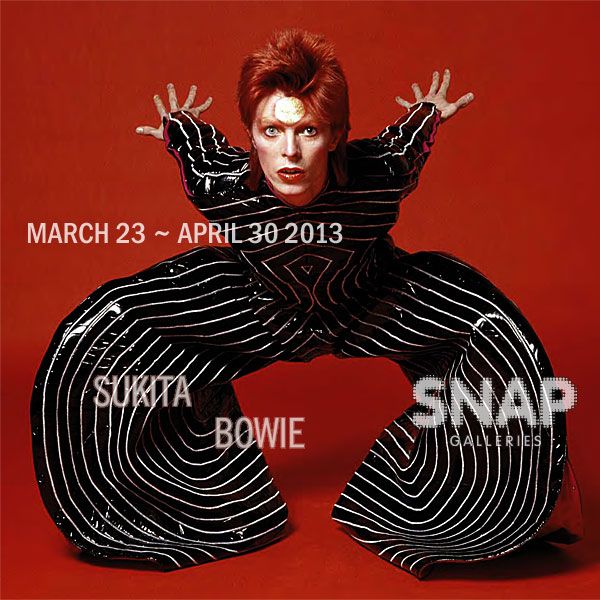
 photo sukita_bowie_snap_exhibition_2013_600sq_zps86874e6d.jpg

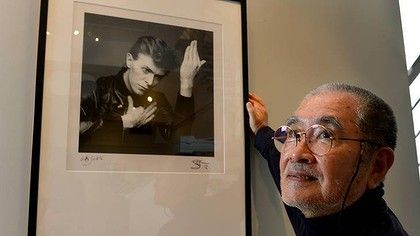
The hot ticket in London at the moment, of course, is the big David Bowie exhibition at the V&A with every visitor slot sold out until God knows when and all the extension places instantly going like hot cakes and probably all snapped up by now, as well. Having seen the magnificent "Glam! The Performance of Style" exhibition in Liverpool a few days before my jaunt down south, I wasn't that bothered about missing out on a place myself. The debilitating disappointment was also tempered by a visit to a small exhibition of Masayoshi Sukita's photographs of the man at Snap Gallery in the Piccadilly Arcade, just over the road from the Royal Academy.

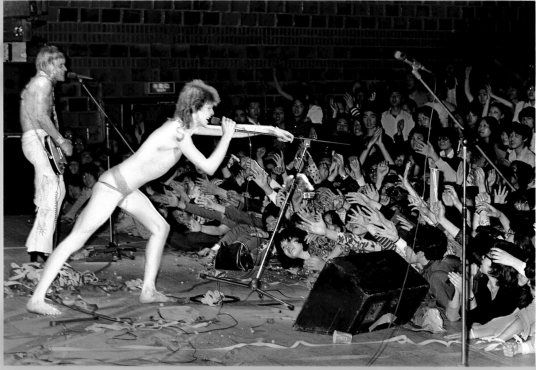
As the exhibition title suggests, theirs is a relationship which stretches back over forty years to a time roughly equatable to the release of the "Ziggy Stardust and the Spiders from Mars" album and performances he did shortly afterwards on the back of it. When Bowie played the Rainbow Theatre in London in August 1972, for example, Sukita was present with his camera, snapping his subject both on and off the stage, continuing do so throughout this era such that, in the early stages of this chronologically organised exhibition, images including the flame dyed feather cut, some in colour, others black and white, and some with him sporting the famous Kansai Yamamoto outfits abound.

 photo bowieimage_zpsa34a53b5.jpg

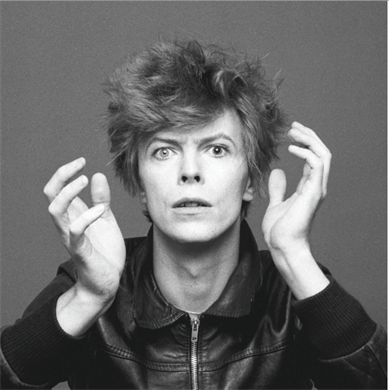
For many people, perhaps the most familiar photograph produced by the pair, and especially so at present as it has resurfaced, albeit occluded, for the sleeve of the latest album "The Next Day", is the German Expressionist inspired one which appeared on the cover of "Heroes" and a number of prints from this session are on display, too, as the exhibition progresses, the Berlin Bowie's hair appearing wild and lacking the more recognisable slickness in some pictures when compared to the one which was finally reproduced millions of times and became a staple in the record racks.

 photo david-bowie-by-masayoshi-sukita-at-snap-gallery-my-my-heroes-session_zps8b4d1d00.png    photo david-bowie-by-masayoshi-sukita-at-snap-gallery-the-next-moment_zps5c6f2dea.png

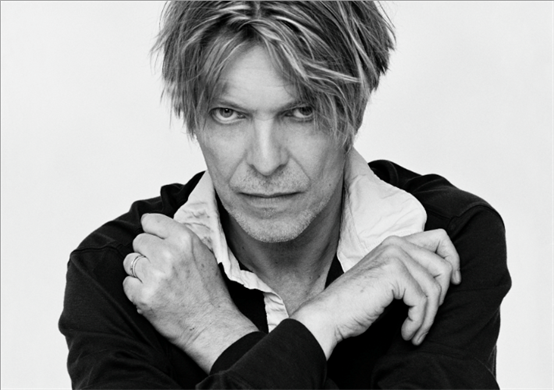
Then, down in the basement, the exhibition reaches its conclusion with images of an older, hoarily bestubbled early twenty-first century Bowie. Here, a figure with whom I am a lot less familiar stares out from inside the frames but it is still the same remarkable and instantly recognisable physiognamy so many of us will have seared into our psyches until the day we die.

 photo david-bowie-by-masayoshi-sukita-at-snap-gallery-never-get-old_zps3c3d52b1.png

Unlike the aforementioned Kenneth Anger exhibition, this one has a little longer to run, until the end of the month, and like that one consists only of two rooms so it is quite quick to get around. They're within spitting distance of one another, too, so will be easy to do in one fell swoop if you get your skates on and go before the end of the week. If you're rich, too, everything on display can be purchased, as all of the pictures are available in small editions signed by the photographer. Why not treat yourself?

 photo Bowie-20120830212812780262-420x0_zps02a629e0.jpg

Oh, yes and I never thought I'd hear myself saying these words: I like Bowie's new album, even if it isn't as good as the new Depeche Mode one which is fantastic.

Kenneth Anger “Icons”: Sprüth Magers Gallery, London

 photo KennethAngerApril20134_zpsde44a2ef.jpg

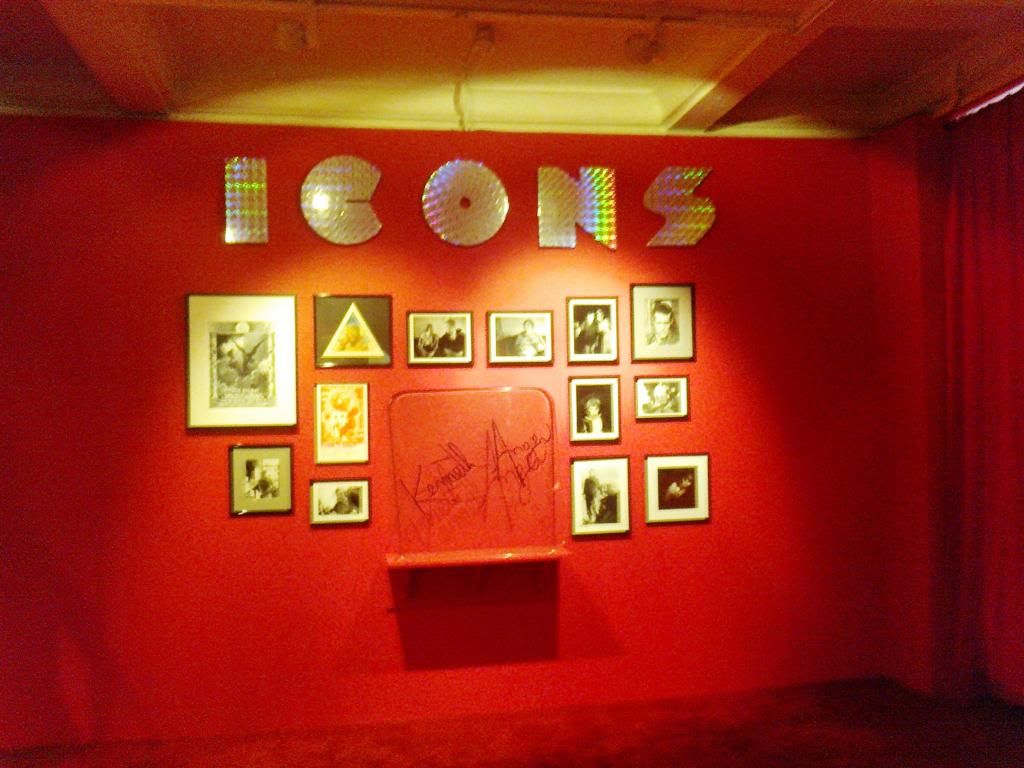
I had a few days down in London last week, catching up with people and getting round to see some of the brilliant exhibitions currently showing. Alongside the Kurt Schwitters retrospective at Tate Britain, my twin highlight was a small two room collection of filmmaker/artist/writer Kenneth Anger’s memorabilia at the Sprüth Magers Gallery, just round the corner from swishy Cork Street and upmarket Berkeley Square in Mayfair.

According to the press release, this is Anger’s second outing at the gallery, the first from three years ago having focussed more on his filmic output than this one which, alongside a peppering of exhibits related to his own work, ostensibly collects together photographs, newspaper clippings, scrapbooks, letters and paintings assembled and archived over the decades by the man himself. Unsurprisingly, these reflect his notorious fascination with the Golden Age of cinema and the film industry which informed his entertainingly scurrilous “Hollywood Babylon” books, a much more rewarding read than any dullard celebrity mag of our own epoch, and which dates back to a time when, as a young boy, he used to visit film sets with his costume designer grandmother and he allegedly played the role of the Changeling Prince in Max Reinhardt’s 1935 celluloid version of “A Midsummer Night’s Dream”.
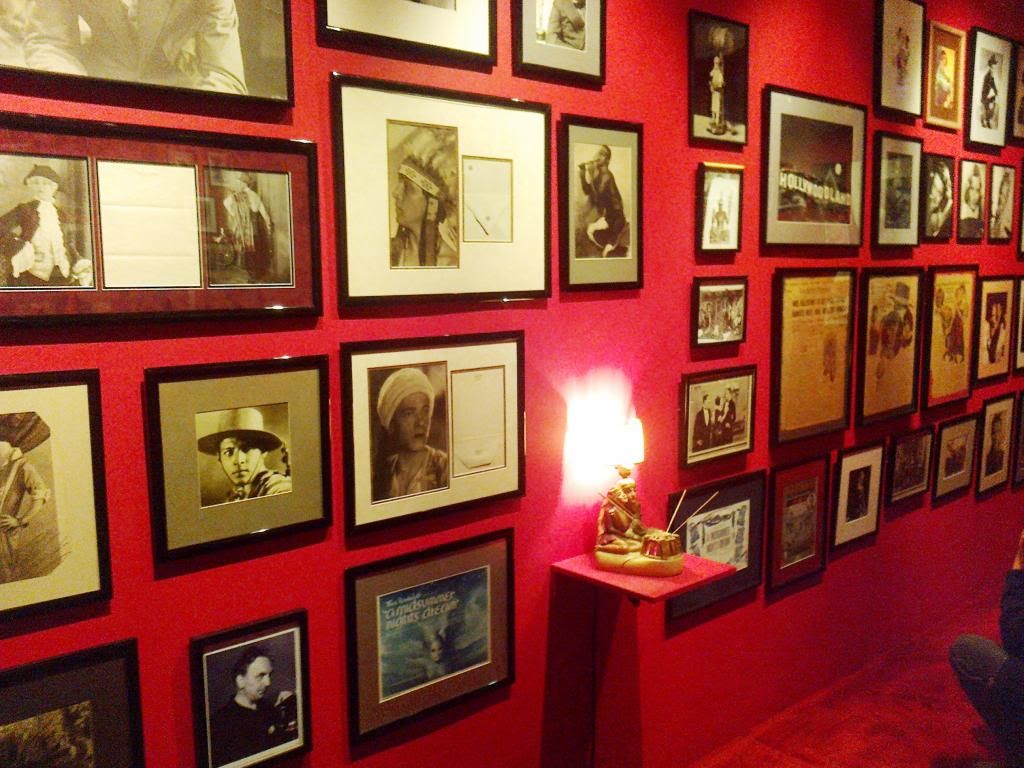
 photo KennethAngerApril20135_zps0441de81.jpg

Like so much great art, Kenneth Anger’s oeuvre is a double-edged one, the films being visually beautiful, often balletic and poetic, whilst also frequently feeling dangerous and subversive at the same time, the books doing a similar job in turning over the glamorous gemstones of Hollywood superstardom who are the subject matter at the tip of Anger’s pen to reveal a simultaneous, less public underside of decadence, desperation and squalor. This is the mood of the exhibition, too, as before the bell is even pressed to gain admittance, the black painted shop window front presents the visitor with a plush red curtain, closed and shrouding the contents of the gallery from external view, this overlaid by the artist’s signature boldly emblazoned across the window in gold, all combining to connote that a hidden and slightly sinister world of luxury and celebrity lies beyond. The feeling is also a bit like arriving at a theatrical undertakers, perhaps in an episode from the sixties Batman television series or a Vincent Price film, where some kind of fantastic sideshow mystic will offer dubious insight into an exotic world of non-everyday experience. This superb impact must be an intentional one as it sets the scene highly aptly and in a showmanly fashion ready for what lies beyond the adjacent doorway, a few steps up from the pavement and its pedestrian (no pun intended) world of parked-up Boris bikes.
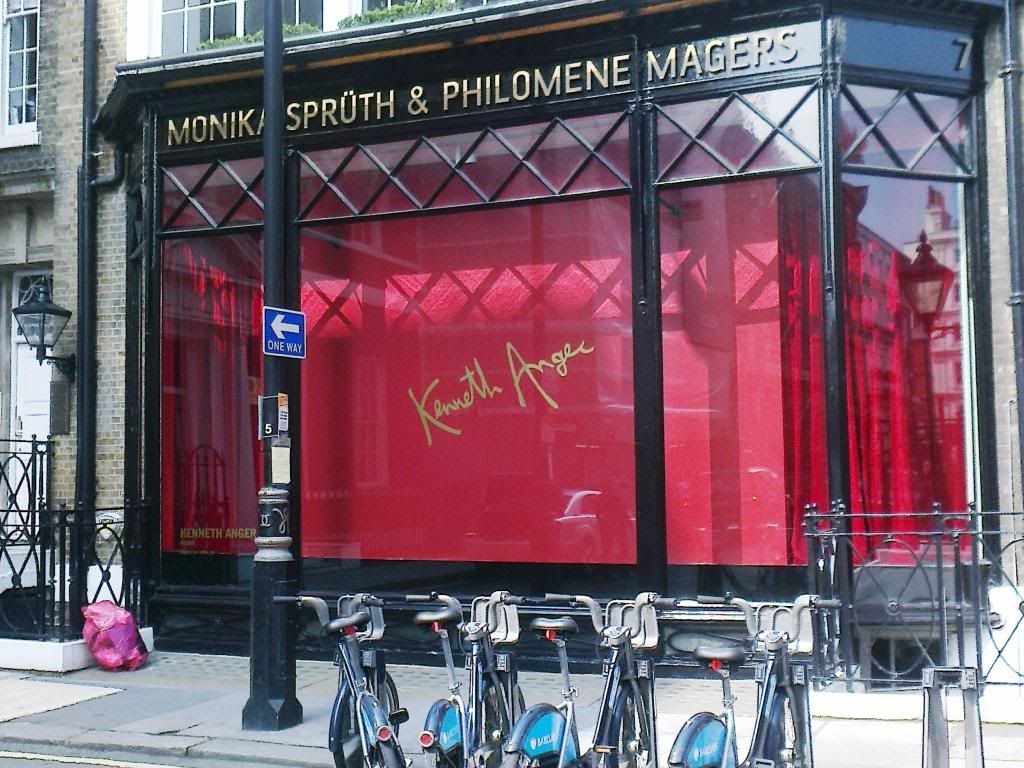
 photo KennethAngerApril20131_zpsfacee2b9.jpg

Once inside, the rooms into which no external, natural light is permitted are contrastingly painted and equally theatrically, one midnight blue and the other crimson, to reflect the way the collection was displayed in Anger’s Los Angeles home, this also creating an ambience both reminiscent of a plush funeral parlour and an occultist’s den. On the walls are mainly displayed old publicity photographs of gods and goddesses of the silent age and early talkies, all uniformly framed in black for maximum dramatic impact, these complimented by their letters and frayed, dated newspaper reports, mainly from the 1920s, which detail their public exploits. In amongst images of people like the bullwhip-toting cowboy Lash Larue, his signature insciption alluding to his obvious trademark, Bette Davis and Barbara Stanwyck, screen lothario Rudolph Valentino is the obvious star of the first (crimson) room as he appears repeatedly along one wall, both photographically and in print. As anyone who has read the short chapter about him in the first “Hollywood Babylon” book will know, his reputation and story was one that has especially fascinated and fed the imagination of Anger, this resulting from his powder wearing effeminacy and the scandal caused when other young men influenced by his stardom followed suit, his questionable virility and alleged preference for dominant female partners which led to him more than once marrying those of more inverted proclivities and his mysterious death at the age of thirty-one, officially from peritonitis - or was it arsenic poisoning at the hands of a jilted lover, a bullet from the gun of an irate, cuckolded husband or the effects of syphilis reaching the brain which brought about his premature shuffling off? Add to this the cod fascist, black-shirted guard who stood watch by his open coffin, the black lead, autographed Art Deco dildo he gave as a present to fellow cinema idol and "close friend" Ramon Novarro, this apparently serving as the weapon used to murder its recipient decades down the line, and the reactions of distraught fans following his death, suicides abounding and a mysterious Lady in Black who took flowers every year on his anniversary to the mausoleum where he was laid, and the appeal becomes obvious. The rather more forgotten and, therefore, obscure twenties screen beauty Billie Dove is also a rather unsettlingly ubiquitous presence here, through publicity shots, newspaper clippings under glass and, most strikingly, a few examples of the rather unaccomplished yet vaguely ominous (perhaps only because of the context in which they hang) paintings, mainly portraits, that she produced following her early retirement from film stardom. These reminded me a little of those you see of vengeful, dead relatives in horror b-movies whilst also emanating a similar vibe as the creepy “The Lady With Crying Eyes” painting to which Joe Meek apparently attributed so much significance. This is especially true of a saturated blue depiction of a clown, at once both hopelessly kitsch and rather uncanny.
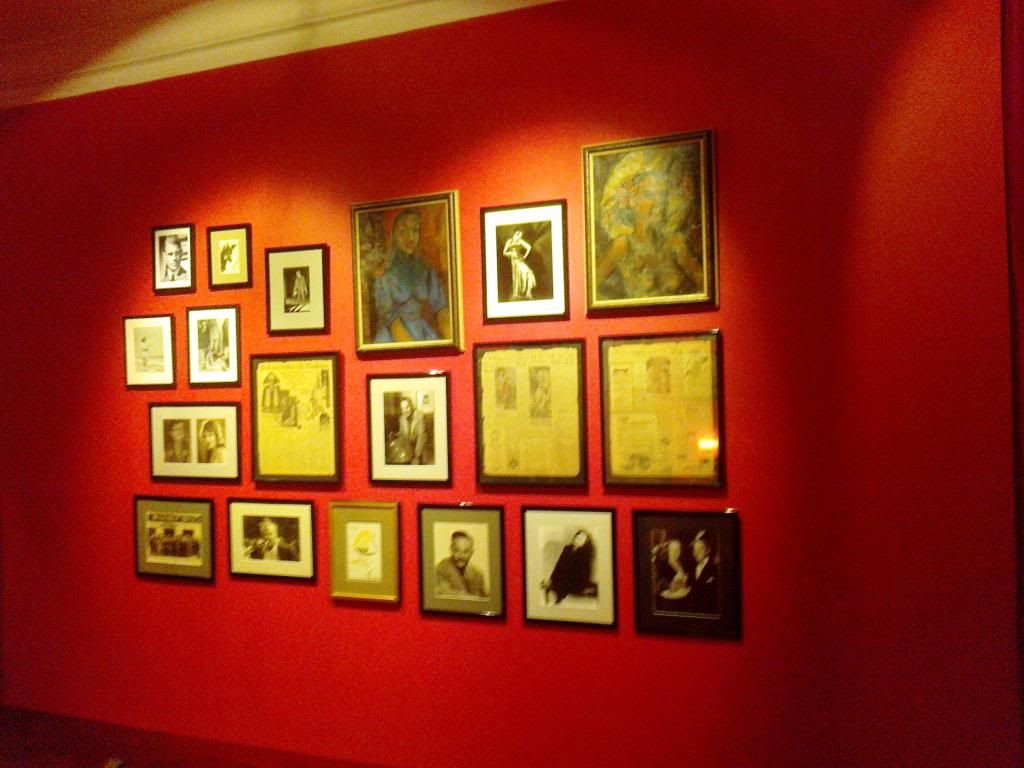
 photo KennethAngerApril20136_zps436a02a0.jpg

In the midnight blue room, the theme shifts somewhat, a little away from the collection, although this is still much in evidence, and a tad more towards the man himself. Although there is less to look at, the ambience darkens with the colour scheme and a bier-like glass cabinet sits along one wall, this containing assorted ephemera including items related to Anger’s films, such as a rather covetable t-shirt featuring The Scarlet Woman from “The Inauguration of the Pleasure Dome”. Compared to the crimson room, the walls here are more sparsely decorated. In one photograph the director stares out at the viewer, hands stuffed in his trouser pockets, in the background an Egyptian style poster for his film “Lucifer Rising”, similar to the one in the first room of the exhibition. Beside him is a photograph of the exploding Zeppelin airship, perhaps alluding to his friendship with the "diabolic" Jimmy Page. Diagonally across from these, the wall is dominated by a set of neon Hollywood Babylon lips, perhaps dating back to the 1970s, although maybe later, as I believe a similar set or perhaps these exact ones were used as the logo for his last London exhibition. Anyway, they add a further fairground sideshow aspect to an otherwise slightly otherworldly ambience.
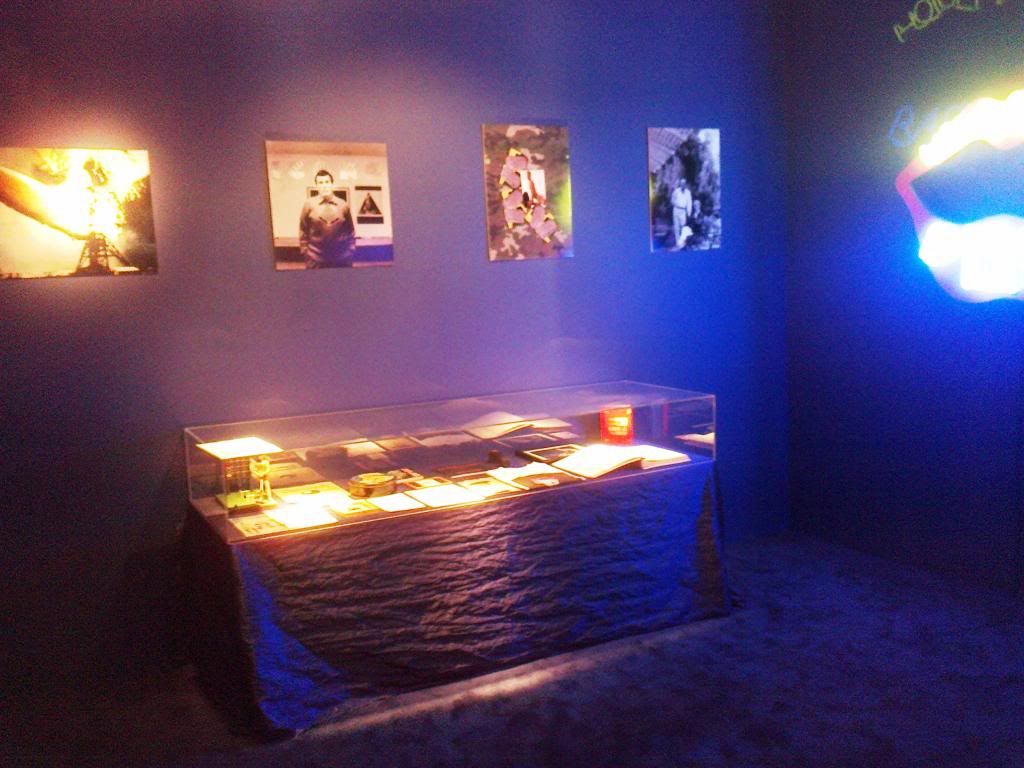
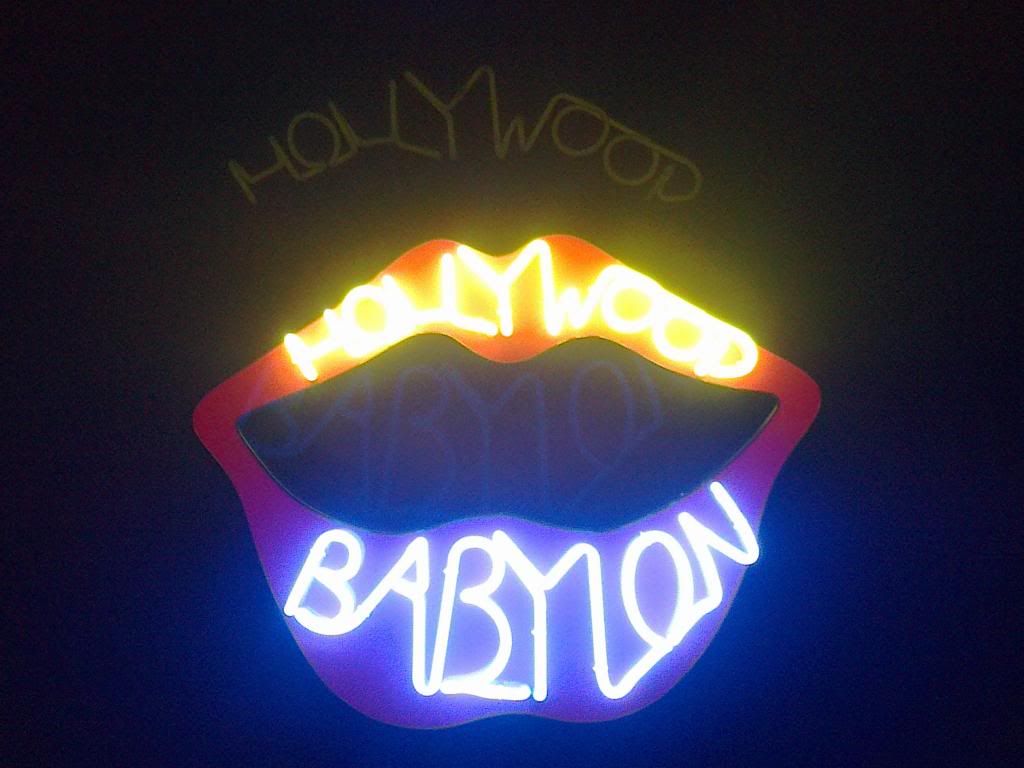
 photo KennethAngerApril20133_zpscd9e534f.jpg

 photo KennethAngerApril20132_zpsa6e111ef.jpg

As often happens with these things, I’ve visited towards the end of the run – see the “Querelle” photography exhibition in Berlin – and this one now has less than a week left before it closes on, I think, 20th April. If anybody reads this in the meantime, though, and is in London, it comes with the strongest of recommendations. If not, I guess it may travel. It has already done a short stint at their Berlin branch earlier this year, prior to coming to London. Maybe it will move on somewhere else. According to the schedule on their website, they have a Kraftwerk exhibition on in Berlin, too, throughout the summer so they seem to be a window on which to keep an eye.

Friday, 2 November 2012

Bureau B: Andreas Dorau Reissues

Hamburg's Bureau B Records cannot be praised enough for their endeavours over recent years in reissuing a plethora of brilliantly essential and often ground breaking German electronic music from the 1970s and 1980s, a lot of which previously sat on the deleted register or came unsatisfactorily packaged, also adding to these a smattering of new material by some key players  from the period still working, such as "Programm 6" by DIN A TESTBILD ("Programm 1" was released in 1980) and the fantastically vibrant new album last year by Kurt Dahlke a.k.a. Pyrolator ( "Neuland" ). The whole thing is clearly a total labour of love, the comprehensive focus of the catalogue and the careful attention to detail, stylish packaging and thoughtful production of the accompanying booklets, often with rare photographs and informative mini-essays printed in both English and German, belying the work of a genuine enthusiast(s) who has impeccable taste. Hats off to you, whoever you are!

So, in amongst countless reissues by Roedelius, Cluster/Qluster and Moebius, either alone or with assorted collaborators, there is a little corner which reflects some of the activities of those living and working in Düsseldorf during the late seventies and early eighties, the ill-fated Riechmann's wonderful "Wunderbar" album from 1978, which seems to have had them bopping down at Billy's and The Blitz at the time, whilst concurrently blending with the likes of Bowie's "Low" and Heroes" to influence the nascent Visage sound, being one perfect example. Most exciting to these ears and eyes, though, has been the hopefully still evolving reissue programme focussed on matter originally released on the idiosyncratic and pioneering Warning / Ata Tak label. So far we've had the first two albums by label founders and acid-headed, Residents inspired, synthpop terrorists Der Plan ( "Geri Reig" from 1980 and "Normalette Surprise" from 1981 ), both complete with extra tracks, the first, pre-Mute, pre-Virgin, 1979 debut from the then highly experimental and seemingly improv Deutsch Amerikanische(n) Freundshaft and the two brilliant openers by the aforementioned Pyrolator ( 1979's "Inland" and "Ausland" from two years later ), he too, as everybody knows, having been one of the mischievous Der Plan triumvirate, as well as a participant in the initial D.A.F. experiment.  

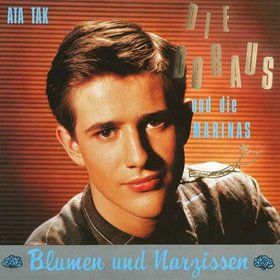
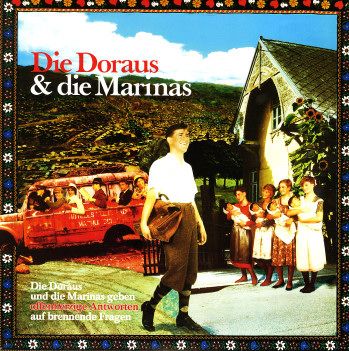
As regular readers of this blog will know, certain names and faces keep reappearing, like Boyd Rice and Chris & Cosey, as well as early eighties teenage poster boy Andreas Dorau who is back again courtesy of the reissue people Bureau B. Several months ago his two Die Doraus und Die Marinas albums from 1981 and 1982 surfaced, "Blumen und Narzissen" having originally come out on Ata Tak and "Die Doraus und Die Marinas Geben Offenherzigen Antworten Auf Brennende Fragen" being a product of the major CBS who seemingly snapped him up after the unexpected chart success of the single "Fred Vom Jupiter". Again, the packaging is first-class so the old Captain Trip versions can now get relegated to the duplicates cupboard, and they feature carefully chosen extra tracks to fulfill the completist's dream, the b-side of the aforementioned "Fred..." single, the three tracks from his debut Zick Zack 7" from 1980 and a couple from contemporary compilation albums complementing the first CD and the stand alone follow-up single "Kleines Stubenmädchen", the dub mix b-side to single number three "Die Welt Ist Schlect" and  two more compilation tracks being added to the second. Again, the accompanying booklets are impeccable, with rare photos and sleeve reproductions, as well as informative and witty liner notes by Carsten Friedrichs, the whole shebang, for me at least, shedding some light on the previous mysteries of Dorau's early association with Palais Schaumburg's Holger Hiller, his involvement in the band Fähnlein Fieselschweif and the probable story of why Die Doraus und Die Marinas only ever had one chart hit.

Photobucket

Offenherzige

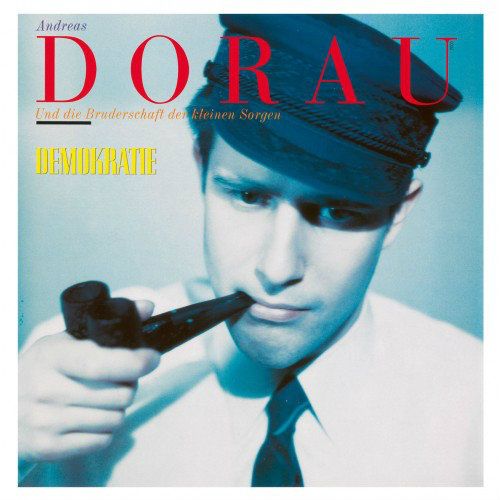
Now, just a few days ago, the Andreas Dorau reissue programme progressed further with the release of his first two solo albums "Demokratie"(1988) and "Ärger Mit Der Unsterblichkeit"(1992), both of which, again, came out originally on Ata Tak before he departed for pastures new, his motives for doing so here included in Herr Friedrich's latter contribution on offer. Once again, the attention to detail is perfect with the inclusion of photographs unseen previously by these eyes and extra tracks in the form of alternative versions of a small handful of  the albums' singles and highlights, as well as the enlightening essays about which I keep harping. This time we're treated to a snippet of what he got upto as a film student in Munich in the eighties, as well as finding out about his penchant for the band The Left Banke at the time, their baroque-pop influence now sounding quite obvious on the reissue of "Demokratie", an album which, for me, represents one of the absolute pinnacles of an almost spotless recording career now extending nearly three and a half decades. Also, would you believe that Dorau travelled to Birmingham to try to persuade Roy Wood of Wizzard and The Move fame to produce his debut solo album and that the deal would have been struck but for a repulsive Phil Collins album entering the equation or that a Flying Lizards' connection led to Michael Nyman partly taking his place as arranger or that, enthused by the first cheap samplers, our hero spent a small fortune amassing records from which he could plunder? Well, that last bit is no surprise. Let's hope the Dorau reissues keep coming so more can be revealed.

bb113_dorau_demokratie_rgb

Photobucket

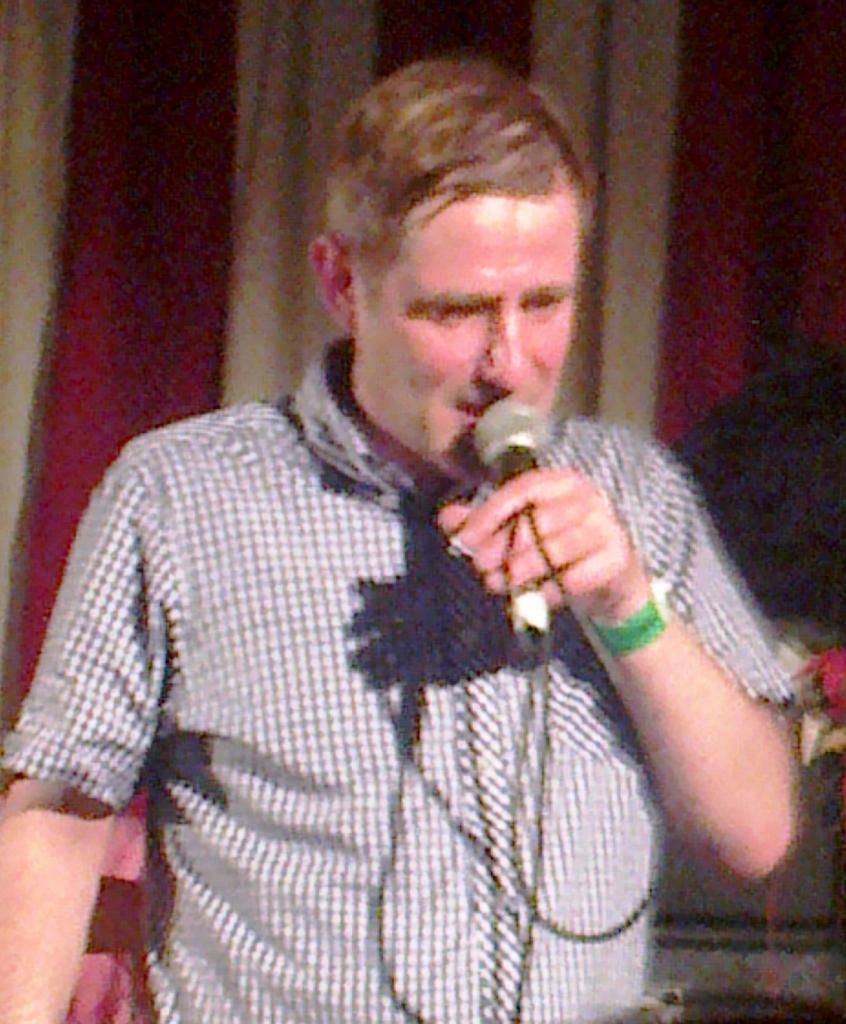
Herr Dorau played a concert in Berlin last Saturday at the mesmerising fantasy venue of Kater Holzig, his performance being part of the celebrations to mark the tenth birthday of his current recording home Staatsakt and, in amongst an amazing week and a half for gigs which began in Manchester with Sparks and ended with Crime & City Solution at Berlin's C-Club, as well as Barbara Morgenstern and Gudrun Gut performing live at Tresor, myself and a couple of friends were there to see him. He was superb, belting out highlights from the "Todesmelodien" album and old favourites too numerous to begin listing, his enthusiasm for his material also leading to him falling off the stage at one point. I enjoyed him at Berlin's Hau2 last October but the intimacy and high octane set this time knocked that easily into second place. For the benefit of fellow fans, here's a clutch of photos I snapped on my telephone.

Andreas Dorau Kater Holzig 4

Andreas Dorau Kater Holzig 3

Andreas Dorau Kater Holzig 1

Andreas Dorau Kater Holzig 2


...and finally, in true Bureau B style, to complete the completist's dream, here's some videos which accompanied the singles from the latest two albums to be reissued, some of them including the wonderful artistic contributions of Moritz Reichelt and others from the Der Plan / Ata Tak crew.


Sunday, 24 June 2012

Soft Riot-Hyperbolic Masses


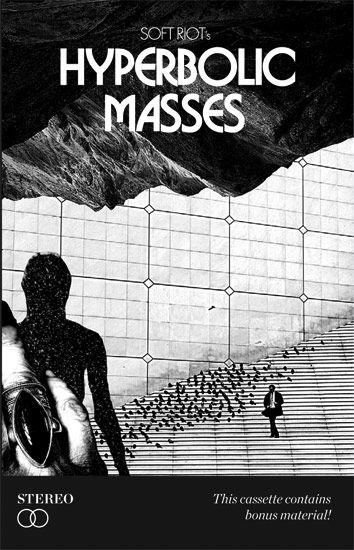
Soft Riot have been mentioned on here a couple of times now without receiving any of the individual attention they deserve. So, it's an enormous pleasure to now say a few words about their recently released cassette album, "Hyperbolic Masses", a copy of which passed into my hands a few weeks ago. I'm mightily pleased it did, too, as it's truly wonderful.

I used the word "their" above when, in fact, I should say "his" as Soft Riot is a one-man band in the form of Canadian, but living in London, JJD (Jack Duckworth, would you believe?) who, he says on his website, has been doing band things for a decade and a half, "starting off in the mid-nineties in North America's vibrant art-punk/hardcore underground through to the revival of synth-based post punk music just over a decade or so ago." Again, cribbing from his website, it says that Soft Riot initially functioned as an occasional studio project amongst his other activities until rising to prominence early in 2011 with their first release, this soon followed by the earliest examples of the Soft Riot live experience which, unfortunately, I'm still to catch but which sounds to be rather a spectacle with him commanding no less than three synthesizers, on-stage mixing and various effects, all accompanied by what is enticingly described as "atmospheric on-stage lighting".  

The sound he describes as, "drawing inspiration from synthesizer-based film soundtracks of yesteryear, drones, early EBM, minimal wave, a bit of synthpop and a heavy dose of throbbing arpeggiated rhythms," thereby creating, "a science-fiction heavy sound that narrates the listener through today's fractured post-modern world with hints of black humour," and this is a pretty good summation or distillation of what's to be found on the eight tracks which comprise "Hyperbolic Masses", four on each side, just like in the good old days. 


So, with that description, my job has been done for me already, by the look of things, although a quick trawl through some of the tracks will hopefully add to what's been said above. These start with "Another Drone In Your Head" which I believe was released as the lead track on a recent E.P. or something. I get very confused with all this MP3 download culture. Anyway, it begins, rather unsurprisingly given the title and lyrical content, with a bit of a drone before a stately, crunching rhythm starts up, this supported by a pounding, confident bassline over which a vocal, almost conspiratorial in delivery at times, and  swathes of more strident electronics slash across and weave in and out of the audial field. It rather reminds me of Cabaret Voltaire during their transitional phase in the run-up to their leaving Rough Trade and making the move to Some Bizzare/Virgin around the end of 1982. They're quite an influence I would imagine as track number two, "There Just Isn't Enough Time", an accomplished, rather funky and propulsive number with whip crack beats, bubbling  electronics and punchy, rhythmically delivered vocals sounds like it would have sat very comfortably on their 1983 album "The Crackdown". 


This isn't to say that JJD's music is totally derivative of its forebearers, though,  as it still has a very contemporary feel to it rather than sounding like it has been lifted directly out of the eighties, as well as a well-crafted poppier element which is definitely the case with the track just mentioned and the one that follows, "You Can't Please Everyone". This is probably my stand-out track and, I believe, would have made a fantastic single in the days when these things mattered. The fact that he's made a video for it probably belies an intention that it be taken this way, too. It begins quite gently but ominously with eerie, science fictiony chords, a bit like Dopplereffekt on their "Myon-Neutrino" single, but soon develops into a much more layered, sophisticated and quite wistful entity which puts me in mind of people like The Associates, Blancmange and Depeche Mode at their most thoughtful and yearning. "Write Yourself Into The Void" which ends side one, aside from a short excerpt from "Jubilee" with Jack Birkett in the role of Borgia Ginz opining about his rise to power, does so in a similar vein of highly engaging, unobvious and textured electropop. 


Turn it over and Side Two is equally impressive, "Some Abstract Terror", retaining many of the qualities of the two songs that ended the first side with the track that follows, "You've Got To Use It", being moodier, more sequencer based and reminiscent of what used to be called funky alternatives in some quarters during the early to mid eighties; people like D.A.F., Hula and Cabaret Voltaire (again!) spring to mind when listening to it, although it directly apes none of these. "Do Less" which comes next seems to have a foot in both camps as it pulses and pricks along like a kind of cinematic, dance-orientated pop number and then proceedings end with the rather dystopian soundscape of "How Can You See Them?" which again brings the starkness of Dopplereffekt back to the table, as well being reminiscent of things like Throbbing Gristle's "E-Coli", the S.P.K. track "Genetik Transmission" from their "Leichenschrei" album or German Bite favourite Fad Gadget on "Arch of the Aorta". It's a perfect, minimal palette cleanser after the richness which has preceded it.


The cassette which contains some previously released material, as well as some being outed for the first time round, is intended to act as a bridge to forthcoming new material and, maybe for this reason, comes in a hand-numbered limited edition of seventy five copies, each with an individual download code for those who haven't got a cassette player or the means to transfer from it to their Ipod, MP3 player or whatever it is they use. The download does, though, come in an impoverished form compared to the three-dimensional object, and rightly so, as it does not include the additional incidental music and film extracts which segue one track into another on the physical release. I would, therefore, strongly recommend getting one whilst they're still available from www.softriot.com as the inlay card informs the purchaser that these tracks will never be released as this collection again. And why is it a cassette rather than a record or a CD? On his website, JJD explains all, this basically boiling down to ease and cost of reproduction, durability, physical interaction and sound quality.


I wish I'd written this piece a few days earlier now, as he's just been on a bit of a jaunt around the continent with Noi Kabat, taking in Berlin, Budapest, Vienna and Prague, plus possibly Brussels and Leipzig. However, they played their final date last night, I think, so I can't encourage anybody living in any of these places to go out to see them. I think there is another tour being lined up for later in the year, though, possibly with Lebanon Hanover whose track "Die World" has been given a rather radical Soft Riot "Ice Cave" remix.


I think we're going to hear a lot more about Jack Duckworth and Soft Riot in future. I certainly hope so as he's a real talent deserving to be recognised. He does rather brilliant surreal collages, too, which remind me a bit of John Stezaker in places and which act as a perfect visual compliment to the music. So, he gets a double thumbs-up from German Bite.


Sunday, 17 June 2012

Simon Barker: Punk's Dead


I had a trip down to London for a few nights a week or so ago and, as often happens when you go somewhere with no concrete plans, there was loads of brilliant stuff going on, so much so that I was rather unhappy about having to drag myself away on the Sunday afternoon to head back up north, as one extra day would have allowed me to see one of my very top films ever, "Pierrot Le Fou", being introduced by Cerith Wyn Evans at The White Cube Gallery in Bermondsey and what promised to have been a truly memorable gig at The Macbeth up in trendy Hoxton, Dalston, Hackney or whatever, this featuring Soft Riot, Noi Kabát and Linea Aspera, none of whom I've managed to see live yet...and all on the same bill. 

On reflection, my absolute highlight was an exhibition of Simon Barker's photographs from the years 1976-7 and thereabouts which was on at the Divus Temporary Gallery on Wilkes Street in the Spitalfields area. Being a little out of touch lately and not being one of the Facebook set, I knew nothing about it until myself and my host went to meet another friend of ours who was doing some business on Brick Lane and we went into Rough Trade to kill time and have a look around prior to our rendezvous. There on the counter was an eye-catching postcard featuring the unmistakable and dolly eek of Jordan, fully made-up but posed rather casually, on the back details of the exhibition which turned out to be just a minute or two's walk away. So, once we were in our planned triumvirate state we had a wander round, finding it to be just round the corner from Gilbert & George's gaff on Fournier Street and also that of Miss Tracey Emin who we'd passed in the street just a few minutes earlier. It's such a happening area, it really has to be said!


What we found was an absolutely superb exhibition of photographs of many of the key players from the earliest days of what came to be known as punk, those often referred to as The Bromley Contingent of whom Barker was a core "member", all taken by an insider for personal rather than professional reasons and all the more fascinating and culturally significant as a consequence. So much has been written, published and broadcast about punk and this group of people in particular, all accompanied by what images and footage is available, that it seemed as though  not a stone had been left unturned in a quest to visually represent the era. However, I can safely say that I'd never previously seen any of the photographs on dispaly, and then expanded across the pages of the accompanying book, before so for that reason alone it was a completely refreshing experience, never mind enjoying the intimacy of the shots which offered a peek into somebody's private album of friends often sitting around, preparing to go out or looking as if they've not long been back from a night on the town. 

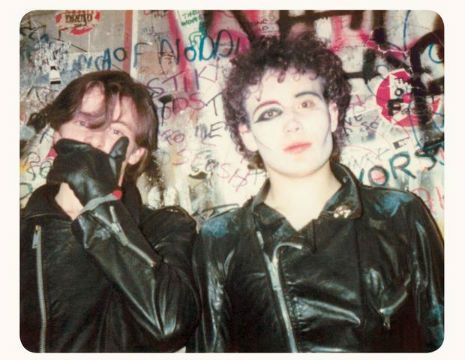
One of my crowd is a friend of the photographer, having known him for several decades and she was, therefore, delighted to find him and his partner, Derek Dunbar, still hanging around the gallery twenty-four hours after the exhibition's opening. This also proved to be somewhat of a bonus as he walked us around some of the images on display, reminiscing a little as he went and explaining that they were all just taken with his instamatic camera for personal reasons, just as we've all taken pictures of our own mates over the years. Quite a good number were, therefore, taken in the St. James' Hotel close to Buckingham Palace where he lived for a while with one Linda Ashby, elements of whose story and significance can be read about in the better punk books, and feature friends who used to come to visit or crash over after missing their last trains home to the suburbs. As a consequence, old school friend Steve Severin and other Bromley dwellers such as Siouxsie Sioux and Bertie Marshall (Berlin) are much in evidence, as well as the aforementioned and seemingly ubiquitous Jordan and people like Debbie Juvenile, Tracie O'Keefe, John Mackay, Nils Stevenson and Kenny Morris.

The camera wasn't just confined to home, though, and a very interesting set  of pictures are those which were taken at the premiere party for the film "Jubilee" which was held at Derek Jarman's studio/dwelling at Butler's Wharf. As well as some of the usuals, these also include others in snapshot scenes: the film's director himself, Little Nell, Jayne County, Helen Wellington-Lloyd, Adam Ant, Marco Pirroni and one Max who was in Rema Rema and The Models, I believe, with the last of the aforementioned, as well as being the voice of the single "I Confess" by Dorothy which came out on Throbbing Gristle's Industrial label in 1980; quite a favourite round here it is, too, I can tell you. Others were taken at gigs and on tour with The Banshees and, as well as featuring action shots of people like Adam and Jordan on stage with the Ants, several of Siouxsie doing her stuff and figures like Poly Styrene, Alan Vega, Wayne Barrett from Slaughter and the Dogs and even journalist Jane Suck with microphones in their hands, the scene surrounding such events off stage is  also documented. In the book, for example, there is a small section titled "Managers" which includes images such as one of Richard Boon chatting to Malcolm McLaren at the Croydon Greyhound and a rather sartiorially elegant Leee Childers and friend at The Music Machine. Elsewhere, there's a casual shot of Billy Idol at The Vortex and dressing room images from early Ants gigs, including a hilarious one of Jordan posed with teenage fans decked out in all the clobber.


As I've said at least once, one of the best aspects of this exhibition is that the photographs were not taken for any other reason than the personal and they, in places, essentially feature friends doing what friends do, albeit in a rather exciting place and time. So, a lot of the pictures have an unplanned lack of self-consciousness to them which I like. If I had to pick my very favourites they would have to include a little set entitled "Negative Jordan" where she is wearing her recognisable geometric make-up design only this time with the white parts of her face shaded in black. As she poses against the wall at the St. James' and pulls a face in one of them, she looks a bit like a collision between the Ballet Russes and the Black and White Minstrel Show, displaying an aspect of her character which I strongly suspect would never have been revealed in a more staged, public setting where a more demure, stand-offish aspect seemed to be more the order of the day. I also like one of her caught talking on the phone, made-up but with her hair unfinished or one of her lying on the floor, at the foot of a sofa, smoking a fag and looking half-asleep. There's also one of  Tracie O' Keefe caught sleeping in bed which I like, the fact that she drifted into her eternal sleep as a result of a rare form of bone cancer not long afterwards adding quite a degree of poignancy to it. She also appears in photos taken at The Vortex speaking to a young Bella Freud in one and a young Steve Strange in another, their subsequent fame making them interesting shots. Other real favourites, although they're all so brilliant, are of Jordan with the Ants wearing a long black wig and looking more like Jayne County than herself as she belts out what is presumably "Lou" on stage at The Marquee. I've never seen pictures of her is such a get-up before so another new angle emerges here, too.

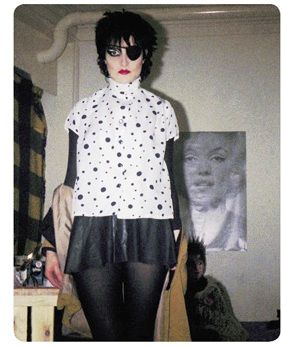
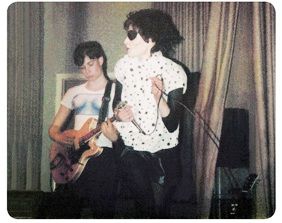
Similarly, I've never seen pictures of Siouxsie Sioux wearing an eye-patch, a la Bette Davis in "The Anniversary", before but here she is looking terrific both at the St. James' Hotel and on stage at an early Banshees gig, presumably on the same night as the continuity in her outfit suggests. As he walked around with us for a bit, Herr Barker picked out the former as one of his favourites as not only does it feature his old mate posing very upright with her arms at her sides, but also, in the background, Jordan sitting on the floor leaning against the wall with a poster of Marilyn Monroe above her head. "The three women," he explained. It's a favourite of mine, too. When I'd bought the book / catalogue, Derek picked out a favourite of his, as well, one of himself and Derek Jarman talking at the "Jubilee" party where he is wearing a shirt with a photograph of Siouxsie in the clear, plastic breast pocket. As he explained, following record company wranglings, the Banshees were removed from the film's soundtrack and, as a punishment, they were not invited to the party. "I made sure she was there, though, if only in a photograph," he told us proudly.


So, I think we can agree that, if this kind of thing interests you in the slightest and you're in Londinium, a visit to the "Punk's Dead" exhibition is pretty essential. It runs until 7th July, I believe, and is open from midday until 9pm daily which is very civilised. I would also strongly recommend shelling out thirty quid on a copy of the book as it is a beautiful, hardback creation consisting mainly of photographs, a lot of which aren't in the exhibition, presumably for logistical reasons, and fascinating bits of text introducing thematic sections with titles such as St. James' Hotel, Linda, Jordan, A Jarman Party, Seditionaries, Siouxsie and Live. I also suspect that a lot of these images, once exhibited, will slip back into the realm of the private so the book will offer an invaluable, permanent record. Plus, as often happens with these things, it will no doubt sell out pretty quickly and start passing between hands for ludicrously inflated amounts on the second-hand market. Mine's autographed, "...pissing on the past, Simon Barker". Act now, whilst you can, is my advice.

Sunday, 22 April 2012

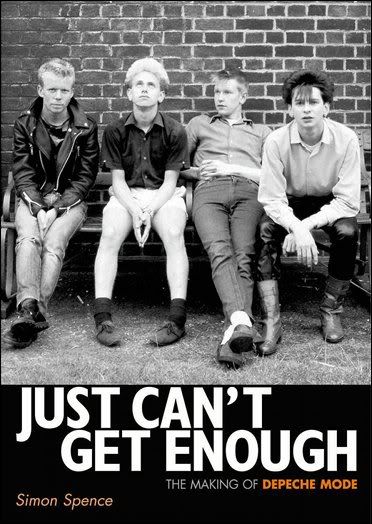
Simon Spence-Just Can't Get Enough: The Making of Depeche Mode


Mention of James Nice's "Shadowplayers" in my last entry also makes me think of another tremendous book which I finished recently, Simon Spence's "Just Can't Get Enough: The Making of Depeche Mode" which is equally detailed and focused, written by someone with a similarly evident enthusiasm and fascination for his subject matter and, although in paperback rather than hardback, also published in very satisfying proportions so that it's a pleasure to simply hold in the hand.

As the title suggests, the book takes as its subject the nascent Depeche Mode, tracing their development upto the release of their fifth album "Black Celebration" in 1986, the point at which they were poised to meteorically transcend their opening five years of British / European stardom and become the global, stadium-sized super group which they remain until the present day, a point also before the American influence began to seep into their sound as it had so obviously done by the close of the decade. Interestingly, this was also the point at which my eye began to drift from the band, having previously been an ardent follower of their every move and someone who bought each new record during the week of its release, if not on the day. I do, however, remain a fan, I must say, and even travelled to Munich and Manchester to see them last time they toured.

In the initial stages of the book, Spence is at great pains to explain the band's originating from Basildon as being of enormous significance to their sound and outlook, their adoption of synthesizers and electronic technology being a mirror to the post-war new town whose brand new houses, shopping precincts and purpose built industrial estates offered a similar freshness and split from the past to those families who initially moved there from areas in the east of London as did this sparkling new ultrapop to almost everything that had gone before when first heard in 1980-81. On the back cover, singer Dave Gahan is quoted as having once described DM as " a new sort of band from a new sort of town".  

The first hundred pages or so, therefore, provide a kind of potted history of the town, as well as tracing the developments of Vince Clark, Martin Gore, Andy Fletcher and Dave Gahan upto their first performance together - under the name of Composition of Sound - in June 1980, their set around this time still including a number of cover versions such as "Mouldy Old Dough", "I Like It", "Then I Kissed Her" and "The Price of Love", as well their own early compositions, some of which, "Ice Machine", "Tora! Tora! Tora!" and "Big Muff", turned up on those initial releases. Gore was also playing in a band called French Look at the time, often on the same bill, which included Robert Marlow who released some of the songs from their set as a solo artist a few years later on Clarke's short-lived Reset Records, consideration of which is always a rather interesting diversion. Through interviewing people like the aforementioned Marlow and Alison Moyet, as well as other key players from Basildon at the time, Spence manages to provide a fascinating and essential keyhole into the town during this era, this including the importance of Christian youth groups on the teenage Clarke and Fletcher, and to a lesser extent Gore, the area's punk, soul and eventual "futurist"scenes, as well as some of the early bands therein such as sixth-former Gore's Norman and the Worms and Moyet's The Vandals.

By the end of 1980, Depeche Mode were playing regularly at venues such as Croc's nightclub in Rayleigh and in London at The Bridgehouse in Canning Town, balancing their synths on beer crates and this, as we know, is where Mute Records boss Daniel Miller saw them supporting Fad Gadget, thus kick-starting a relationship which still continues over thirty years down the line. In fact, this part of the book is particularly interesting as it charts the band's decision to go with the relatively new independent label and retain artistic freedom rather than sign up for the huge advances being offered by the major labels also chasing them at the time but keen to mould them into something which would no doubt have been much more ephemeral - quite canny decision making, especially considering their tender ages. All were still under twenty, I think, or at least thereabouts. Fletch, as they call him and whose input into the band is often rather nastily played down, seems to have been the prematurely sage factor at the time. Clarke's then girlfriend, Deb Danahay, who I remember running the Yazoo Information Service when I was a schoolboy, also seems to have been keen to influence the decision towards Mute, being quite a fan of "Warm Leatherette", "Back to Nature" and "Ricky's Hand" like the best of us. 

At this stage, whilst also explaining the deals made to distribute Depeche Mode in various international territories, artwork decisions, Clarke's departure just prior to the release of their debut album and with their first few "Top of the Pops" appearances just under their belts, Gore's switch to the role of main songwriter and the addition, initially on a temporary and jobbing basis, of Alan Wilder, Spence begins to peddle a parallel narrative in telling the story of the early years of the Mute label and its limited roster at the time, something I have to say has obsessed moi since the day I received a label biography from them in very early 1983. So, whilst the focus stays primarily on the band, other voices such as that of Boyd Rice and DAF's Robert Görl weave into the picture, offering new information and perspectives regarding the period, and peripheral stories are told regarding early Mute artists such as Robert Rental and The Silicon Teens, as well as Rice's NON and the first incarnation of DAF over in Düsseldorf. Linked in to the latter, the beginnings of the German connection, so important to Depeche Mode during the first part of the eighties, is also introduced through the voice of Moritz Reichelt of Der Plan and Warning / Ata Tak records, he also having designed the sleeves for 1982's "See You" and "Meaning of Love" singles

The years 1982-84 saw Depeche Mode maturing away from their initial teenybop, pop sound and, through singles like "Leave in Silence", "Get The Balance Right" and "Everything Counts", as well as their second and third albums "A Broken Frame" and "Construction Time Again", towards becoming a darker, more experimental entity than would have first been envisaged and whose insistence on remaining on an independent label and to not pander to corporate expectations began their drift into near invisibility in the eyes of the British media, in spite of being one of the most successful bands the country has ever produced. It's always struck me as strange how nauseating tosh such as U2, Blur and a hundred others always receive these lifetime achievement awards and so on yet the much more internationally successful and genuinely influential Depeche Mode, who have also consistently been appearing in the British charts for over three decades, remain a name practically unspoken. I am rather glad, though, as it has led to them retaining a good degree of their cutting edge and integrity. I said a while ago that they remind me of The Horrors and Siouxsie and the Banshees and here, again, I say it as one always feels/felt with these three bands that they are primarily fans of music themselves, with pretty impeccable tastes, too, prior to making their own which almost serves as a necessary by-product. 

Anyway, I digress so let's jump to Berlin, always a good idea, where Depeche Mode were recording and, Martin Gore with his A-level in German especially, were spending a great deal of time around the middle of the 1980s, Spence providing another invaluable insight, this time into life in the city during the period and the band's place in it, the voices of people like Gareth Jones who recorded them at Hansa Tonstudios, Gudrun Gut and Beate Bartel adding to the tale which now also references clubs like Dschungel and bands like Palais Schaumburg, Liaisons Dangereuses (whose Chrislo Haas is, once again, heralded as the unrealised genius of the period) and Einstürzende Neubauten whose influence on the Depeche Mode sound at the time and since cannot be overstated and who, indirectly, brought metal bashing onto prime-time television in Britain and elsewhere around the world. To me, it's all fascinating and brings new information to the table, even though I thought I'd read almost everything there could be to read about this kind of thing before. 

At this time, Gore's dress sense deviated into leather butchers aprons and skirts, studded leather torso harnesses, black nail varnish and seethrough black silky tops, probably another reason the conservative British media took against the band, although single titles like "Shake the Disease", "Blasphemous Rumours" and "Stripped" won't have helped either - let's hear The Saturdays cover one these, hey!  - and  his presence at the mid-week fetish night "Skin Two" around the time is detailed by none other Genesis P-Orridge-Breyer - all the German Bite favourites are cropping up here in the Depeche Mode story, it seems. Here, anyway, the pair would hang out together, with the likes of Soft Cell's Dave Ball and journalist Betty Page (yes, her again - see SALT piece) and would, it seems, whip the occasional bottom before heading home of a night. Again, a short peek into another, as yet, undocumented area of pop culture is unveiled by Spence.

Which brings us more or less to the point where the book closes with a very definite sense of the end of an era as their "Black Celebration" tour grossed $100 million dollars with a 40% or thereabouts profit and, in spite of us being told that some band members still lived in Basildon and, to this day, have retained very "feet on the ground" links with old friends there, they certainly, as a fan, began to be feel more and more distant with every release. Mute had also moved to much bigger premises on Harrow Road and their release schedule increased and diversified year by year so that the cottage industry feel, albeit with international success, seemed finally to be over, too.

Well, teary-eyed nostalgia aside, I want to thoroughly recommend "Just Can't Get Enough" to anybody with an interest in the band and the period and, even though it deals with the poppier end of the experimental / electronic/ industrial music crowd from the period, like I say, in providing a context for Depeche Mode, Spence has gone some way towards writing a biography of the early period of Mute, as well as offering quite broad insights into the late seventies/early eighties "futurist" scene, early to mid-eighties Berlin and a whole lot more besides. It's a superb book which brought so much back to me and provided even more which was new besides.

Here's Depeche Mode doing "Photographic" and "Puppets" on BBC television during that golden period.


Saturday, 21 April 2012

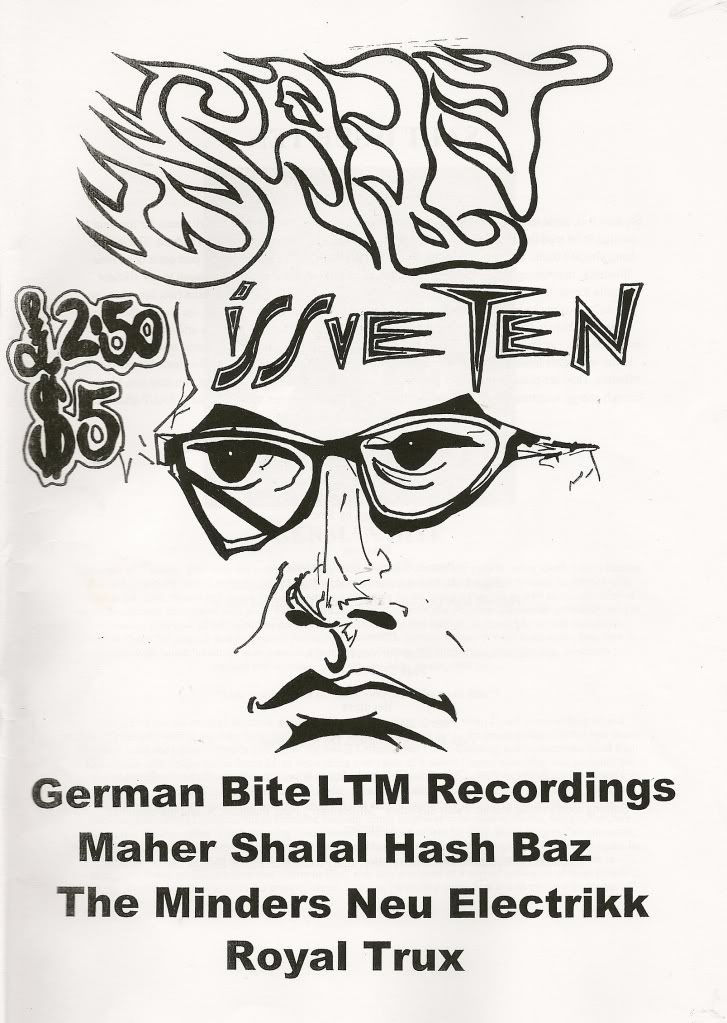
SALT : Issue 10


When I got back from Germany last weekend, I was very pleased to find that the new issue of SALT was waiting for me on my doormat. Being approximately as old in years as it is now in number, I believe, SALT is produced by one Kevin McCaighy whose enthusiasm for all that he writes about, both thoughtfully and in depth, is extremely infectious and always an absolute joy to cast the old peepers across. Keen to scour the darker, often unexplored corners of popular culture, Kevin draws his subject matter from all areas of his far reaching and highly individual tastes, each issue reflecting what's turning him on from the current crop, as well as unearthing histories long buried in the ever expanding morass which is popular culture, winkling out some fascinating and highly engaging interviewees in the process. Drawn towards the obscure, experimental and compendious, regardless of trends, SALT is the expression of a genuine and tireless investigator who has a compulsion to share his enthusiasms with an audience no matter how small that may be. He's a good friend of German Bite, too, and most definitely a kindred spirit.


For me, this issue has as its centrepiece eleven pages of A4 devoted to an interview with Steve Parry who talks of his early influences, move down to London from the north in the late seventies and the milieu into which he fell, this including the young Matt Johnson then laying the foundations for The The. He also tells the story of his band Neu Electric / Neu Electrikk who released two 7" singles - "Lust of Berlin"(1979) and "Cover Girl"(1980) - but remain most famous for their contribution of a track to Stevo's "Some Bizzare Album" released at the dawn of 1981 and which, as we are repeatedly made aware, gave very early exposure to Soft Cell, Depeche Mode, Blancmange and the aforementioned The The, as well as other more experimental artists like Eric Random, almost rans like B-Movie and Naked Lunch and assorted nutcases such as Blah, Blah, Blah. Keen to drain every drop of info as he possibly can through his questioning, Kevin has managed to produce an essential, unique and detailed insight into the period which would otherwise most definitely have remained unearthed.


Elsewhere, he interviews James Nice of LTM Recordings who also wrote the fantastically comprehensive labour of love about Factory Records that is "Shadowplayers" a few years ago, this being one of the very best music books ever in my view and so beautifully packaged, too. Another kindred spirit, methinks. Other interviews include a vintage piece from 2001 with The Minders who, I must confess, were a new name to me until now but such is Kevin's enthusiasm that I shall going off to do some researching very shortly, as well as a few questions answered by my very self about German Bite and its origins. This is also coupled with pieces about Maher Shalal Hash Baz and an extremely heartfelt piece about how Kevin fell in love with Royal Trux and why they remain his favourite band to this very day. It ends with a short obituary of the abstract painter John Hoyland RA, who died last year, written by Katharine Simpson, one of whose paintings is reproduced, albeit, unfortunately, not in colour within this issue. Overall, it's a totally superb read and one I keep picking up and browsing through again and again, even though I have read the majority of its contents at least three times already.


It costs £2.50 or $5 and Kevin can be contacted by email at kevinmccaighy@yahoo.com . I don't think he gets a tremendous number printed up, though, so it may be worth dropping him a line sooner rather than later and, whilst you're at it, may I suggest asking him if he's got any copies of Issue 9 left which contained a fantastic piece about the aforementioned "Some Bizzare Album" for which he interviewed one Beverley Glick, she once called Betty Page and a champion of all things electronic through her writing in "Sounds" and the short-lived grown-ups alternative to "Smash Hits" called "Noise", this alongside interviews with Pyha, Carla Speed McNeil, 13 and Korperschwache, as well as pieces on Jason Lytle, Grandaddy b-sides and "A Guide to Great (Fairly Inexpensive) Vodka. Getting the picture? Zum Wohl, Kevin!