Saturday, 5 October 2013

The Sound of Geri Reig – The Original Tapes of 1979

 photo DerPlanGeriReigfront_zpsf045f974.jpg 

Der Plan’s “Geri Reig” was mentioned in these pages about a year ago when the fantastic Bureau B label reissued this debut album of 1980 along with other Ata Tak releases from the period. Now, are there any others on the way and are the next two Andreas Dorau albums, the ones he released on Motor in the nineties, going to get the same lavish BB treatment, one has to wonder, nay entreat. It’s turning into a long wait, this one, made all the more frustrating by there being no guarantee of an outcome. 

Anyway, to get to the point, a vinyl copy of the aforementioned album has made its presence felt at German Bite/Friedrich Strasse HQ for many years, its odd title serving to greatly perplex over time. OK, it’s a homemade genre of music, perhaps exclusive to the band, I gathered, but how do you pronounce these words? Geri with a hard ‘G’ as in “Du bist gegen Gegen” by Cyberbeatnix or with a soft beginning as in ‘Germany’ or “Jerry”, the wartime nickname given to those from whom Der Plan descend. In fact, is this latter word the origin exactly for the first of this confusing pairing and, as for its partner, is this a one or two syllable entity? Taken phonetically, are we being introduced to a post-punk, synthetic, LSD infused German interpretation of reggae? Certainly, amongst all the twisting, reversing, speeding up and slowing down, sometimes spooky, sometimes kindergarten-sounding madness of the album, the rhythm can get a little bit springy at times. Nowhere is this more obvious, actually, than on the album’s title track where the words “reggae reggae”, in true Levi Roots style, are repeated over and over in a kind of duet performed by what sounds like one of Alvin and the Chipmunks and an altogether less cutesy counterpart.

 photo DerPlanGeriReigbackcover_zpsdb94cce1.jpg 

Pulling to hand an English-German dictionary and doing a little research serves to shed some additional light. For example, scour the pages of Jürgen Teipel’s indispensible oral history of the punk and post-punk scene in Deutschland “Verschwende Deine Jugend” (to the uninitiated out there, it’s like a German “Please Kill Me”), for anything Der Plan related and a crumb or two mehr can be found. Here, in a little section midway through, all three of those who would eventually crystallise into the trio we know and love speak of their original intentions. Frank Fenstermacher goes first, talking about how they wanted to inject a humorous element into their music, this going against the grain of the prevailing “all must be earnest” doctrine of the day. Pyrolator comes next, explaining briefly how the band’s members committed punk suicide by publicly declaring their love of the music produced by 1950s/early 1960s teen film starlet Cornelia Froboess who’d had her first hit in 1951 at the age of eight with a song her father wrote called “Pack Your Swimsuit”. They’d also grown rather fond of things like airport and elevator music and decided that what they were going to produce would be completely different from the efforts of everybody else. Then Moritz R®, who it emerges was the main instigator of all this, speaks of wanting, like a lot of those on the scene over there at the time, to break away from the American tradition that had dominated pop music in Germany for so long. However, this didn’t just mean refusing to sing in English, as was the stance made by many, but also to try to produce music that sounded German, too. Dismissing the popular Schlager genre as too laden with transatlantic influences, he came to the realisation that only nursery rhymes fully reflected the nation’s traditions and that this, in fact, was no bad thing as it corresponded nicely with ideas he’d brought back from a visit, rather ironically perhaps, to America where he’d been involved in making primitive music using the likes of plastic bowls. This, he and friends had christened “jerry reeg”, to improvise through the use of makeshift, patched-up and temporary devices. So, armed with this philosophy, viele tabs of acid, messages transmitted to them by the dead during trippy midnight walks in local cemeteries and a little problem still to solve regarding which of them was going to sing, they set about recording their album. 
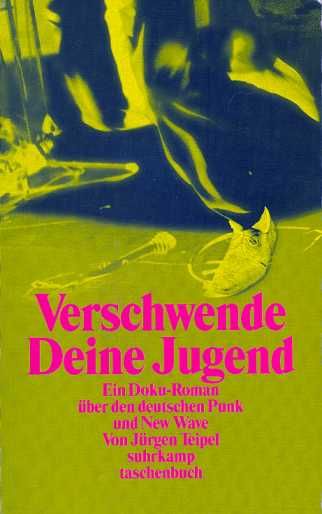
 photo VerschwendeDeineJugend_zps06237cdd.jpg           photo DerPlanbook_zpseffc0c34.jpg 
 
Open up Moritz R®’s own autobiography, “Der Plan: The Splendour and Misery of The Neuen Deutschen Welle” and you will find a short chapter titled “Amerika, California and Disneyland” in which more detail of his aforementioned visit to the US of A is recounted. He begins by telling us that he’d travelled via London, where he’d visited Genesis P-Orridge at Beck Road and played him the earliest Der Plan recordings, hoping he’d agree to releasing them on Industrial Records. His host seems to have been reasonably receptive, but not that receptive, and a similar visit to Green Gartside of Shitty Politti revealed that his boat was definitely not floated by what he heard. A Residents badge was bought there, I’ve subsequently found out, and once stateside, courtesy of Freddie Laker, it seems our hero was spotted at San Francisco’s Deaf Club by a young couple who were impressed by this seemingly insider item pinned to his shirt and, introducing themselves, they invited him to stay with them in San Jose, an offer he summarily took up, seemingly to their surprise once her arrived. The story then goes that the initial frost caused by this faux-pas was melted when conversation turned to music and the Americans (Greg, Cindy, Pete and Sharon) were impressed by the first of the two visits Herr Reichelt told them he had made whilst in London. Greg, it seems, then rebounded the wow-impact by talking of Geri-Reig a new style of music he’d devised which was produced by using the simplest of means, the name deriving from the process of jerry-rigging, improvising or making use of something temporarily repaired. This struck a chord with their visitor’s already percolating ideas and when he returned back home to Germany he was keen proselytise. 
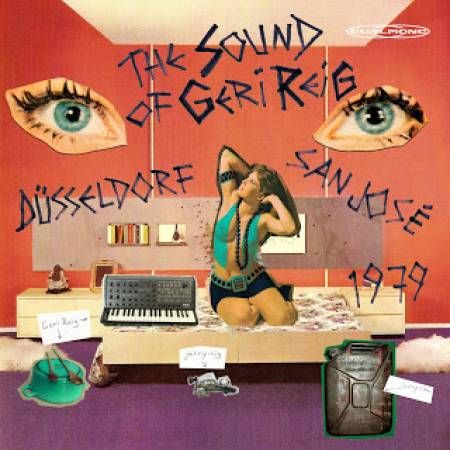
 
 photo SoundofGeriReigfrontcover_zps10877602.jpg 

This is all very helpful, indeed, and even more helpful was the recent release of an album “The Sound of Geri Reig”, on the brilliantly named Kernkrach label, which finally puts the mystery to bed and reveals a whole host more besides. However, before we get back on to the story and then the music, let’s get the definition straight, as casting your eyes to the top right-hand corner of the album’s back sleeve, you find two complimentary definitions which I make no apology, given the circumstances, for quoting in full.

1. Jerry-rig:
to fix or put together using non-standard or improvised materials. A derivation of jury-rig, from the nautical term jury mast. This term refers to a temporary mast raised when the normal mast has been lost due to storm or battle. This is probably a short form of injury mast. Not to be confused with Jerry-built, which refers to an original construction of poor quality.

2. Jerry-rig: To fix an object (usually mechanical) to a working condition in a haphazard way. Also known as doing a MacGyver on it. This can apply to any non working thing, to fix it in a nonconventional way. This term was created during WW2, in reference to the Germans who were referred to as "Jerries" as slang. Allies often came across hastily repaired objects left by the Germans hence the term Jerry-Rig came to be.

Relocate your peepers onto the other side of the back cover and below the head of a child happily entranced by the live sounds of Geri Reig, a panel of text tells the story from above with greater clarity and accuracy of detail, one assumes. It begins by stating: “When Greg Oropeza and Sharon Nicol coined the term ‘Geri-Reig’ in the hot summer of 1979, they were thinking of a music so totally home-made with the simplest of tools you could find in any kitchen and toy instruments from your still operational children’s room, that the result would be completely novelty(sic.) for its lack of musical professionalism. Performed by uneducated youngsters in virgin innocence it would also expose the unruliness of youth in its pure natural state.” It sounds a bit like Jean-Jacques Rousseau crossed with the punk d.i.y. ethos, to me. Listening to The Ventures, never a bad idea, says I, and banging cooking pots with wooden spoons became their order of the day. The Residents badge story is then re-told, although the location has now shifted from The Deaf Club to The Mabuhay Gardens. The Düsseldorf connection we’re then told was forged over “two kinky mind-boggling weeks” they spent together often “sitting on giant concrete bank reinforcement tetrapods of the docks of Santa Cruz, high on acid, eating a pineapple together and being surrounded by a surreal scene of nightly biker gatherings.” They vowed there and then to make the concept of Geri-Reig a reality and this they did, rather less ambitiously on one side of the Atlantic than the other, history suggests.

 
 photo SoundofGeriReigbackcover_zps7906596e.jpg  


“The Sound of Geri-Reig” gathers together sixteen examples of recordings surviving from the period, flip-flopping pretty much throughout from San Jose to  Düsseldorf  and back again as the listener progresses across the album’s two sides. They’re introduced, it at first appears, to six different bands plus one collaboration, some of the recordings rawer than others and, one assumes, often captured by basic means. However, read the small print and you’ll find that, really, there are just two bands featured as: Wonders of Science, The Prehistoric New Wave Singers and Der Swingerschnitzel are Greg Oropeza, Sharon Nicol, Pete Millman and Cindy Fahey; Der Karmann Ghias, Weltsaufstandsplan and Der Plan are Frank Fenstermacher, Moritz R and Kurt Dahlke.

So, what of the music? The American contribution is much more primitive, it quickly becomes evident, whilst the German one, unsurprisingly, is more technologically infused, through the inclusion of Pyrolator’s Korg MS-20, an instrument seemingly ubiquitous on the country’s new wave scene at the time. “54321” by The Prehistoric New Wave Singers is a short ditty which opens the shebang, combining Manfred Mann with a Three Stooges nerdiness, also bringing the efforts of the Wiggin sisters, released under the name of The Shaggs, to mind, as well as the spirit of the Kasenetz-Katz / Ohio Express / 1910 Fruitgum Co. empire. Then the rhythmic, shape-shifting squelch of the Germans first appears in the form of the instrumental “Dark Porno” which featured as a bonus track on the Bureau B re-issue referred to several paragraphs ago. “Gondo Jundi” by Wonders of Science could be the product of the same band, although pianos, a bass guitar, plastic-sounding drums and the contents of the cutlery drawer sound to have been brought together in its making. Like a lot of the songs on here, The Residents are clearly an influence, as it sounds as though it could be a nascent outtake from either “Third Reich and Roll” or any other of those early albums, this being unsurprising given the button badge which had brought these people together. Moritz R® also tells us in his book that he’d made a pilgrimage to his heroes’ San Francisco HQ prior to his San Jose sojourn. Weltaufstandsplan are a more tripped-out, less disciplined, if such a thing is possible, incarnation of what was to follow and tracks like “Heinz, Komm Zum Feuer” make for quite creepy, un-easy listening, this one probably resulting from those “trips” to the Friedhof previously mentioned, one assumes. Again, the darker moments of The Residents are echoed. Like some early Der Plan tracks, the music on “Two Kellys” by Der Schwingerschnitzel sounds sped-up, whilst over the top quite an accomplished, by these standards, song is delivered, the resulting distorted ditty reminding this listener a little of other American post-punk experimentalists from the period such as Monitor, Ki Di Me and Crash Course in Science. Weltaufstandsplan’s Resident-sy “Money Honey” then sounds like an electro-acidic Honey Monster playfully thumping his chest. 
 
 photo DerPlanphoto_zps1638cdc4.jpg 

And on it goes. “Mary Mary” by The Prehistoric New Wave Singers, which opens the B-Side, like their first offering, brings a pop hit of yore to mind, this time The Monkees, although intentionally more naively and pre-pubescently executed, of course. Again, the outcome is more sing-a-long song structured than other offerings found on the album. The German variant is again more elektronische in delivery, both gloopy and spiky at the same time, “Es ist Hegel” by Die Karmann Ghias sounding how I imagine Dr. Who’s Daleks would have were they German, lysergically charged and let loose with a bunch of synthesizers and such like effect creating devices. Die Schwingerschnitzel then re-appear with another squeaky ditty. Unsurprisingly, a number of the tracks clock in at under two minutes (sometimes under one) as does the one just mentioned and the two that follow, by Die Karmann Ghias and Wonders of Science, and are sometimes more like sketches rather than fully-formed entities, all the while, though, supporting the spirit of the genre. “Why Don’t We Dance” by Weltaufstandsplan is longer, though, and reminds me a little of a track from the first Der Plan 7”, recorded when their line-up was more fluid, as was their sound, in its powerful, sinister abstraction. Sinister is also a word I would use to describe “Mommy Says” by The Prehistoric New Wave Singers, the swampy music rumbling and occasionally soaring whilst a childlike vocalist whines and laments a tale of pain, domestic abuse and death, the lyrics barely audible, even if you strain. Then the set (is it right to call it that?) ends with a genuine Residents connection, as the departure track “Abschied” is credited as a collaboration between Der Plan and N. Senada, the “Bavarian composer and music theorist”, who was conjured up, my research tells me, by those mysterious S.F. residents and rumoured in some parts to be none other than Captain Beefheart. It’s a valedictory, quite chirpy for these bedfellows, yet rather unstable, whistled piece of lightweight almost tunefulness, accompanied by what sounds like a piano and one or two other less classical elements, I assume. It certainly leaves everything hanging in a state of confusion which, of course, invites another listen to Side A and then Side B again.

Like so many releases on vinyl these days, “The Sound of Geri-Reig” is a limited edition, this time to five hundred numbered copies, and a short promo video exists in cyberland to whet the appetite of potential punters. Here it is.


Astral Pattern-Light Poems


  photo AstralPatternphoto1_zps056b2a88.jpeg

When the demise of S.C.U.M. became apparent around this time last year and then formal a few months later, I couldn’t help but feel a little bereft as they’d developed into one of my very favourite bands of a long time. As they’d grown and developed, their powerful electronic drone and gothic theatricality had tempered a little, too, and begun to mix perfectly with a more song-centred leaning and a sly, synth-pop sensibility which was exemplified brilliantly on each and every track on their stunning 2011 album “Again Into Eyes”, an absolute highlight of the millennium for me, as were the majestic singles which accompanied it. Finally, their version of New Order’s “586” which came on a magazine freebie CD also blew the socks off anything else around and acted as a perfect epitaph to this once wonderful band.

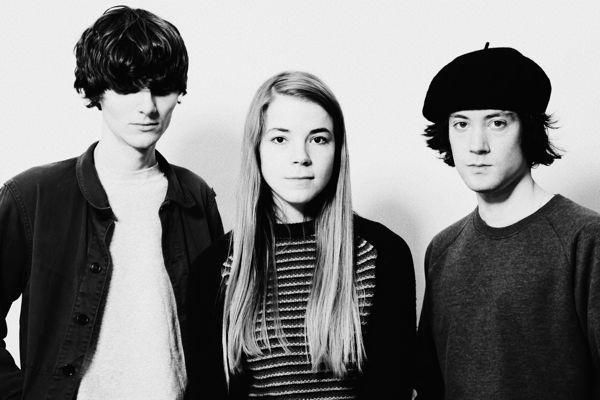
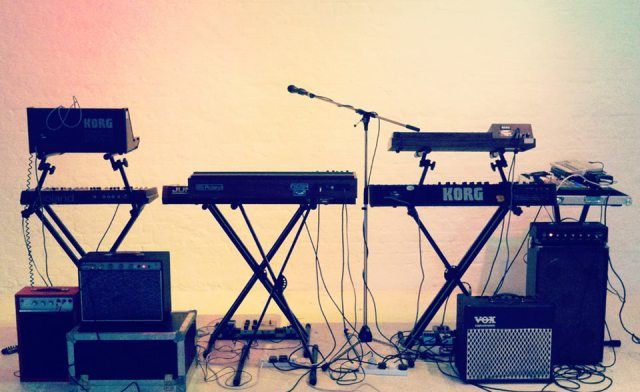
It was a shame they called it a day but, of course, not everything can last, as we know. Time moves on and new shapes emerge around corners, one of which is Astral Pattern, formed out of the ashes of the aforementioned S.C.U.M. and comprised of three of their five members, the less volatile contingent one assumes. Apparently, a move across London to a new riverside work space, where the views of free-flowing water and the comparative calm of being in a less obviously urban environment have combined with the influence they took from a trip to see Kraftwerk in Düsseldorf, thus creating a sound which is still dominated by vintage analogue synths, more so in fact, with Melissa Rigby switching from behind the drum kit to vocals and keyboards and Hugh Webb also joining Bradley Baker in this role. The baroque intensity of their previous band, it seems, has been swept aside, as though with one of those cloths from a television advert for a cleaning product, revealing in its place a fresh arc of sonic Kristine Sparkle, sorry, I meant sonic pristine sparkle.

  photo astral-patternphoto2_zps4fc85faf.jpg

In the small amount I have read about them, their efforts thus far have been described as psychedelic dream pop and the photographs currently displayed on their web page reflect this, too, as there are ones of the inside of a shimmering, sun-kissed wave and the cool minimalism of what looks like airport architecture, as well as several evoking space travel and, more specifically, the floaty, weightlessness of scenes from “2001: A Space Odyssey”. Still relatively new and low key, although You Tube evidence shows they played live in London in July and, I believe, they also guested at The Horrors’ Cave Club a few Saturdays ago, they did slip a five track 12” EP out a couple of months or so ago on the 37 Adventures label.

  photo AstralPatternsleeve_zpsa792b2c7.jpg

This begins with “Properties of Colour” a highly fluid, poppy instrumental possessed of all of the optimism you could expect from a new band, sparkling (yes, that word again) and fresh, the clean layers of sound you hear on the record being perfectly encapsulated in the track’s highly apt title. It reminds me of a couple of glorious instrumentals Blancmange released during my boyhood, especially “Heaven Knows Where Heaven Is”, if you remember that one, and it also has something of Kraftwerk’s “Neon Lights” about it in the way it rolls effortlessly and elegantly along, although the illumination here isn’t at all artificial as an airy, brightness suffuses the whole scene, like a warm breeze wafting out of the speakers. After about two minutes it peters away gently, having acted seemingly as both an introductory statement of intent for the rest of the EP and a palette-cleansing aperiftif, before we move on to more substantial courses, although barely so, as it turns out.

“Sitting in the Sun” is perhaps the collection’s lead track. Certainly, a video was made for it and was put out there a few weeks preceding the release of the record. Here vocals are introduced and the dream pop label is, perhaps, best befitting as, again, title and sound are perfectly married together in another gentle, breezy, sun-drenched song which provided a perfect soundtrack to the bright, long summer days in which it lived and breathed its first. Words like shimmering, crystalline and ethereal spring to mind and I can a little appreciate why the shoegaze epithet I saw attached to Astral Pattern has been done so. I was never keen on that particular genre myself, too gloomy, drifting and self-concerned for my tastes. However, this does share a kind of insular cocoon-like vibe, a bit like music from the womb, and blows around softly like the seed-head from a dandelion clock. It has a brighter, electronic iridescence to it, though. If it has to bring anybody from that era to mind, which it doesn’t for me especially, it’s Ultra Vivid Scene and their almost pointillist, colour-drenched video for “Mercy Seat”.

“Light Poems” is again a well chosen title for the instrumental which closes Side A, as gently moving, light flicked water is conjured up in the mind's eye, textures and patterns glistening and gleaming as they surge slowly but purposefully by. The influence is clearly German, as they seem ready to admit in interviews, a track from an earlier Kraftwerk album or the Cluster / Brian Eno axis here, perhaps, as ambience is the key word and a pair of audial sunglasses might be recommended, too, if you’re intending to stand up quickly too soon after listening.

 photo AstralPatternphoto3_zps5aa84f77.jpg

“When We’re Falling” rolls what I feel characterises both “Properties of Colour” and “Sitting in the Sun” into one perfect blend, a beautifully crafted, lightweight pop song which has the dynamism and mood of a glorious summer evening car drive, windows down, breeze blowing in. Again, it makes me think of Kraftwerk in its use of tones and layers – the gentle electronic sounds which circle through and swish by from time to time are gloriously evocative of both the air and the birds in it, as well as the 3-D elements of the German's live show which move towards the listener / viewer in similar fashion – and just the right amount of economy is employed to create a perfect sonic atmosphere. Orchestral Manoeuvres in the Dark songs, the ones sung by Paul Humphreys rather than Andy McCluskey, from their late seventies/early eighties heyday before the rot set in, come to mind now, too, mainly as a result of the vocal delivery. A gorgeous beauty, this one is!

Last up is “Faraway” which I think was also promoted as a single, as far as these things go these days, as there is again a video. In line with expectations, the tone is maintained here, too, and another accomplished, seemingly uncomplicated and uncluttered pop song ensues, the “floating away” lyrics extending the imagery of the previous four tracks and also heralding the fact that the record is drawing to a close. Here I’m reminded a little of the mid-eighties Factory Records releases of The Wake in the uncloyed clarity, simplicity and cleanness which one elicits from a listen.

I believe a new record is planned before the end of the year. Maybe, if we’re lucky, they’ll take to the road. I keep fantasising that they’ll be in support when Factory Floor (God! Their new album is superb!) do a few dates around the country at the beginning of December. Here are a couple of videos for now, though.


Unfortunately, I can’t say that I’m convinced by the beret and dungarees, I’m afraid; it makes them look a bit like a synth-pop Rod, Jane and Freddie , I sadly feel.

Saturday, 4 May 2013

Sniffs-Black Glass Floor: German Bite Records BISS01.5

 photo SniffsSleevePhoto_zps488a6488.jpg

It's a little over a year and a half now since I first wrote about a new and intriguing Leeds duo, Sniffs, then only a few months old and with their first two gigs just performed during the summer months of 2011. As I did so, they stood poised to play for the first time out of town, supporting The Monochrome Set in Newcastle, this being an occasion where, once again, they won round an audience initially bemused but soon to warm to their blend of highly controlled yet seemingly wild layers and loops of guitar, buzzing, flashing and swooping electronics and forceful, declamatory vocals, these sometimes treated and echoing as they feed through synthesizer and kaoscillator, sometimes natural, sometimes both at the same time, but always regaling with twisted vignettes of death, defiance, passion, paranoia and a whole lot more besides. Again, on that night, as over the preceding weeks, people tried unsuccessfully to draw comparisons in order to explain and place Sniffs at some reference point. Early Patti Smith was mentioned, Suicide, too, maybe The Shangri-Las but none would suffice in the least. I think it has to be said that, although influenced by a whole bag of things, some peeping through on occasion, others not so obvious on the surface, Sniffs have distilled and shaped what turns them on into something both unique and massively attractive.

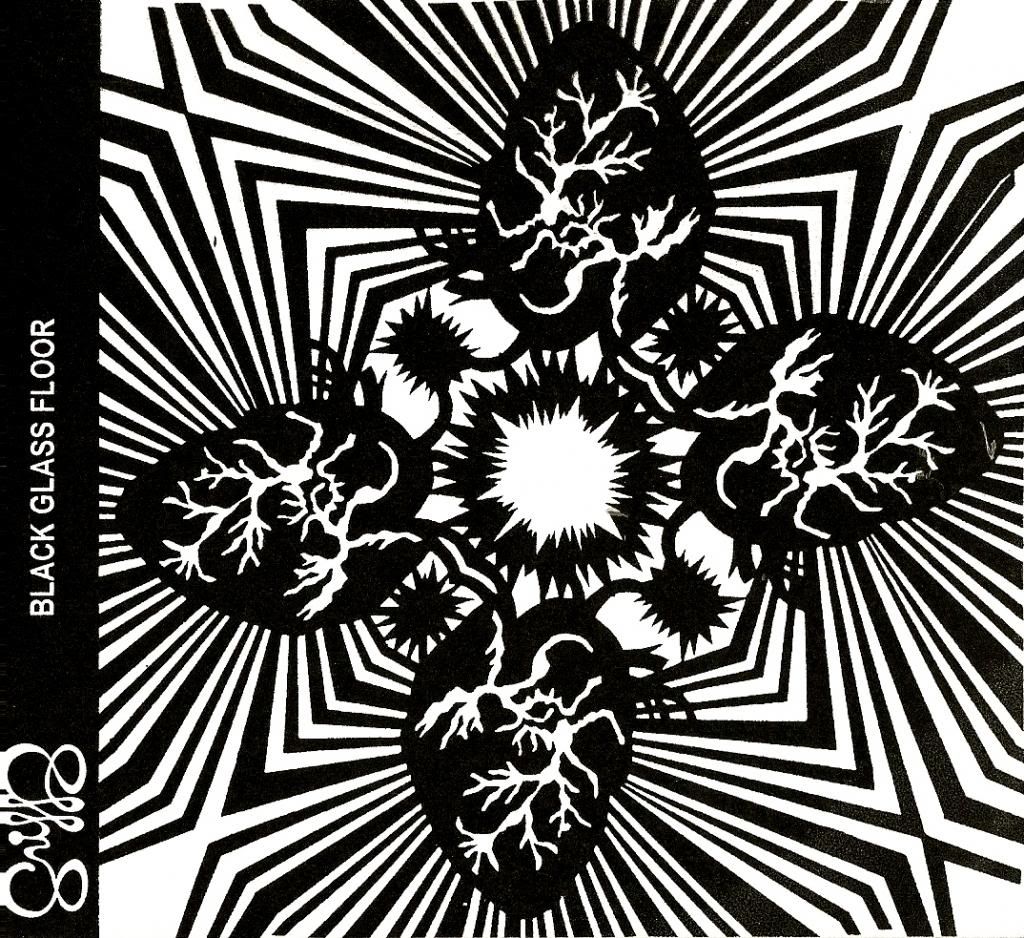
In the months which have followed, it would seem that not an enormous amount has been going on. They've only played out sporadically, their gig count nudging double figures at most, I would imagine, and the first set of demoes they recorded in an attempt to capture their early live set on a multi-track was only circulated rather tightly amongst a small set of supporters. However, in private, there has, in fact, been much activity occuring as the pair have worked pretty tirelessly to refine and develop their sound, both through the acquisition and incorporation of new equipment and the writing of so much new material that they don't really know what to do with it all. Now, though, following a second set of home recordings and in an attempt to make available some of their earlier songs which are in danger of being superceded and lost into the recessess of history, they've packaged together a CD so that people attending their next gigs will have something they can take home with them. It's a beautifully designed, ten track affair, taking live highlight "Black Glass Floor" as its lead number and, with them being old and close friends of German Bite, we've decided to make it a joint release and give it a half catalogue number prior to our hopefully collaborating on something of a vinyl nature in the near(ish) future.

 photo SniffsFrontCover_zps233e9745.jpg

“Nous Sommes Les Sniffs” opens the set forcefully and in a beguiling and vaguely disorienting fashion with what sounds like a door slamming, a starter pistol acting as ignition for something akin to a guitarist tuning up, only this, it quickly emerges, is on a loop. Round and round, over and over it goes, building gradually to quite hypnotic and dizzying effect, both droning and attempting to squeal at one and the same. Over the top, tension starts to build with the addition of random electronic droplets, pittering as they’re tapped out on some piece of techno hardware. Suddenly, and unexpectedly, the vocals then rush in, like a strong gust of wind down a chimney, barking swiftly and self-importantly the words: “Nous sommes less Sniffs! Vous portez le chiffon!” - three times, like all good incantations, before being sucked off giddily into an electro-vortex. The listener is left with a feeling of having been spun around sharply or maybe having experienced an aircraft fly by at Mach 1. Although a little sketchy compared to other Sniffs numbers, this is an important piece which dates back to their very earliest days and, as the title suggests, has been used as an opener to their live set, acting as a statement of intent in triplicate which sets out the duo’s stall attitudinally, sonically and aesthetically in just ninety seconds and, by its conclusion, leaves the listener in no doubt as to where Sniffs’ values lie. “Hey! Hey! We’re The Monkees”, this one ain’t!

Another early number is “Black Glass Floor” which follows, a drum machine kicking off proceedings with a simple and instantly recognisable beat  which evokes sixties girl groups and the death disc genre to which it lovingly pays homage. The tone is further set by the twang of a guitar, then a rather pretty, subdued melody begins to be strummed and picked out so that, with this backing established, the tale can begin: “We were so happy that night, Jimmy and I, getting dressed up and looking so good. As we walked down the street to the disco, a car whipped round the corner and crashed on the black glass road. We were so happy, we just laughed. They were alright, just hurt. We kept on walking.” Flashes of white noise sweep across the proceedings, providing a sense of urgency as the vehicle careers out of control and a helpless and rather portentous echo is added to the voice, more of which later, as festivity quickly turns to tragedy. “BGF” is unusual amongst Sniffs numbers in that it is quite traditionally structured with verses and a chorus refrain, the first occasion for which has now arrived, as our narrator tells us: “Jimmy can dance. Oh! Jimmy, you’re fine! I’m so proud that you’re mine, all mine. Jimmy can dance. Oh, Jimmy divine! Oh, so happy, gonna burst inside.” The tale then continues, our protagonists having reached their destination, with friends laughing and Jimmy stealing the show, at least in one person’s eyes. All’s well until she returns from having a cigarette, swelled with pride, to find her lover doing what he does best, “his new Cuban heels, stomping, stomping on the black glass floor.” He’s something of an ill-fated, pre-destined character, like those from classical tragedy, it seems, as suddenly he slips out of control, just like the car before him, the black glass floor now covered in an inevitable pool of red. “NO! NO! NO! NO!” Our storyteller’s screams echo in horror and despair, as she watches Jimmy’s life slip away, just before she launches into one last poignant chorus. Don’t worry, though. She’s a tough cookie, this one. She’s soon over it, as she reassures the listener with no mention of poor Jimmy: “I’m alright, just hurt”. This number, although not wholly representational of their sound, has become quite a favourite amongst those who’ve seen them live, hence its title leading the whole kaboodle, here. You could call it their Greatest Hit, thus far, if you like.

Track number three, “(Do The) Rotation”, one of a second wave of Sniffs songs, pretty much does what it says on the tin, I feel. An eddying gyre from the outset, it drags the listener around woozily, similarly to the way that double-holed Boyd Rice single does when played off-centre. A peremptory vocal straightaway instructs the increasingly enchanted listener to, well, “Do The Rotation”, looping and spiralling to quite dizzying and mesmerising effect. Meanwhile, what had started out as quite innocuous rhythm guitar soon takes a sinister twist, quickly layering into a Velvet Underground-ish chaos and an underlying pulse of a siren adds further force to the maelstrom. After a minute or so, it begins to consume itself; the vocals begin to become suffocated, like a drowning man sucked down by the circling current. In spite of a few valiant attempts to resurface, the momentum’s too strong and, before the two minute mark is again reached, the fight is over.

“Macho Bravo, Bravo Tango” roars track number four rather fizzily, the first pairing providing its title. There’s a twanging, Cramps-y raucousness to this one, something akin to an early-ish Fall number, too, only lacking the beat, both in the way that the vocals are partly delivered with a cocksure swagger and the guitars rhythmically career and slice out a captivating groove which then grows to quite thunderous proportions at times, the song being structured in a series of waves. Two microphones are traded, a la early Diamanda Galas, one untreated, the other dalek-ised, as the word “Sensational” is repeatedly puked and lashed across proceedings, this vocal dominatrix asserting her mastery over the situation as she weaves another of her perverted little scenes. Is she cunningly concocting her own version of the phonetic alphabet? Is she the mastermind of a criminal syndicate or a gangster’s moll? Is she simply on the pull? It’s not tremendously clear. An early track, too, this is a real Sniffs tour-de-force, combining looping guitar filigree with a strong rhythmic foundation, whilst an assertive and electronically distorted top layer lures the listener through domains both exotic and slightly dangerous. Sensational (and bitterly delicious)!

As we reach the halfway mark, my two favourite Sniffs tracks rear their heads, one relatively new, one having been there from the genesis. “Eyes” which will have recently celebrated its first birthday has a tone not heard thus far, being propelled along by a deep, sequenced, thrumming bass groove which you’d think was created by the synthesizer, if you’d not had it personally explained to you by the guitarist from whom it emanates. It feels like a slightly swampy D.A.F. number, perhaps, whilst remaining a million miles away from their disciplined, coaxing, sexquencer generated disko. As the first layer of circling guitar kicks in, cascading and sweeping like a psychotic take on rockabilly, you feel a little like one of those helpless passengers aboard Mark Gertler’s hellish merry-go-round ride. More guitar then starts to weave and ascend, dropping discordantly and a tad incrementally as soon as any sense of expectation has been established. The process then recommences, and seemingly without pattern, to most discombobulating effect. Meanwhile our vocalist is, on this occasion, in complimentary mood. “I like eyes. I like your eyes,” she echoes and purrs with insane glee, having hummed ominously over the intro. “I like your eyes. I’m going to take them and put them in a box. I’m going to keep them with all my pretty rocks. I like eyes.” The spell is once more cast three times, with ever growing lapidarian delight, all this pumped along hypnotically and with the addition of a cautionary siren effect, before this lunatic charabanc disappears over the brow in search of its next victim.

 photo SniffsBackCover_zpsdf5e747b.jpg

“Pictures” is a clip-clopping, paranoid, preening, petulant, spoilt little princess of a number which never fails to delight these ears, having done so from their very first performance two summers ago. Our heroine seems a little on the defensive this time, as she complains that she’s been hurt, that her flash won’t work and that she’s down on her knees. She’s perennially ferocious and more in control of proceedings than we first thought, though, as she cries out repeatedly, both commandingly and a tad coquettishly: “No pictures! Don’t look at me! No pictures! Don’t Look at Me! Oww!” Guitars, in the meantime, squeal and twist, seemingly arbitrarily but clearly not so, before breaking occasionally into a temporary rhythmic clarity, creating short-lived space for the spotlight to become focussed sharply on the aforementioned vocal refrain before order is once again lost.

“Maria” is Mediterranean in feel but the spaghetti western warmth with which it begins is short-lived, as it quickly descends into darker tones, for this is a southern climate as refracted via Mario Bava, Dario Argento and Jess Franco rather than Ennio Morricone, José Feliciano or Raffaella Carra, even though the latter does, I believe, hold a place in the Sniffs pantheon. Supported by an unsettlingly perverse variation on flamenco guitar, our heroine is now a thwarted, love-crossed Hexe, seated at her crystal ball or tarot table, perhaps, as she accusingly declares: “Maria, I see. You’re wearing his ring...You and I shall meet, Maria!” A fight is soon contrived, a bit like in The Whyte Boots’ “Nightmare”; only our narrator needs no encouragement for her actions nor does she display an ounce of contrition as she stands atop her victim’s blood and hair, announcing with pride that the authorities are on their way to get her. Then, as she’s led trudging to her cell, the ghostly curse which has been there from the start repeats itself so as to follow poor Maria to her grave.

“Hello Luv / Good Girl” is a bit of a medley as two soupçons segue together to make a whole. The opening segment, another Sniffs favourite of mine, begins rather gently with guitars tinkling like crystals but you just know that this prettiness isn’t going to last as a more sinister layer enters the fray, strengthening the overall structure. Vocals are less confident this time round, however, feeling like an ectoplasmic visitation has seeped in and begun to circle the room, dancing in a gentle skein amongst the increasingly menacing guitars which thrum and gather momentum, circling, too, but with ever growing power. “Hello, hello – I think I love you. I think I love you”, the voice repeats, somewhat tentatively and in a muffle, twisting and reversing in on itself, like words spoken in tongues, trying to push through the clarity barrier. Then, just as it seems to be succeeding, rhythm guitar hooks us off unceremoniously to a fresh scene, this one another of rebel(ette) defiance, as a second prison-bound persona proudly unfolds her criminal story, asserting strongly: “Good girl! Good girl! I’ll never be a good girl, now!” Electronically treated at times, these words declaim and squidge over another intricately layered texture of guitars.

The set now draws to a close with two recent additions to the Sniffs repertoire. “Lonely House” is up first, its length of knocking on three minutes belying a new confidence compared to earlier numbers. The looping guitar is more bold, perhaps, than before, also more rhythm and riff oriented than those original songs, whilst also still retaining some of its less structured, plucked-out anarchy. The growing, catastrophe-bound element of so many Sniffs songs is once again in evidence here, as new, sharper, strident textures begin to enter the brew, combining with machine generated ingredients to dizzying effect. The tale this time takes us back to 1972 as our voice rather disturbingly begins to tell us of her first encounter with this “lovely” house. Once more, though, there’s something unhinged as she lovingly remembers its floors, walls, doors, windows upto the sky and the way the house smiled at her as she enjoyed it in solitude. Unsurprisingly, given what we’ve come to expect, tears, collapse, violence and malevolent spirits quickly enter the darkening whirlpool which, at the same time, has a tilted, cascading sense throughout, as though all is slipping gradually towards a precipice, both mental and physical. By its conclusion, rather subtly buzzed out rather than explosive, there is a vague sense of ruination of some sort or other. Have we experienced an Escher-like, Dali-esque dream?

Here we are, almost at the end, and Sniffs’ Roland SH-101 buzzes its way into the foreground on closing number “Bad Little Witch”, the sequenced notes of which make it sound like it was recorded in a wasps nest courtroom, our commanding vocalist reaching almost hysterical levels as she plays the role of Matthew Hopkins, snatched viciously from the grasp of Mr. Vincent Price. The voice ranges from something akin to Suzi Quatro or Joan Jett at times through to a screeching, supernatural witchiness of its own at others, as it puts its accused on trial, recounting charges of betrayal and lies before passing judgement: “Burn, witch! Burn, witch!” A more electronic track than any which precede, the guitar is still a strong ingredient, though, as it picks away in the background before swooping down bomber-like on occasion, adding power and gravity to proceedings. It’s a real palette cleanser on which to end, this one, and another favourite, I have to say.

Well, I sincerely that hope you’ve enjoyed this rather florid and effusive account of the Sniffs CD and that it’s made you want to catch one of their future gigs – there are, though, none lined-up currently, as I understand things. Maybe you’ll want to snap up a copy of this little treasure, too, whilst you’re at it and, of course, whilst you still can. I think they’re going to only make about sixty or so in total so speed might be of the essence. If you’re a bit too far out of reach, however, but still want a piece of the action, I’m sure we can sort you out with something, if you drop me a line. In the meantime, rather than taking my word for it, have listen to Sniffs on their Soundcloud page. Here’s the link:


Here’s three videos, as well, the first made by Rent Boy Dan Commons for “White Jaguar”, a number you won’t find on the CD, and then a couple filmed at the Monochrome Set show referred to above. These are quite old now but still stand up pretty well, I feel.


...and with tracks like their Manson Family number “Creepy Crawling” and the enticingly titled “Germany John” waiting in the wings, the journey is still, it seems, in its early stages. I’m trying to encourage them to do a cover, too, a version of Soft Cell’s “Metro MRX” which I’m sure they have the ability to interpret quite stunningly. Watch this space!

 photo Germanbitelogo2.jpg

Sunday, 14 April 2013

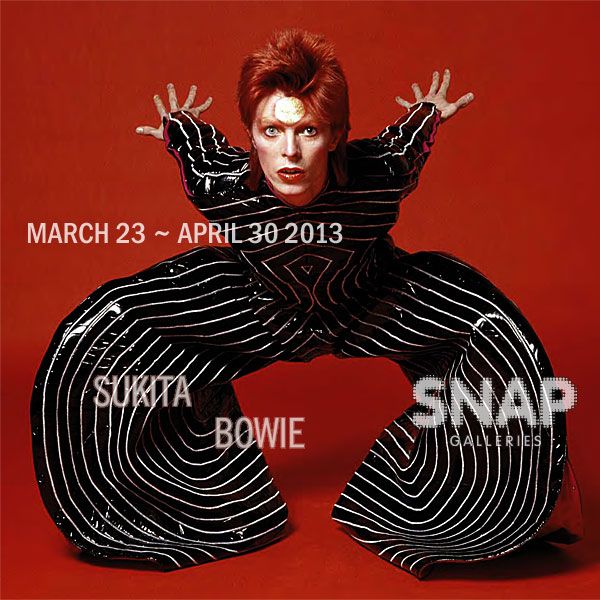
Masayoshi Sukita-Photographs of David Bowie 1972 to 2002:Snap Gallery London

 photo sukita_bowie_snap_exhibition_2013_600sq_zps86874e6d.jpg

The hot ticket in London at the moment, of course, is the big David Bowie exhibition at the V&A with every visitor slot sold out until God knows when and all the extension places instantly going like hot cakes and probably all snapped up by now, as well. Having seen the magnificent "Glam! The Performance of Style" exhibition in Liverpool a few days before my jaunt down south, I wasn't that bothered about missing out on a place myself. The debilitating disappointment was also tempered by a visit to a small exhibition of Masayoshi Sukita's photographs of the man at Snap Gallery in the Piccadilly Arcade, just over the road from the Royal Academy.

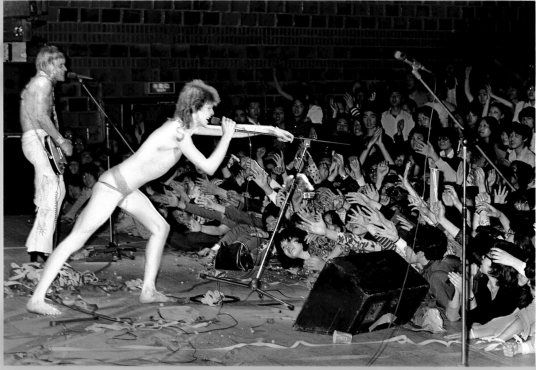
As the exhibition title suggests, theirs is a relationship which stretches back over forty years to a time roughly equatable to the release of the "Ziggy Stardust and the Spiders from Mars" album and performances he did shortly afterwards on the back of it. When Bowie played the Rainbow Theatre in London in August 1972, for example, Sukita was present with his camera, snapping his subject both on and off the stage, continuing do so throughout this era such that, in the early stages of this chronologically organised exhibition, images including the flame dyed feather cut, some in colour, others black and white, and some with him sporting the famous Kansai Yamamoto outfits abound.

 photo bowieimage_zpsa34a53b5.jpg

For many people, perhaps the most familiar photograph produced by the pair, and especially so at present as it has resurfaced, albeit occluded, for the sleeve of the latest album "The Next Day", is the German Expressionist inspired one which appeared on the cover of "Heroes" and a number of prints from this session are on display, too, as the exhibition progresses, the Berlin Bowie's hair appearing wild and lacking the more recognisable slickness in some pictures when compared to the one which was finally reproduced millions of times and became a staple in the record racks.

 photo david-bowie-by-masayoshi-sukita-at-snap-gallery-my-my-heroes-session_zps8b4d1d00.png    photo david-bowie-by-masayoshi-sukita-at-snap-gallery-the-next-moment_zps5c6f2dea.png

Then, down in the basement, the exhibition reaches its conclusion with images of an older, hoarily bestubbled early twenty-first century Bowie. Here, a figure with whom I am a lot less familiar stares out from inside the frames but it is still the same remarkable and instantly recognisable physiognamy so many of us will have seared into our psyches until the day we die.

 photo david-bowie-by-masayoshi-sukita-at-snap-gallery-never-get-old_zps3c3d52b1.png

Unlike the aforementioned Kenneth Anger exhibition, this one has a little longer to run, until the end of the month, and like that one consists only of two rooms so it is quite quick to get around. They're within spitting distance of one another, too, so will be easy to do in one fell swoop if you get your skates on and go before the end of the week. If you're rich, too, everything on display can be purchased, as all of the pictures are available in small editions signed by the photographer. Why not treat yourself?

 photo Bowie-20120830212812780262-420x0_zps02a629e0.jpg

Oh, yes and I never thought I'd hear myself saying these words: I like Bowie's new album, even if it isn't as good as the new Depeche Mode one which is fantastic.

Kenneth Anger “Icons”: Sprüth Magers Gallery, London

 photo KennethAngerApril20134_zpsde44a2ef.jpg

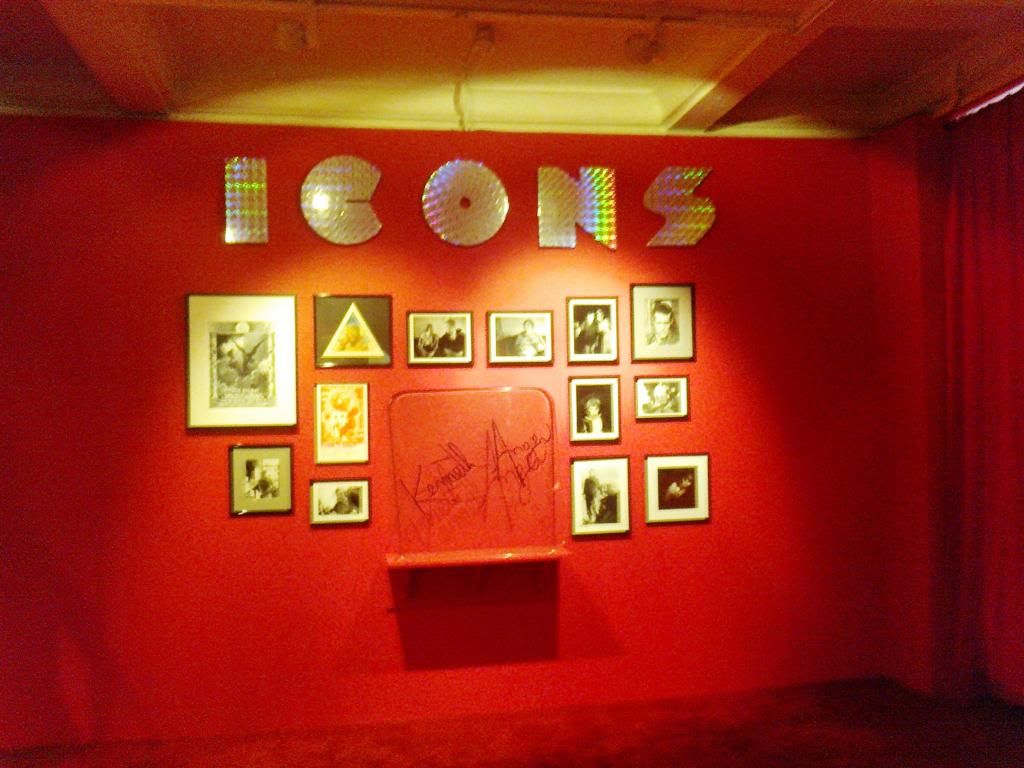
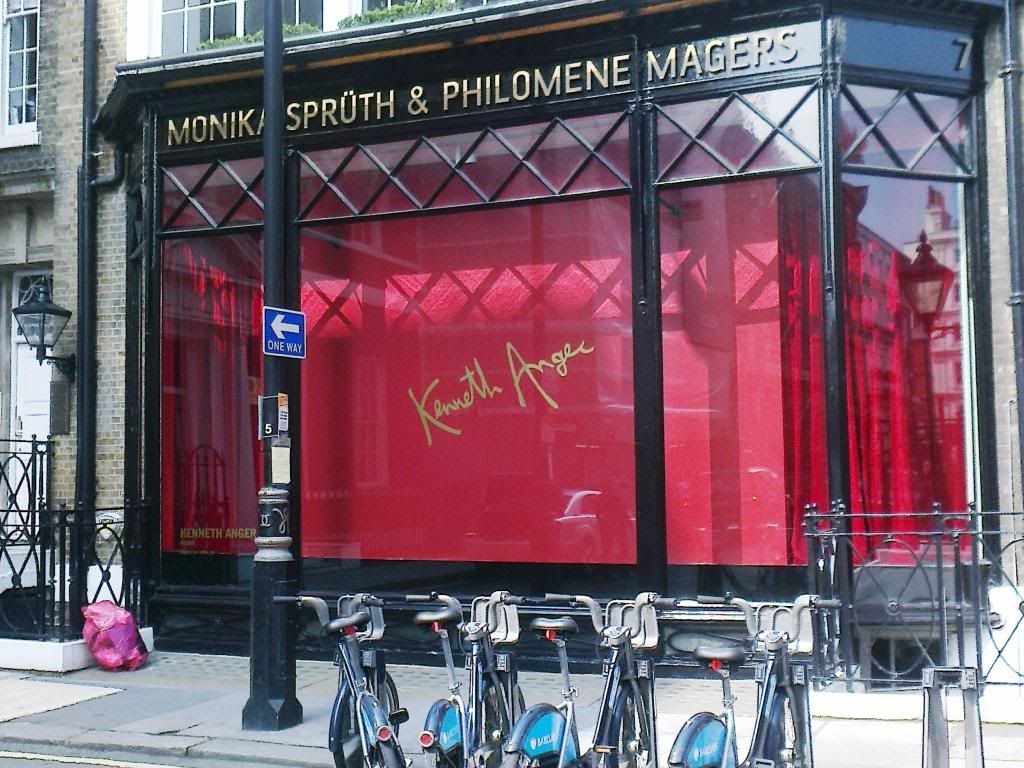
I had a few days down in London last week, catching up with people and getting round to see some of the brilliant exhibitions currently showing. Alongside the Kurt Schwitters retrospective at Tate Britain, my twin highlight was a small two room collection of filmmaker/artist/writer Kenneth Anger’s memorabilia at the Sprüth Magers Gallery, just round the corner from swishy Cork Street and upmarket Berkeley Square in Mayfair.

According to the press release, this is Anger’s second outing at the gallery, the first from three years ago having focussed more on his filmic output than this one which, alongside a peppering of exhibits related to his own work, ostensibly collects together photographs, newspaper clippings, scrapbooks, letters and paintings assembled and archived over the decades by the man himself. Unsurprisingly, these reflect his notorious fascination with the Golden Age of cinema and the film industry which informed his entertainingly scurrilous “Hollywood Babylon” books, a much more rewarding read than any dullard celebrity mag of our own epoch, and which dates back to a time when, as a young boy, he used to visit film sets with his costume designer grandmother and he allegedly played the role of the Changeling Prince in Max Reinhardt’s 1935 celluloid version of “A Midsummer Night’s Dream”.

 photo KennethAngerApril20135_zps0441de81.jpg

Like so much great art, Kenneth Anger’s oeuvre is a double-edged one, the films being visually beautiful, often balletic and poetic, whilst also frequently feeling dangerous and subversive at the same time, the books doing a similar job in turning over the glamorous gemstones of Hollywood superstardom who are the subject matter at the tip of Anger’s pen to reveal a simultaneous, less public underside of decadence, desperation and squalor. This is the mood of the exhibition, too, as before the bell is even pressed to gain admittance, the black painted shop window front presents the visitor with a plush red curtain, closed and shrouding the contents of the gallery from external view, this overlaid by the artist’s signature boldly emblazoned across the window in gold, all combining to connote that a hidden and slightly sinister world of luxury and celebrity lies beyond. The feeling is also a bit like arriving at a theatrical undertakers, perhaps in an episode from the sixties Batman television series or a Vincent Price film, where some kind of fantastic sideshow mystic will offer dubious insight into an exotic world of non-everyday experience. This superb impact must be an intentional one as it sets the scene highly aptly and in a showmanly fashion ready for what lies beyond the adjacent doorway, a few steps up from the pavement and its pedestrian (no pun intended) world of parked-up Boris bikes.

 photo KennethAngerApril20131_zpsfacee2b9.jpg

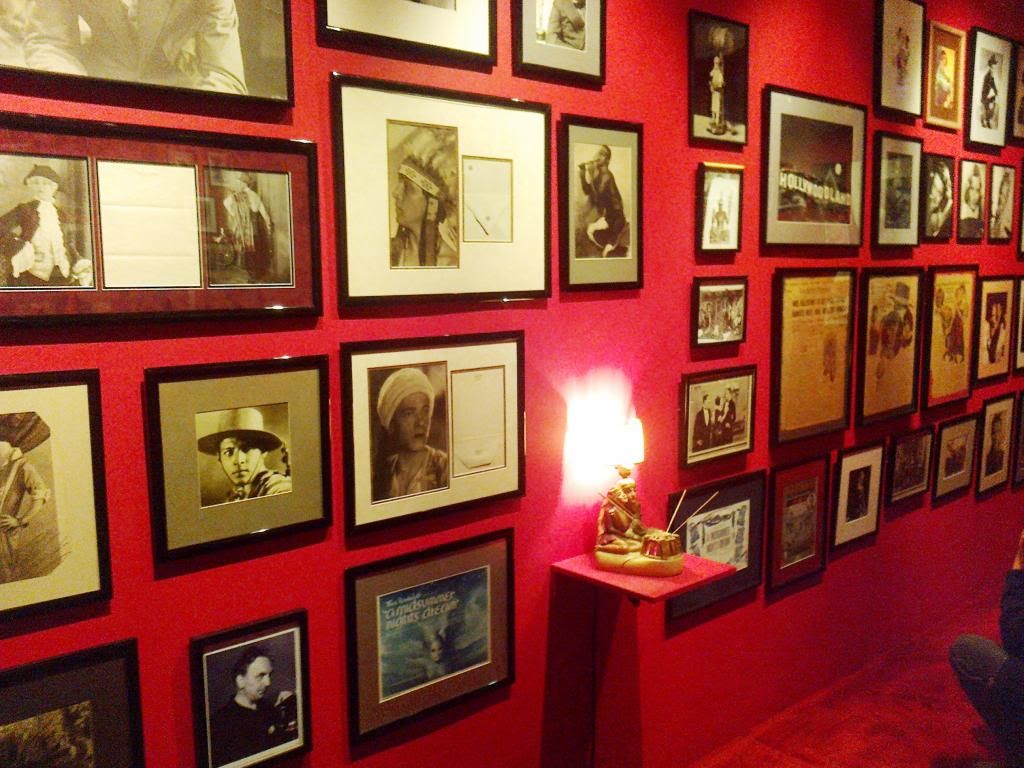
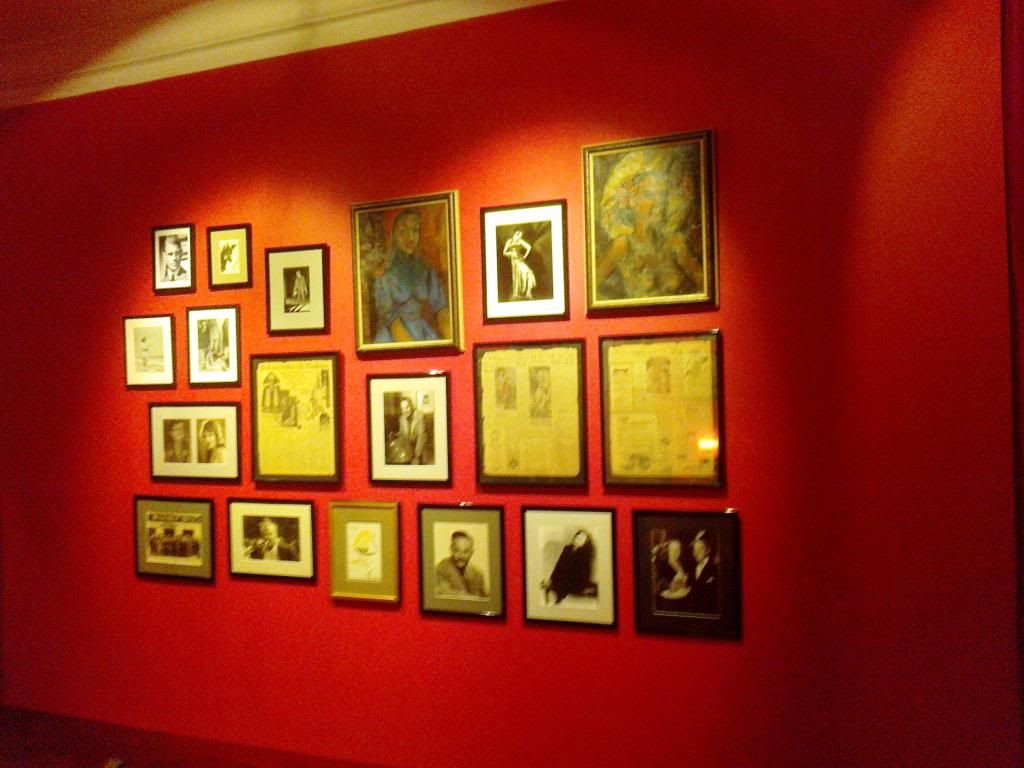
Once inside, the rooms into which no external, natural light is permitted are contrastingly painted and equally theatrically, one midnight blue and the other crimson, to reflect the way the collection was displayed in Anger’s Los Angeles home, this also creating an ambience both reminiscent of a plush funeral parlour and an occultist’s den. On the walls are mainly displayed old publicity photographs of gods and goddesses of the silent age and early talkies, all uniformly framed in black for maximum dramatic impact, these complimented by their letters and frayed, dated newspaper reports, mainly from the 1920s, which detail their public exploits. In amongst images of people like the bullwhip-toting cowboy Lash Larue, his signature insciption alluding to his obvious trademark, Bette Davis and Barbara Stanwyck, screen lothario Rudolph Valentino is the obvious star of the first (crimson) room as he appears repeatedly along one wall, both photographically and in print. As anyone who has read the short chapter about him in the first “Hollywood Babylon” book will know, his reputation and story was one that has especially fascinated and fed the imagination of Anger, this resulting from his powder wearing effeminacy and the scandal caused when other young men influenced by his stardom followed suit, his questionable virility and alleged preference for dominant female partners which led to him more than once marrying those of more inverted proclivities and his mysterious death at the age of thirty-one, officially from peritonitis - or was it arsenic poisoning at the hands of a jilted lover, a bullet from the gun of an irate, cuckolded husband or the effects of syphilis reaching the brain which brought about his premature shuffling off? Add to this the cod fascist, black-shirted guard who stood watch by his open coffin, the black lead, autographed Art Deco dildo he gave as a present to fellow cinema idol and "close friend" Ramon Novarro, this apparently serving as the weapon used to murder its recipient decades down the line, and the reactions of distraught fans following his death, suicides abounding and a mysterious Lady in Black who took flowers every year on his anniversary to the mausoleum where he was laid, and the appeal becomes obvious. The rather more forgotten and, therefore, obscure twenties screen beauty Billie Dove is also a rather unsettlingly ubiquitous presence here, through publicity shots, newspaper clippings under glass and, most strikingly, a few examples of the rather unaccomplished yet vaguely ominous (perhaps only because of the context in which they hang) paintings, mainly portraits, that she produced following her early retirement from film stardom. These reminded me a little of those you see of vengeful, dead relatives in horror b-movies whilst also emanating a similar vibe as the creepy “The Lady With Crying Eyes” painting to which Joe Meek apparently attributed so much significance. This is especially true of a saturated blue depiction of a clown, at once both hopelessly kitsch and rather uncanny.

 photo KennethAngerApril20136_zps436a02a0.jpg

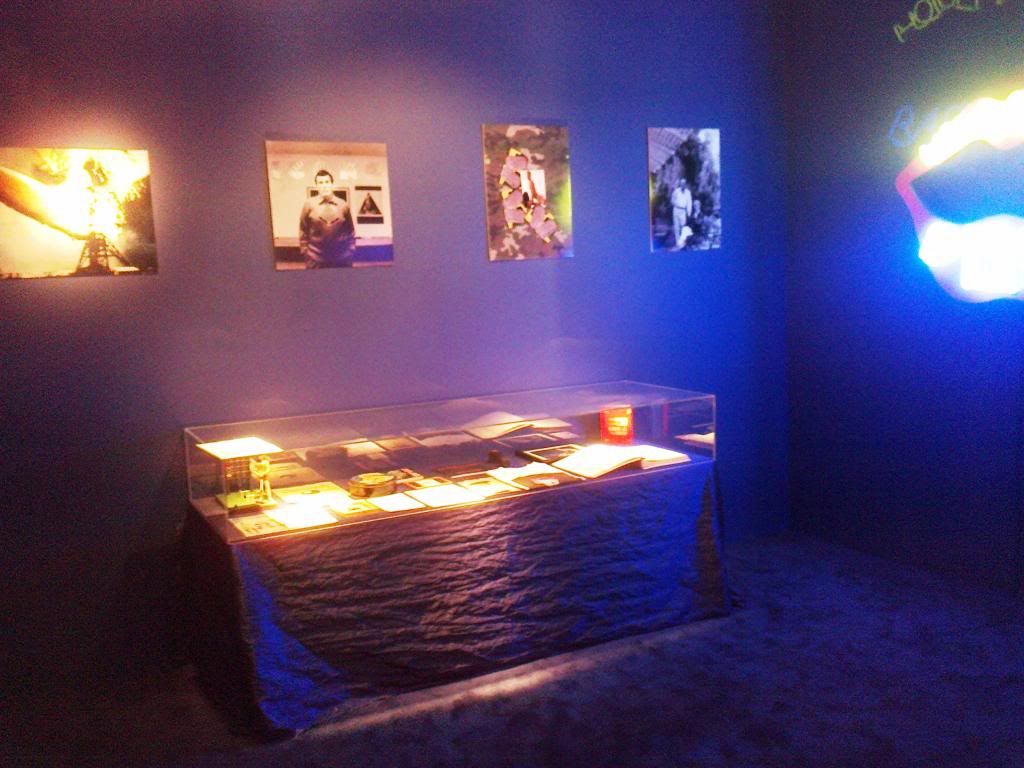
In the midnight blue room, the theme shifts somewhat, a little away from the collection, although this is still much in evidence, and a tad more towards the man himself. Although there is less to look at, the ambience darkens with the colour scheme and a bier-like glass cabinet sits along one wall, this containing assorted ephemera including items related to Anger’s films, such as a rather covetable t-shirt featuring The Scarlet Woman from “The Inauguration of the Pleasure Dome”. Compared to the crimson room, the walls here are more sparsely decorated. In one photograph the director stares out at the viewer, hands stuffed in his trouser pockets, in the background an Egyptian style poster for his film “Lucifer Rising”, similar to the one in the first room of the exhibition. Beside him is a photograph of the exploding Zeppelin airship, perhaps alluding to his friendship with the "diabolic" Jimmy Page. Diagonally across from these, the wall is dominated by a set of neon Hollywood Babylon lips, perhaps dating back to the 1970s, although maybe later, as I believe a similar set or perhaps these exact ones were used as the logo for his last London exhibition. Anyway, they add a further fairground sideshow aspect to an otherwise slightly otherworldly ambience.

 photo KennethAngerApril20133_zpscd9e534f.jpg

 photo KennethAngerApril20132_zpsa6e111ef.jpg

As often happens with these things, I’ve visited towards the end of the run – see the “Querelle” photography exhibition in Berlin – and this one now has less than a week left before it closes on, I think, 20th April. If anybody reads this in the meantime, though, and is in London, it comes with the strongest of recommendations. If not, I guess it may travel. It has already done a short stint at their Berlin branch earlier this year, prior to coming to London. Maybe it will move on somewhere else. According to the schedule on their website, they have a Kraftwerk exhibition on in Berlin, too, throughout the summer so they seem to be a window on which to keep an eye.

Friday, 2 November 2012

Bureau B: Andreas Dorau Reissues

Hamburg's Bureau B Records cannot be praised enough for their endeavours over recent years in reissuing a plethora of brilliantly essential and often ground breaking German electronic music from the 1970s and 1980s, a lot of which previously sat on the deleted register or came unsatisfactorily packaged, also adding to these a smattering of new material by some key players  from the period still working, such as "Programm 6" by DIN A TESTBILD ("Programm 1" was released in 1980) and the fantastically vibrant new album last year by Kurt Dahlke a.k.a. Pyrolator ( "Neuland" ). The whole thing is clearly a total labour of love, the comprehensive focus of the catalogue and the careful attention to detail, stylish packaging and thoughtful production of the accompanying booklets, often with rare photographs and informative mini-essays printed in both English and German, belying the work of a genuine enthusiast(s) who has impeccable taste. Hats off to you, whoever you are!

So, in amongst countless reissues by Roedelius, Cluster/Qluster and Moebius, either alone or with assorted collaborators, there is a little corner which reflects some of the activities of those living and working in Düsseldorf during the late seventies and early eighties, the ill-fated Riechmann's wonderful "Wunderbar" album from 1978, which seems to have had them bopping down at Billy's and The Blitz at the time, whilst concurrently blending with the likes of Bowie's "Low" and Heroes" to influence the nascent Visage sound, being one perfect example. Most exciting to these ears and eyes, though, has been the hopefully still evolving reissue programme focussed on matter originally released on the idiosyncratic and pioneering Warning / Ata Tak label. So far we've had the first two albums by label founders and acid-headed, Residents inspired, synthpop terrorists Der Plan ( "Geri Reig" from 1980 and "Normalette Surprise" from 1981 ), both complete with extra tracks, the first, pre-Mute, pre-Virgin, 1979 debut from the then highly experimental and seemingly improv Deutsch Amerikanische(n) Freundshaft and the two brilliant openers by the aforementioned Pyrolator ( 1979's "Inland" and "Ausland" from two years later ), he too, as everybody knows, having been one of the mischievous Der Plan triumvirate, as well as a participant in the initial D.A.F. experiment.  

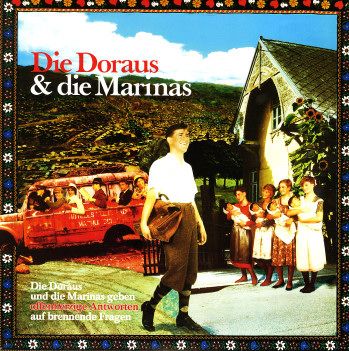
As regular readers of this blog will know, certain names and faces keep reappearing, like Boyd Rice and Chris & Cosey, as well as early eighties teenage poster boy Andreas Dorau who is back again courtesy of the reissue people Bureau B. Several months ago his two Die Doraus und Die Marinas albums from 1981 and 1982 surfaced, "Blumen und Narzissen" having originally come out on Ata Tak and "Die Doraus und Die Marinas Geben Offenherzigen Antworten Auf Brennende Fragen" being a product of the major CBS who seemingly snapped him up after the unexpected chart success of the single "Fred Vom Jupiter". Again, the packaging is first-class so the old Captain Trip versions can now get relegated to the duplicates cupboard, and they feature carefully chosen extra tracks to fulfill the completist's dream, the b-side of the aforementioned "Fred..." single, the three tracks from his debut Zick Zack 7" from 1980 and a couple from contemporary compilation albums complementing the first CD and the stand alone follow-up single "Kleines Stubenmädchen", the dub mix b-side to single number three "Die Welt Ist Schlect" and  two more compilation tracks being added to the second. Again, the accompanying booklets are impeccable, with rare photos and sleeve reproductions, as well as informative and witty liner notes by Carsten Friedrichs, the whole shebang, for me at least, shedding some light on the previous mysteries of Dorau's early association with Palais Schaumburg's Holger Hiller, his involvement in the band Fähnlein Fieselschweif and the probable story of why Die Doraus und Die Marinas only ever had one chart hit.

Photobucket

Offenherzige

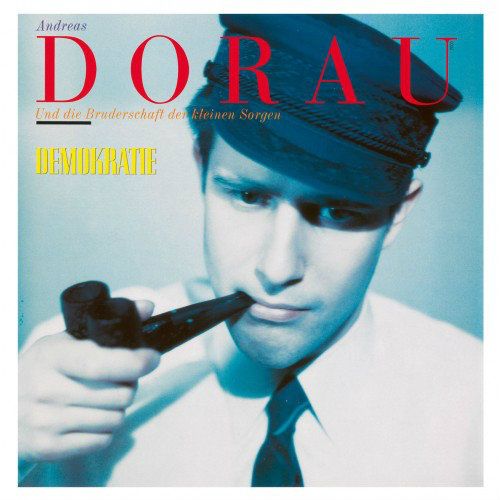
Now, just a few days ago, the Andreas Dorau reissue programme progressed further with the release of his first two solo albums "Demokratie"(1988) and "Ärger Mit Der Unsterblichkeit"(1992), both of which, again, came out originally on Ata Tak before he departed for pastures new, his motives for doing so here included in Herr Friedrich's latter contribution on offer. Once again, the attention to detail is perfect with the inclusion of photographs unseen previously by these eyes and extra tracks in the form of alternative versions of a small handful of  the albums' singles and highlights, as well as the enlightening essays about which I keep harping. This time we're treated to a snippet of what he got upto as a film student in Munich in the eighties, as well as finding out about his penchant for the band The Left Banke at the time, their baroque-pop influence now sounding quite obvious on the reissue of "Demokratie", an album which, for me, represents one of the absolute pinnacles of an almost spotless recording career now extending nearly three and a half decades. Also, would you believe that Dorau travelled to Birmingham to try to persuade Roy Wood of Wizzard and The Move fame to produce his debut solo album and that the deal would have been struck but for a repulsive Phil Collins album entering the equation or that a Flying Lizards' connection led to Michael Nyman partly taking his place as arranger or that, enthused by the first cheap samplers, our hero spent a small fortune amassing records from which he could plunder? Well, that last bit is no surprise. Let's hope the Dorau reissues keep coming so more can be revealed.

bb113_dorau_demokratie_rgb

Photobucket

Herr Dorau played a concert in Berlin last Saturday at the mesmerising fantasy venue of Kater Holzig, his performance being part of the celebrations to mark the tenth birthday of his current recording home Staatsakt and, in amongst an amazing week and a half for gigs which began in Manchester with Sparks and ended with Crime & City Solution at Berlin's C-Club, as well as Barbara Morgenstern and Gudrun Gut performing live at Tresor, myself and a couple of friends were there to see him. He was superb, belting out highlights from the "Todesmelodien" album and old favourites too numerous to begin listing, his enthusiasm for his material also leading to him falling off the stage at one point. I enjoyed him at Berlin's Hau2 last October but the intimacy and high octane set this time knocked that easily into second place. For the benefit of fellow fans, here's a clutch of photos I snapped on my telephone.

Andreas Dorau Kater Holzig 4

Andreas Dorau Kater Holzig 3

Andreas Dorau Kater Holzig 1

Andreas Dorau Kater Holzig 2


...and finally, in true Bureau B style, to complete the completist's dream, here's some videos which accompanied the singles from the latest two albums to be reissued, some of them including the wonderful artistic contributions of Moritz Reichelt and others from the Der Plan / Ata Tak crew.