Sunday, 20 September 2015

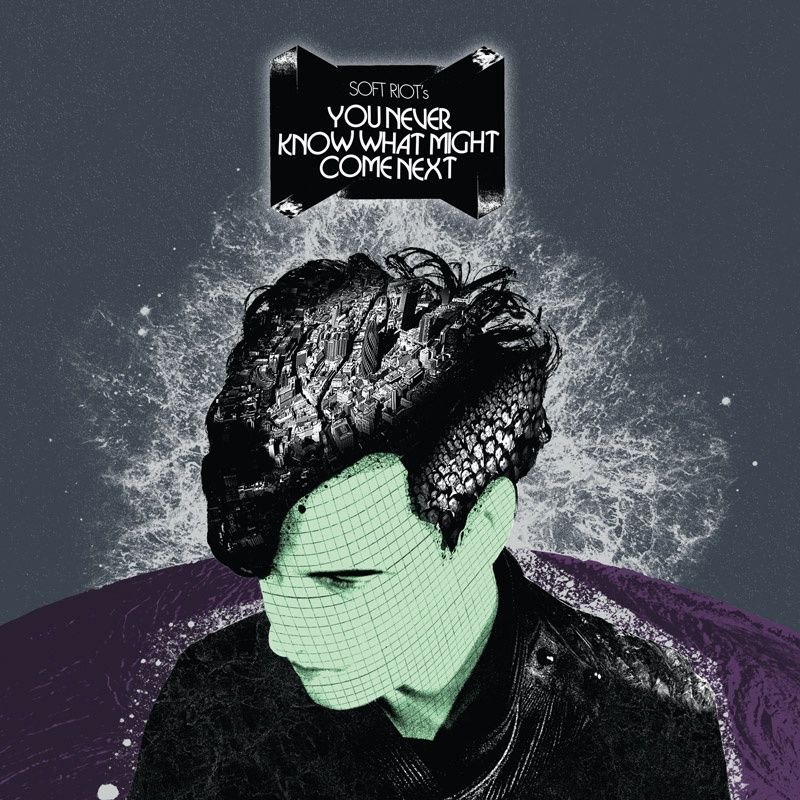
Soft Riot-You Never Know What Might Come Next

 photo Soft Riot cover_zps66aazvyo.jpg
 
 
Soft Riot (a.k.a. JJD / a.k.a Jack Duckworth / Canadian born but living in the U.K.) last appeared on here about three years ago, when I reviewed his cassette album “Hyperbolic Masses” and, as predicted back in 2012, since then, things have come on apace. He’s released three more albums on an annual basis (well, one of these was essentially a reissue of the cassette and another also featured earlier outings), played out live with some degree of regularity and relocated to Sheffield, with its rich heritage of intelligent electronic journeying to which he now contributes. This month also sees the release of his new collection “You Never Know What Might Come Next”, which represents quite a momentous step forward, in my view, and is released as a vinyl album on the EXBTN label from France, a download and a strictly limited (50 copies) CD package, with four bonus tracks, available for the not-too-distant future from www.softriot.com. I received a version of the latter in the post recently and to say that I’m mightily impressed would be rather an understatement.
 
Before I offer any of my own observations, like last time, I’ll crib a little from the website and press release which accompanied the CD in order to set the tone:

“Soft Riot, coming from a more punk rock pedigree, often places more focus than the norm on his lyrical content, bringing in detailed pictures and sometimes even linear narrative storylines to subjects such as modern living, technology, surveillance, environment, overpopulation, enlightenment, life elsewhere, forewarning about catastrophic events, vain people in gyms, and not having enough time. The influences come less from other musical artists but more from written fiction and film – a future predicted by fiction.”

“You Never Know What Might Come Next”…further develops and fine-tunes Soft Riot’s evolving minimal, atmospheric sound that started gaining momentum on the 2013 full-length “Fiction Prediction.”
 
“The very title – “You Never Know What Might Come Next” is as threatening a warning, as it is a hint of a pleasant surprise; it raises questions, it makes you wonder, thus it’s succeeded in its mission to make you, the listener, a great part of it…”
 
Despite the disquieting uncertainty of the title and sleeve imagery - JJD on the front cover looking as though he’s standing atop a barren globe, a looming gaseous cloud behind him, his head full of skyscrapers, an over-crowded cityscape and densely populated space, all seen through his sculpted black hair, as well as an expression of not knowing where to turn next; the inlay booklet featuring him posed in a cheerlessly pensive gesture of irresolution before a table on which various instruments of divination rest impotently around the question of “What Might Come Next?” – this album, for me, stands out quite markedly from anything Soft Riot has released previously, due to it feeling a lot less claustrophobic and, to a large extent, lacking the menace and over-riding tension to be found on previous outings such as “Fiction Prediction” and “No Longer Stranger”, and that’s even with the inclusion of titles like “A Scene From A Dark Beach”, “You Are A Caged Dancer”, “We Are The Chopped” and “There Is Some Great Evil Out There”. Don’t get me wrong, it’s far from being laugh-along sunshine pop but there feels to be a bit more optimism and more of the wry amusement of a satirist at work than we’ve been accustomed to before. It’s also chock-full of often oblique and short-lived moments of catchy melody and, once listened to a handful of times (it’s been said before elsewhere that Jack’s music benefits from multiple plays to decode its initially baffling layers), infectious singalong qualities surface which I’d not previously encountered to such an extent on previous Soft Riot productions where the groove has seemed more like a pulse, the landscape been more bleakly filmic and the voice often a hesitant whisper (or absent altogether). All the familiar ingredients are still here, though, and you can never become too comfortable and relax into any one of the tracks’ direction or momentum; JJD is always on hand to cleverly upset expectations, subverting, collapsing and carefully rebuilding vaguely familiar pop structures throughout. As a consequence, “You Never Know What Might Come Next” has a magnetic quality I would maybe define as ‘perkily portentous’ and is, for me, somewhat reminiscent in this respect of our dear, departed Fad, particularly during his “Incontinent” days.
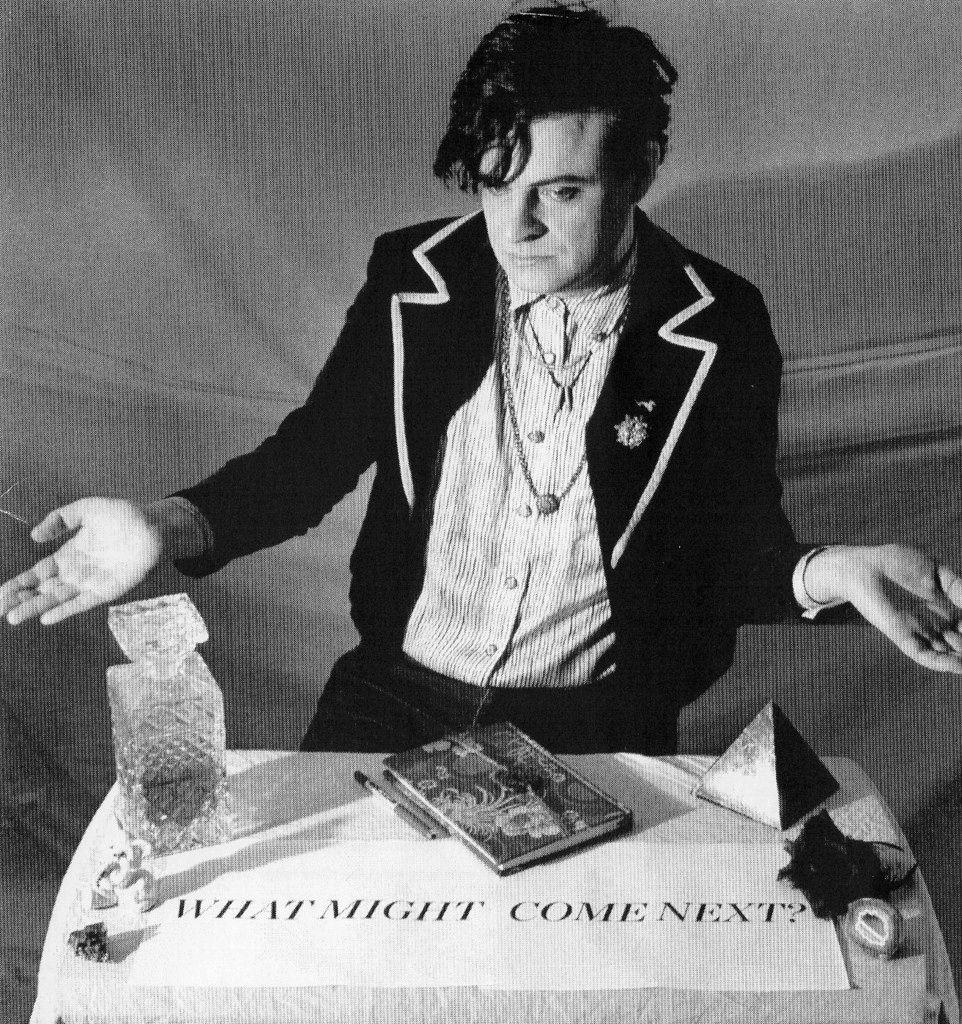
 
 photo Soft Riot inner sleeve_zps1w0t6dat.jpg
 
So, to some of the music which lies herein, every track a gem, I promise you. Proceedings start extremely well with “For Your Entertainment”, its title a nod maybe to another song from the Steel City of yesteryear and presenting a bemused and alienated glance across a landscape of anguished singers on TV, payday loans, erotic moans, mobile communication and, ultimately, tombstones, a world into which everybody can escape and is a potential participant, and the tone is instantly set for much of what follows. I mentioned a particular Fad Gadget album before and it’s with this track that songs like “Blind Eyes” and “Swallow It” would make particularly suitable bed fellows. Meanwhile, behind this imagery, the bass line plods and thuds along, stabs and sparks of synthetic sound pierce and spiral through proceedings, a melody builds steadily before repeatedly turning back in on itself and reforming and then, about a minute from the end, an instrumental passage, both triumphant and ominous, breaks forth and carries us towards track two in a style which encapsulates in a short musical space what the album is trying to achieve overall. It’s as infectious as anything and what our friends in Germany might refer to as an ear worm, boring itself into the long-term memory and refusing to be dislodged. Next comes the album’s title track which is equally bewitching in its appeal and mightily impressive in its neat complexity and, rather than write about it and seeing as Jack has made a video for it, I’ll let readers experience its merits for themselves. Keep watching after it finishes, by the way, for an advertisement for the collection as a whole and in which you’ll get a brief taster of all that I write about here. Sit back and enjoy the next few minutes: here, right now, for your entertainment!


Track three, “There Is Some Great Evil Out There”, has the pace and urgency of a car chase, cascading and twisting like an interminable, out-of-control fairground ride from which there’s no release. It’s one of the album’s more narrative pieces, like a short film of high intensity, in which the heroine races through oblivious zombie-like commuters and confusing signs, drawn towards the city centre where she confronts the personification of what’s implied in the title and, seemingly, at the core of modern living. It’s mysterious and inconclusive but, bleak and hopeless as it may sound, carries forth the ambiguous optimism which is woven through track after track on offer here, its chorus (of sorts) repeating the same message several times over, “When it brings you down, it’s tough to get up but you do it anyway,” before the brakes are slammed on suddenly and it’s time to move on.
 
Don’t worry, I’m not going to be so tedious as to describe all twelve tracks but I will draw your attention to another couple of highlights before packing up, although, as I have already said, each one is a jewel in its own right and worthy of attention. “Your Back To The Stone” offers a similar alternative of resilience over world-weariness to much of what’s gone before and, musically, reminds me of The Human League at their very best with its solid beat, rich, deep vocal timbre, clear verse-chorus structure, passages of arpeggio-driven dynamism and gorgeous hooks and underlying chords. If I had to pick a favourite this is a definite contender, alongside “There Is Some Great Evil Out There”, although really this accolade switches between one track and another with repeated listens to the collection as a whole, such as “You Are A Caged Dancer”, another of the album’s more lively components and coming on instantly a bit like DAF in their more plinking moments or cut from the same musical cloth which underlies much of Depeche Mode’s “Construction Time Again”. Despite its title and the environment of “streets so frightful and crowds unbearable”, it bounces along most pleasingly and, in my view, the lines which conclude its chorus – “Like a great romantic, an idyllic vision in miles of decay” – could stand as an epithet for the entire album and JJD’s current double-edged vision encapsulated.
JJD/Soft Riot’s singular talent, confidence and ambition continues to grow quite staggeringly and in “You Never Know What Might Come Next” he has produced an album I have listened to almost exclusively and repeatedly since it first arrived a fortnight ago and which, on each new play, throws up something new and unexpected as it also settles into the psyche like an old, familiar and much cherished friend. At the risk of sounding cheesy, in terms of planet Soft Riot, I can only see the big question mark which hangs over current proceedings being resolved by even greater things to come, as I’m sure this trajectory is far from spent yet.
Soft Riot will be playing as part of the annual Sensoria Festival in Sheffield on Saturday 3rd October, there’s talk of a small UK tour being planned for later in the autumn, hopefully on a bill shared with Hausfrau and Nöi Kabát, and there’s to be a foray into continental towards the close of the year, too, I believe. I had the pleasure of seeing Jack’s one man, multi-synth, lightshow extravaganza in Newcastle a year or so ago and it comes strongly recommended. I’ll leave you with a rather crap photograph I took on my rather unsophisticated telephone that night. Squint and you might work it out.
 photo Soft Riot Newcastle 240114 c_zpshgin78wb.jpg

Sunday, 31 May 2015

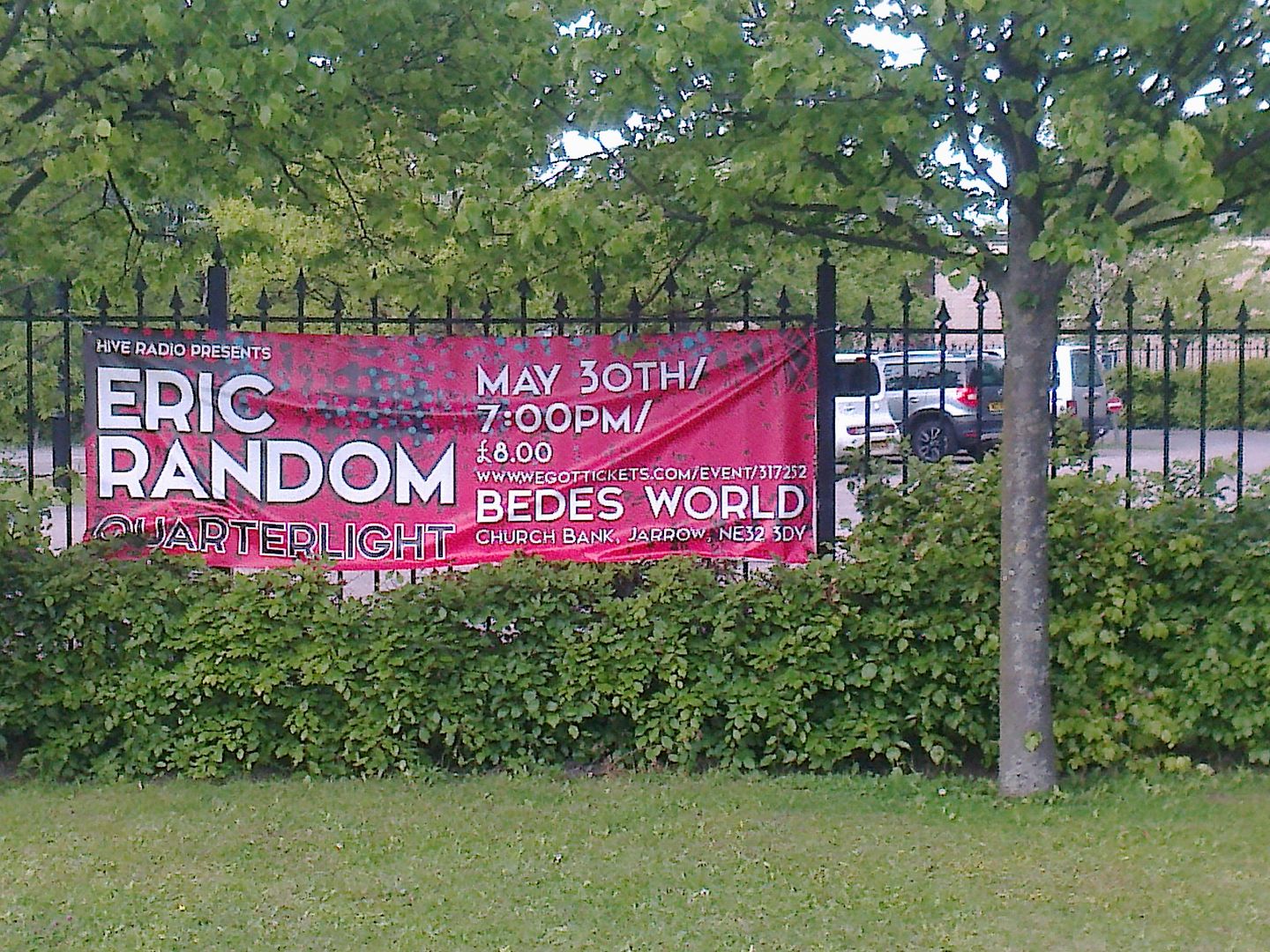
Eric Random: 30th May 2015, Bede's World, Jarrow

 photo Bedes World Jarrow 300515_zpsdahgcvgt.jpg 

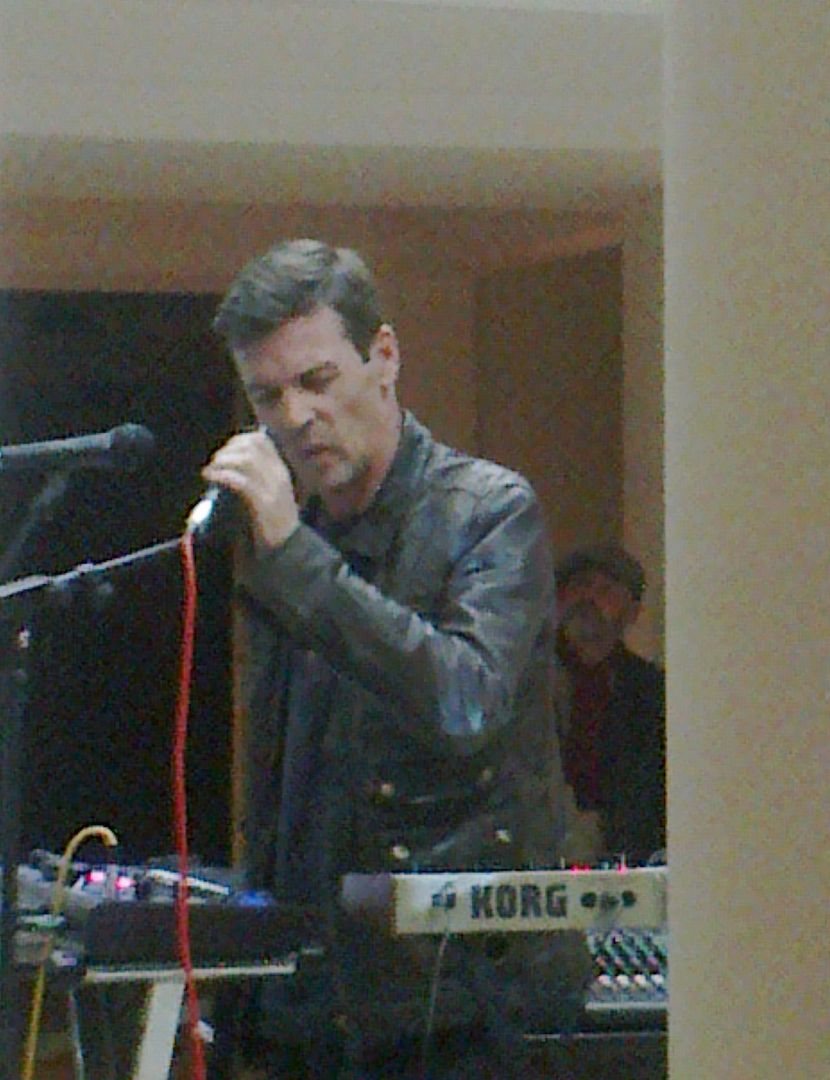
Eric Random played a rare and rather intimate live gig at the Bede's World Centre in Jarrow, near Newcastle, last night and, having missed the one he did last year at Manchester's Band on the Wall with Wrangler, I was keen to go along. He didn't disappoint in the slightest, either, as he was utterly superb.   

  photo Eric Random Jarrow Bedes World 300515 g_zpscwlfjol2.jpg 

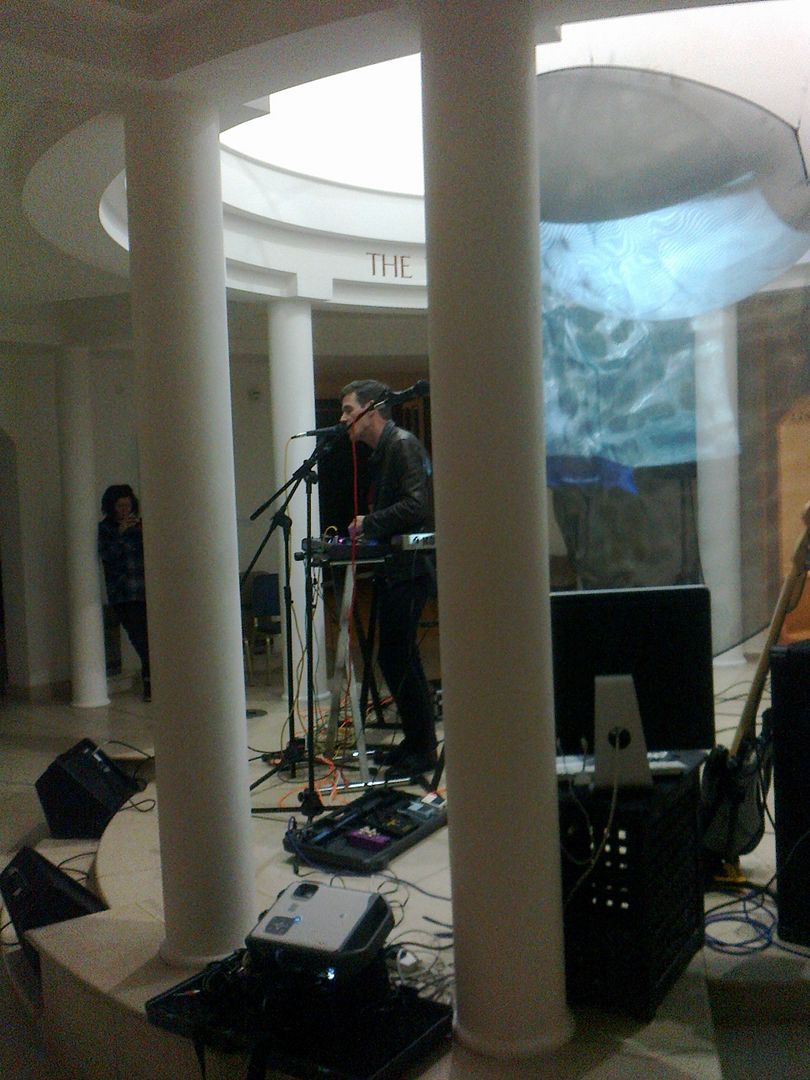
Performing a lively, purely electronic and, for the most part, quite beaty and mainly instrumental set, with the addition of some vocoded and non-vocoded vocals in places, the key elements of the Random sound were still in evidence, the repetitive, circling electro-psychedelic layers and textures, magnetic and engaging, yet also slightly destabilising and unnerving, but given a thirty-five year update...and it sounded brilliant. 

  photo Eric Random Jarrow Bedes World 300515 f_zpslzrypd5l.jpg

He was joined for his final number, on the slightly raised circular stage, in a small, white rotunda area of the museum, by Jez Kerr of A Certain Ratio, who supplied some quite abstract slabs of bass guitar to what Mr. Ramsden was by this point conjuring forth from his various pieces of equipment. Apparently, it was their first live collaboration since the legendary Certain Random Cabaret performance at The Beach Club in Manchester in 1980.

  photo Eric Random and Jez Kerr Jarrow Bedes World 300515 b_zpseqti3qal.jpg

Despite the lack of bodies present, there was no shortage of photographs taken and here's a small selection of mine to add to the pile.

 photo Eric Random Jarrow Bedes World 300515 i_zpsrebuxhei.jpg


 photo Eric Random Jarrow Bedes World 300515 h_zps8sugotmn.jpg

I should also mention that "the crowd" were warmed-up by Quarterlight (a.k.a. Gary Chaplin) who performed a short but equally enjoyable electronic set, a departure from the norm for him, I'm told, which included a slightly smothered, subtle cover of Sheila B. Devotion's "Spacer". A little bird told me, too, that it was the first time he and Eric Random had been in the same room since an event nearly thirty eight years ago to the day, when the former was playing guitar with Penetration at the Electric Circus in Manchester, on a bill which was topped by Buzzcocks and also featured The Stiff Kittens, who changed their name to Warsaw on the night, I believe, before changing it again some time later to Joy Division, this being their debut public performance. 

  photo Gary Chaplin Quarterlight Jarrow Bedes World 300515 a_zps5t9uku69.jpg 

It was a fantastic, highly memorable and, even historic, night. Well done to those people who stuck their neck out and organised it, even though they probably ended up sorely out of pocket, as a consequence.

Wednesday, 3 December 2014

Robert Marlow-The Blackwing Sessions: Demos 1982/3 (Vinyl on Demand Records: VOD131.4)


Thirty-one years ago, I think it was at the start of the school summer holidays, an initially mysterious envelope arrived in the post, containing a single sheet of photocopied paper, the majority of one side featuring the black and white image of a leather-jacketed individual, cropped a little below the shoulders, gazing confidently back out at my then not quite teenage self. Below it, in a couple of inches of white space, a few lines of typed block capitals spelt out the message: “Hello! Hope you’re OK! This is just to let you know that Vince Clarke has just produced a single for a new artiste, ‘Robert Marlow’, which is to be released on July 11th. It’s called ‘The Face of Dorian Gray’ – in both 7” and 12” versions. It’ll be released by RCA on the Reset Records label.” Everything became a lot clearer, however, when I looked in the bottom right-hand corner of the page and read the word “DEB” followed by four kisses, partially chopped off by the parameters of a photocopier, this being Deb Danahay with whom I’d corresponded gently for the previous several months, as I sent off my stamped-addressed envelope expectantly each month for the latest newsletter from the Yazoo Information Service which she, Vince Clarke’s other half at the time, used to run in just the same cottage-industry fashion that Dave Gahan’s girlfriend and future wife, Jo Fox, did the Depeche Mode Information Service for several years into their successful career, each of them willingly answering questions fans posed in cheerful, hand-written replies, all of which I still possess years down the line.


Anyway, back to Robert Marlow. As the days passed, his fizzog began to appear in some of the glossy music papers of the time, ‘Smash Hits’ and the less enduring ‘No.1’ most notably, in short inches of column space declaring the single’s arrival to its readers. An interview I read with Marlow states that RCA put quite a bit of promotional weight behind the single, assuming that a bit of the Vince Clarke magic was sure to rub off, simply by proxy.  In my memory, these were always accompanied by a triptych of facial close-ups, depicting the singer’s increasingly made-up visage aging to oblivion, just as Oscar Wilde’s anti-hero’s does at the end of the novel. The clipping I pasted away in a scrapbook all those years ago, in anticipation of a moment such as this, no doubt, certainly has these pictures in it, along with the words: “No, not the effect of repeated listening to positive punk records. This is in fact Robert Marlow – the first signing to Vince Clarke’s Reset Records (see singles) illustrating his debut single ‘The Face of Dorian Gray’. It’s loosely based on Oscar Wilde’s novel in which the nasty Mr. Gray stays young and pretty while his portrait gets old and rather horrible. Marlow, incidentally, comes from Basildon and has been in bands with Martin Gore, Alf Moyet and Vince himself.” I can’t vouch for the exact origins of these words but they will have certainly come from one of the two aforementioned magazines and I presume the reference to a single review matches another clipping I can find preserved on an adjacent page and which rather cruelly reads: “This is the sort of stuff I expected to hear from Vince Clarke after he left Depeche Mode, rather than the gems he produced with Alf...RM has got a bland voice and the song is probably a Yazoo reject.”  


Although I was partisan and probably outraged at the time, I wasn’t in a position to argue as I didn’t get to hear the song until about six months later when a 7” copy turned up in a ten or fifty pence bargain bin of singles the shop wanted rid of as unsalable at their full price, this being despite a promotional video being produced in which Marlow plays the role of a mad artist in a garret tormentedly doing battle with his creation, in a mise-en-scène which combines elements of Bowie’s “Look Back in Anger” and a BBC Sunday teatime adaptation of a Penguin classic with the over-sheened, over-lit style of many a pop promo clip of the time. Was this ever shown on British television? Blow-torching rather than stabbing the painting, Marlow’s tortured artist meets his demise in a car which explodes dramatically at the video’s denouement, quite the opposite, unfortunately, of the impact of the single itself. Apparently, he also performed the song on Channel 4’s short-lived Friday evening pop show “Switch” but I’ve never seen this clip, even though I was quite an avid viewer at the time. If anybody has it and fancies loading it onto You Tube that would be simply marvellous. Anyway, the record was right up my street when I eventually lowered the needle onto it, providing exactly the same vibe I enjoyed so much in Depeche Mode’s “Speak and Spell” and everything Yazoo had produced, albeit a little more thinly in texture, perhaps. Here’s the video so that anyone who has not heard it can see what they think.


A few months later, a second envelope arrived including a similarly photocopied A4 single sheet, this time with a little more white-space and with Mr. Marlow in profile, the swept-back hair and leather jacket, though, matching him undoubtedly with the image that had come during the summer. This time, bizarrely, the text began, “I am writing to tell you about my secretary,” these last two words struck through with hyphens rather than tippexed away, before continuing, “a great new single from Reset Records artist Robert Marlow. It’s entitled ‘I Just Want To Dance’ and it’s produced by Vince Clarke & Eric Radcliffe. ‘I Just Want To Dance’ is released on Friday 11th November and all the shops listed overleaf should have the record on the day of release. ‘I Just Want To Dance’  is an even better record than ‘The Face of Dorian Gray’ and it’s sure to be Robert’s first Top 20 hit!”  


Despite featuring the perennially popular Sylvia and the Sapphires on backing vocals and Marlow appearing on the weekday afternoon children’s pop and games programme “Razzmatazz” (which many of my generation tried never to miss, if only to see kids they wanted to kill out of envy run around the Pop Scotch board and then win a shopping trolley full of records, posters, promotional items galore – you name it – or open a similarly stuffed treasure chest if they successfully repeated the words “Peggy Babcock, Babcock Peggy” against the clock without floundering) this single flopped, too. Once again, a copy found its way into my record collection via a bargain bin about six months after its release, something which happened with every release from the ill-fated Reset Records I encountered at the time. I did hear this one on the radio when it was current this time, though, and wasn’t surprised, to be honest, by its lack of chart success. I always found it a little bit obvious and lacking in substance, a bit childish even, unlike the b-side “No Heart” which had a sophistication much more pleasing to these ears...but more of that in a bit.


That was it, then, for a number of years. A fellow Mute-head and pen-friend for a while (Jim Mortleman of “Mutations” fanzine, if you’re reading) told me of two more singles that were released, the first in 1984, then the second in 1985, but my never coming across them in the mid-eighties 50p and 10p boxes (where I found other Reset releases by Absolute and Hardware) made me doubt their existence a little, even though my source of information was impeccably reliable and trustworthy. That was until, several years later, a box of records shoved amongst some old shoes in a charity shop threw up a copy of single number three “Claudette”, an electronic ballad, lacking the bounce and fizzle of the first two releases, but telling instead a tale of French resistance love and separation in the streets of occupied Paris, the couple being reunited twenty years later on a platform of the Gare du Nord. Again, much as I like it for what it is, it lacks that something that makes you feel it was unlucky to chart. By 1984, anyway, it appears, RCA had lost interest in the label and Reset was backed by the Swedish company Sonet; hence distribution was even more sparse and sporadic than previously. Those old mailouts from 1983, which came with a list of shops which would be stocking the record, never  included any in places near to where I lived, anyway: Stockport, Manchester, Macclesfield. I think the nearest were places like Liverpool and Accrington, oddly enough. Anyway, I digress. With the internet, though, came the era of nothing being wholly elusive (except for “The Pepsi Cola Addict” by June Alison Gibbons, perhaps) and, true to form, the fourth and final single soon reared its head in this new era of consumer possibility. “Calling All Destroyers”, is a jaunty electro sea shanty, with a sleeve a bit like a tattoo, which would have had the front section of any Erasure concert jumping around and pounding the air only months after its release had it, in fact, been part of their Hi-NRG repertoire, rather than the recent progeny of their founding father. It’s a bit like “Captain Pugwash” or “Friggin in the Riggin” with the salty bits replaced by sequencers, synth-pop melodies and a slight whiff of poppers mixing with the sea air, and it's certainly a long way from the T.Rex cover version I expected it to be for years, that’s for sure. Unsurprisingly, given its obscurity, it was another non-hit.

Also, with the ever-expanding bank of information which makes up the world wide web, combined with the plethora of well-researched music books published during the last decade or so, previously elusive details and connections in people’s careers can now be easily traced and many of the gaps in the Robert Marlow story can, likewise, be plugged quite simply. So, here goes: as suspected, he is documented as having been Vince Clarke’s best friend on-and-off for many years, the two having met aged eight as members of Basildon’s Boys Brigade and there are also stories of the two of them buying 7” singles together on Basildon Market in the early seventies, Clarke initially plumping for Sparks’ “This Town Ain’t Big Enough For The Both Us” whilst Marlow picked “Co-Co” by The Sweet, as well as developing their interests in electronics and sonic effects from listening to Pink Floyd’s “Ummagumma” and Hawkwind’s “Space Ritual” with the lights out. They began making music together, too, around this time, meeting on Sunday afternoons to provide musical accompaniment to lyrics found in “Disco 45” magazine.


As if often the case in tales such as these, punk proved to be the catalyst for greater things with Alison Moyet persuading Marlow to provide guitar for The Vandals, the band she formed with school friends in 1978 ... and then came the famous Basildon Futurist scene, so well documented in Simon Spence’s book “Just Can’t Get Enough: The Making of Depeche Mode”, our subject allegedly being the first of the gang to buy a synthesizer, a Korg 300 acquired on hire purchase, which was initially used in the band The Plan (no, not the more celebrated Düsseldorf outfit with a similar name) which also included Vince Clarke and Perry Bamonte, who went on to be a member of The Cure from 1990 until 2005. Next came the all electronic band French Look, for whom, the story goes, Dave Gahan acted as sound man, as well as featuring Martin Gore, who was a shared member with rival group, Composition of Sound, who eventually turned into Depeche Mode at some point during 1980. In fact, both bands debuted on May 30th of that year at a party organised by the aforementioned Deb Danahay and a friend at a Basildon community centre called The Paddock, French Look’s repertoire including nascent versions of “The Face of Dorian Gray” and “No Heart”, alongside a cover of Sparks’ “Amateur Hour”, and an Ultravox number. Then, prior to the solo outing under discussion, came Film Noir, again featuring Bamonte, who filled the support slot when Depeche Mode played a hometown gig at Racquel’s on their “Speak and Spell” tour, Blancmange securing the role for the rest of the tour. 


Which now brings us to the matter in hand, “The Blackwing Sessions: Demos 1982/83” which were recently released as a vinyl album, limited to just 500 copies, on the quite phenomenal Vinyl-on-Demand label from Germany which is an absolute cornucopia of releases by just about anybody you can think of who comes under the umbrella terms of industrial, experimental and obscure electronic music, Frank Maier’s achievement in curating and anthologising these artists with such attention to detail being both incredible and invaluable. Have a look at his website, if you haven’t done so already (http://www.vinyl-on-demand.com), and you will also see, amongst other recent releases, the entire early works of Val Denham, under such names as Counter Dance, The Death and Beauty Foundation and Silverstar Amoeba, being made available to a wider audience for the first time, as we speak. When I get time, and I receive my copies, I’ll hopefully say a few words about these, too. 


Back to Mr. Marlow, though, the earliest tracks on offer here date back to the Spring of 1982, when Vince Clarke was just launching Yazoo onto the wider world, and were programmed at the Gravesend home of Eric Radcliffe, whom Marlow was apparently “thrilled” to work with as a result of him being instrumental in the early career of Fad Gadget, someone whom our subject, according to one interview I read, “worshipped”. Well, didn’t we all? Produced and recorded at the now defunct south London Blackwing Studios, housed in the former All Hallows Church, which was partially bombed during the Blitz in 1941, the tracks included are mainly demos of those which went on to feature on the first two singles, whilst some were intended for inclusion on the album “The Peter Pan Effect” which was originally due for release through Reset/RCA in 1984 but was shelved, eventually being salvaged by and seeing the light of day through the Swedish label Energy Rekords in 1999. Some of the songs are familiar, such as “No Heart” which appears in two early versions, as well as “I Just Want To Dance” with alternative lyrics to those which made it onto vinyl, whilst others remained unknown at the time. And what of these latter tracks? Clocking in at just over two minutes, “Torch Team” is perky, springy and super-catchy, texturally reminding me of the theme tune Yazoo produced at the time for the Saturday morning children’s TV show “Data Run”, although with a stronger song-based structure. The boxes of tricks which produced it were probably very similar, if not the same. “When Sleep Was Easy”, which claims to be the same song but with different lyrics to “Ambition” from the proposed album, employs a similar palette, with strong sequenced backing which reminds me a little of an early Erasure track such as “Who Needs Love Like That”, although with darker, rich passages and elements which put me in mind of later Yazoo songs like “Good Times” - sorry for the continual comparisons but they are a bit inevitable. Nevertheless, in my opinion, it’s stronger and more sophisticated structurally than much from that which saw the light of day at the time and it’s a crying shame it didn’t. “The Kiss” begins more pensively, before adopting a more mid-paced tempo, complete with a beaty, bassy backing we’ve become accustomed to, bleeping layers and a simple, catchy riff which one assumes could have been played with one finger; a middle eight with appealing key changes and some barely audible “Are Friends Electric?” style mumblings add to its appeal and, again, make this listener question the decision makers at RCA in abandoning the project. With continued work, all three could have graced a 7” platter, which is most definitely the case with “Life in a Film”, too, which continues in the same Hi-NRG, ultra-synth pop vein which went on to earn Erasure such a lot of money over the years which followed, with a darker more mysterious current running beneath it, as well, which also brings to mind favourite moments from “Speak and Spell” and “Upstairs at Eric’s”. Methinks a little bit of poor judgement possibly went into the selection of singles at the time, based on these outings, and also makes me wonder if things may have panned out differently were alternative choices made back then.


Also included are the extended versions of “The Face of Dorian Gray”, “I Just Want To Dance” and “No Heart” which were released on the Reset 12” singles, and make the release a tad repetitive towards the close but are, nonetheless, essential to the collection. Now the question has to be begged whether “Claudette”, “Calling All Destroyers” and their b-sides emerged out of larger sessions and whether these, too, will one day see the light of day through Vinyl-on-Demand. Given their form, I wouldn’t be at all surprised. Go on!