Saturday, 21 April 2012

SALT : Issue 10


When I got back from Germany last weekend, I was very pleased to find that the new issue of SALT was waiting for me on my doormat. Being approximately as old in years as it is now in number, I believe, SALT is produced by one Kevin McCaighy whose enthusiasm for all that he writes about, both thoughtfully and in depth, is extremely infectious and always an absolute joy to cast the old peepers across. Keen to scour the darker, often unexplored corners of popular culture, Kevin draws his subject matter from all areas of his far reaching and highly individual tastes, each issue reflecting what's turning him on from the current crop, as well as unearthing histories long buried in the ever expanding morass which is popular culture, winkling out some fascinating and highly engaging interviewees in the process. Drawn towards the obscure, experimental and compendious, regardless of trends, SALT is the expression of a genuine and tireless investigator who has a compulsion to share his enthusiasms with an audience no matter how small that may be. He's a good friend of German Bite, too, and most definitely a kindred spirit.


For me, this issue has as its centrepiece eleven pages of A4 devoted to an interview with Steve Parry who talks of his early influences, move down to London from the north in the late seventies and the milieu into which he fell, this including the young Matt Johnson then laying the foundations for The The. He also tells the story of his band Neu Electric / Neu Electrikk who released two 7" singles - "Lust of Berlin"(1979) and "Cover Girl"(1980) - but remain most famous for their contribution of a track to Stevo's "Some Bizzare Album" released at the dawn of 1981 and which, as we are repeatedly made aware, gave very early exposure to Soft Cell, Depeche Mode, Blancmange and the aforementioned The The, as well as other more experimental artists like Eric Random, almost rans like B-Movie and Naked Lunch and assorted nutcases such as Blah, Blah, Blah. Keen to drain every drop of info as he possibly can through his questioning, Kevin has managed to produce an essential, unique and detailed insight into the period which would otherwise most definitely have remained unearthed.


Elsewhere, he interviews James Nice of LTM Recordings who also wrote the fantastically comprehensive labour of love about Factory Records that is "Shadowplayers" a few years ago, this being one of the very best music books ever in my view and so beautifully packaged, too. Another kindred spirit, methinks. Other interviews include a vintage piece from 2001 with The Minders who, I must confess, were a new name to me until now but such is Kevin's enthusiasm that I shall going off to do some researching very shortly, as well as a few questions answered by my very self about German Bite and its origins. This is also coupled with pieces about Maher Shalal Hash Baz and an extremely heartfelt piece about how Kevin fell in love with Royal Trux and why they remain his favourite band to this very day. It ends with a short obituary of the abstract painter John Hoyland RA, who died last year, written by Katharine Simpson, one of whose paintings is reproduced, albeit, unfortunately, not in colour within this issue. Overall, it's a totally superb read and one I keep picking up and browsing through again and again, even though I have read the majority of its contents at least three times already.


It costs £2.50 or $5 and Kevin can be contacted by email at kevinmccaighy@yahoo.com . I don't think he gets a tremendous number printed up, though, so it may be worth dropping him a line sooner rather than later and, whilst you're at it, may I suggest asking him if he's got any copies of Issue 9 left which contained a fantastic piece about the aforementioned "Some Bizzare Album" for which he interviewed one Beverley Glick, she once called Betty Page and a champion of all things electronic through her writing in "Sounds" and the short-lived grown-ups alternative to "Smash Hits" called "Noise", this alongside interviews with Pyha, Carla Speed McNeil, 13 and Korperschwache, as well as pieces on Jason Lytle, Grandaddy b-sides and "A Guide to Great (Fairly Inexpensive) Vodka. Getting the picture? Zum Wohl, Kevin!

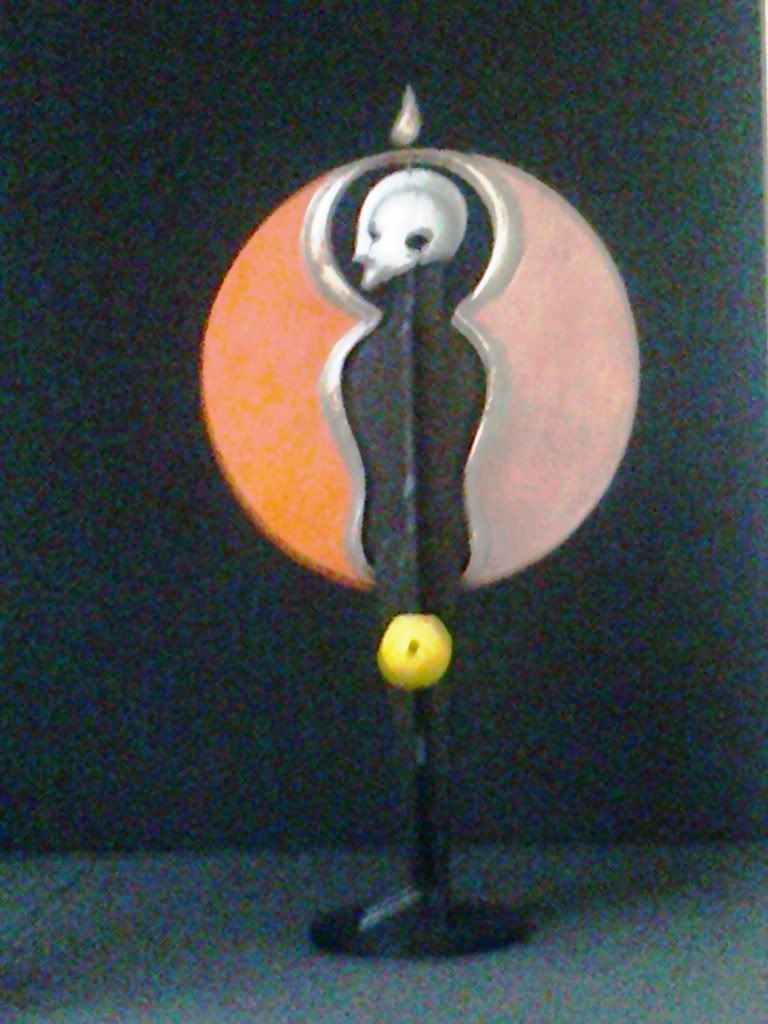
Triadic Ballet

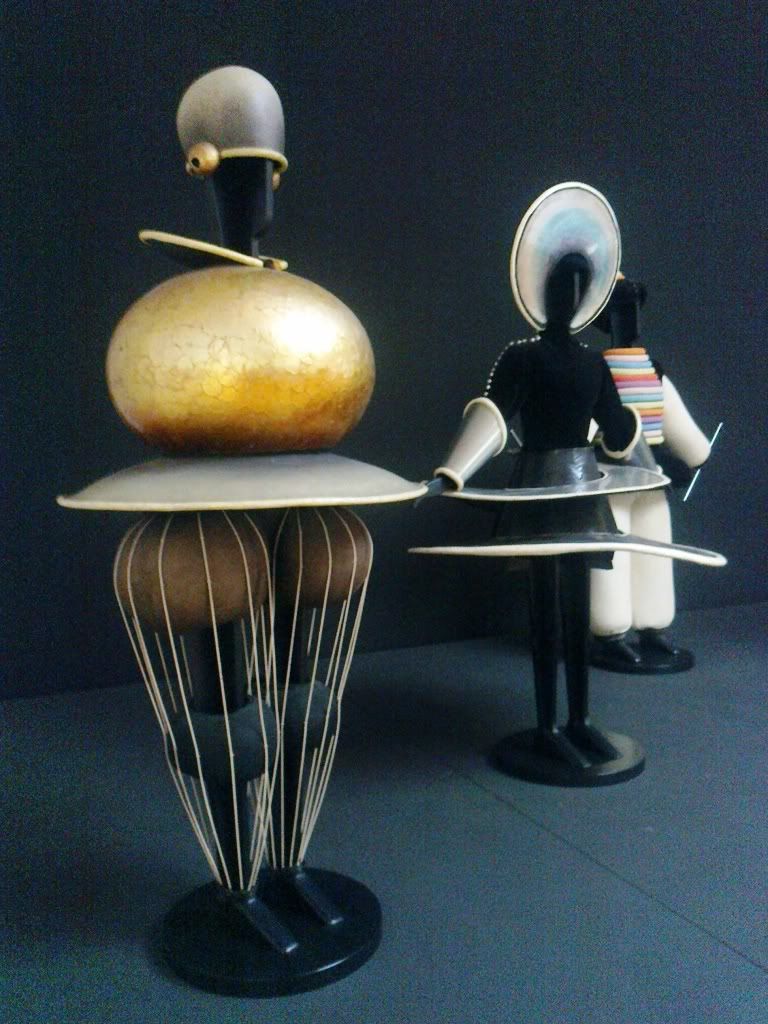
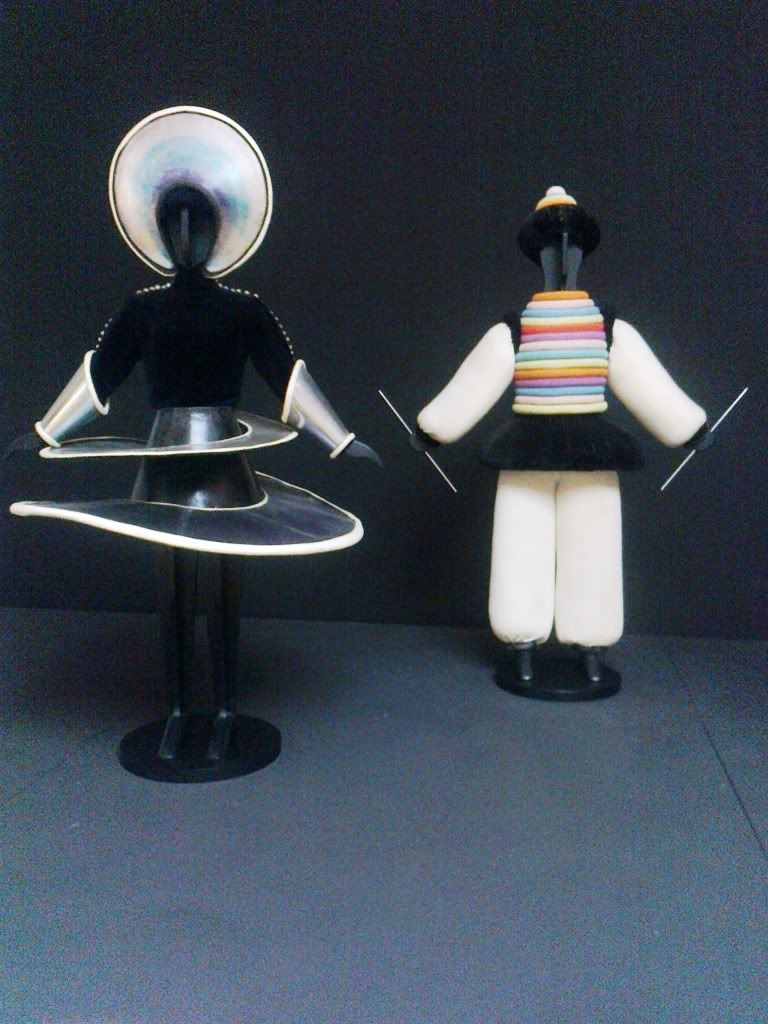
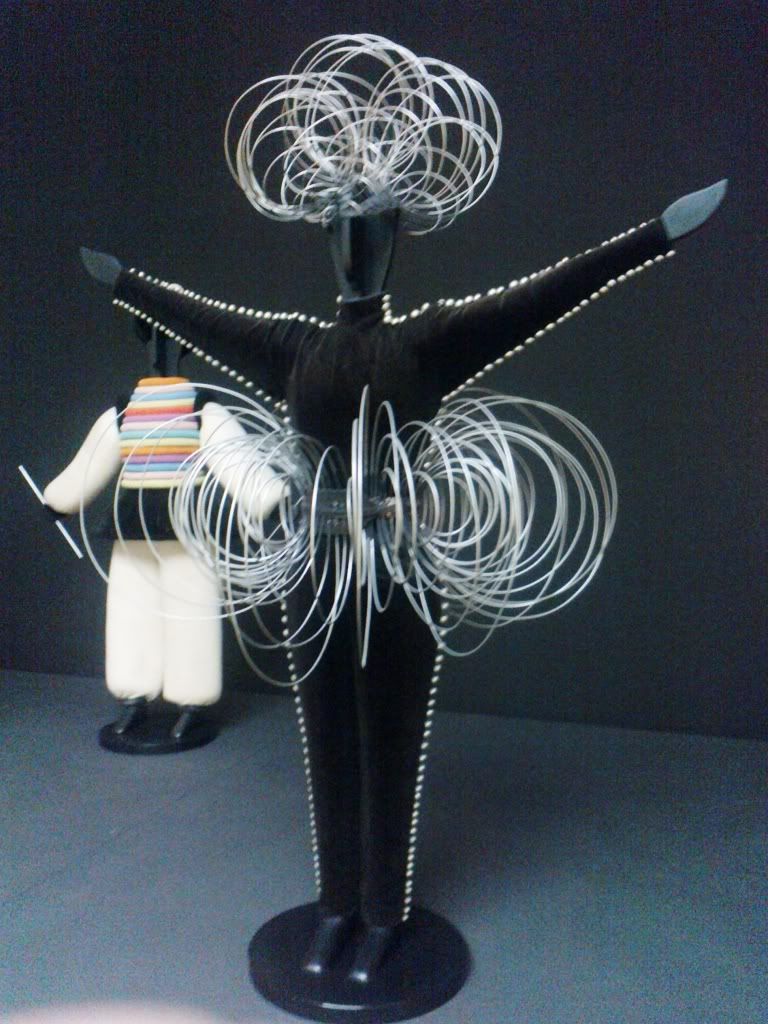
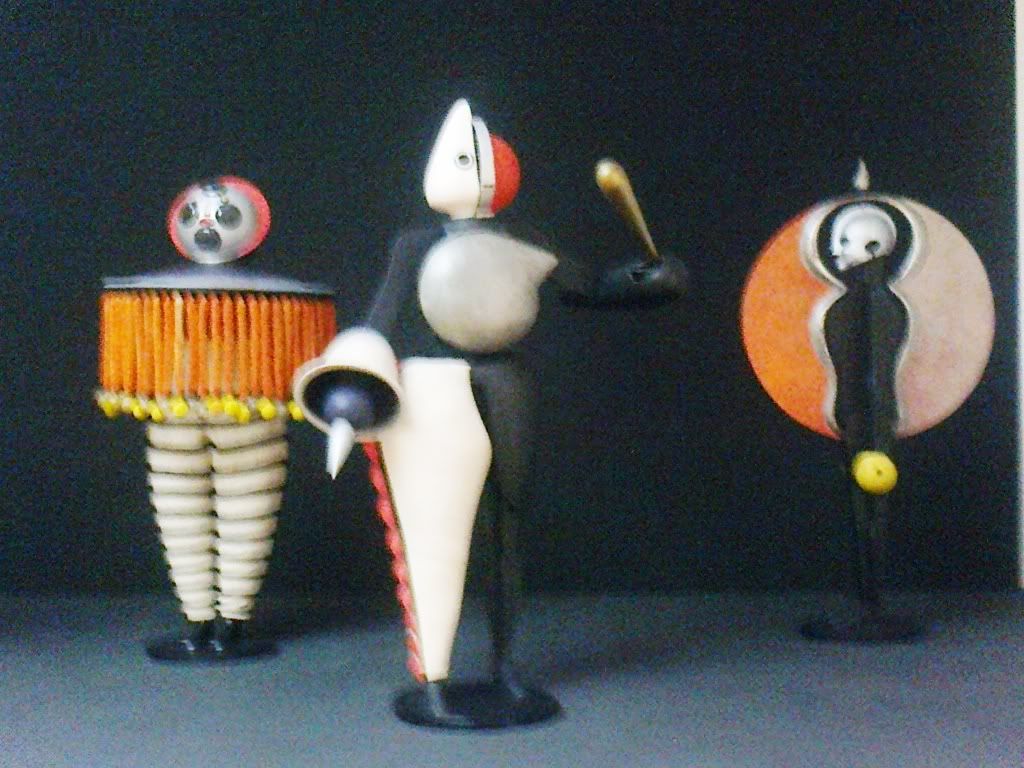
I was in Stuttgart a week or so ago and, in addition to seeing the amazing collection of works by Otto Dix which are housed in the impressive Kunstmuseum Stuttgart, which wasn't there last time I went ten years ago, visiting the Mercedes and Porsche museums and having tram rides out to both Stammheim Prison and the Weissenhofsiedlung housing estate from the 1920s, a  trip to the superb Staatsgalerie was also an absolute essential. Foregoing the current temporary exhibition, which juxtaposes later works by Turner, Monet and Cy Twombly, I took advantage of the Saturday free entrance charge to the permanent collection which took over three hours to work through, so brilliant it is. My absolute highlight, though, as on other visits, was Oskar Schlemmer's costumes for his "Triadisches Ballett" which was first performed in the city in 1922, shortly prior to his move to The Bauhaus. These are some of the photographs I took which make a nice companion, I feel, to the article from my magazine which I put on here last summer. 

StuttgartStaatsgalerie140412-9.jpg

Wednesday, 4 April 2012

Minny Pops-Leeds Brudenell Social Club: 20th January 2012

I also took some photographs of Wally Middendorp when Minny Pops played in Leeds in January, some of which are probbaly worth sharing. They were dead good, too, even though they didn't play "Island" which had apparently gone wrong the night before in Sheffield.


Wishful Thinking: In Remembrance of Peter Christopherson - Tyneside Cinema, Newcastle: 17th March 2012

Sticking with the north east of England, myself and a friend were up in Newcastle a couple of weekends ago for an event at The Tyneside Cinema - "Wishful Thinking: In Remembrance of Peter Christopherson" - which was an evening of music, performance and film centred around aspects of the work of  he who was ex-Throbbing Gristle, Psychic TV, Coil, SoiSong etc. etc. who passed on in November 2010.

The evening began a little confusingly with three pieces called "Evocatio (Air & Metal, Muscle & Spit)", "Re-Man Unkind" and "Wishful Thinking Redux" which, I believe, consisted partly of sketches from an unfinished work commissioned of Christopherson and producer Paul Smith by The AV International Festival of Art, Technology and Music and Film and which was based on and intended to be staged at Durham Cathedral to mark the Spring 2012 Equinox, his father having been Vice-Chancellor and Warden at the city's university throughout the sixties and seventies and the environment, therefore, having had quite a significant effect upon shaping the young "Sleazy". Interwoven with this was recordings made at the cathedral by Chris Watson, as well as a live vocal contribution by Attila Csihar who was seated at a table strewn with candles, as well as the obligatory laptop, and who provided something rather like a more abstract and electronically treated Gregorian chant from somewhere deep down inside his rather sizeable torso. Behind him, projected onto the screen, was a stream of mesmerising imagery by Alex Rose and, at one point, a creature with features covered by a head-dress and draped in fairy lights shuffled around the room delivering a repeated recorded message, stopping rather sinisterly every few steps along the periphery of the audience. It was all very atmospheric and evocative, I must say, especially the bells which opened and closed the procedings and which hopefully evoked the spirit of the man in whose honour we were all assembled.

Chris & Cosey followed, performing some mixes from the final Throbbing Gristle album, a cover of Nico's "Desertshore", which Christopherson was working on when he died and the completion of which, I believe, has now passed into their hands, and a real thrill this turned out to be, the original album being one of my very favourites, anyway, but now being given a new life by this lot. Again, seated at a pair of laptops - miming were they? - who knows or cares? - and backed by an image projected behind them - this time a film made with a static camera of a beach near their home where, Cosey told us, they used to take Sleazy on his visits and where he would eat a bag of seaside chips which he so missed, living out in Thailand - they began by playing a version of "Abschied" on which the vocals were provided by none other than  Blixa Bargeld in the absence of Ms. Breyer-Orridge, this grinding along eerily and in a very stately fashion, retaining some of the tone of Nico's original whilst having the TG stamp all over it. Next was a superbly elongated version of "Le Petit Chevalier" which I felt was verging on the disco, although sounding as though refracted through a factory floor, and which had a number a people visibly twitching in their seats. Here, little Ari's vocals were replaced by the rather trollish rasp of Argentinian filmmaker Gaspar Noe which worked wonderfully. I should add, however, that none of these vocalists were actually present, performing live - that would have been really something! - but were emanating out of the aforementioned duo's laptops. Cosey did, though, provide live vocals next on "All That Is My Own" which was superb and perfectly suited to her unique echoing timbre which here was almost choirboy-like. She also provided live cornet, which is always a treat, on the fourth extract "Janitor of Lunacy" where the voice was this time provided by Antony Hegarty, suggesting that this album will contain all of the promise of Vince Clarke's, unfortunately, never fully realised The Assembly project of 1983 with its host of guest vocalists, several of whom must be still to be revealed. They then finished with a non-cover where a collage of the voices of those Christopherson held dear to him drift in and out repeating the words "meet me on a desert shore" over a simple, echoey piano riff. It all promises to be extremely good when it gets completed and released later this year.

The evening then moved into its second half, beginning with a very rare showing of "La Cicatrice Interieure" in which Nico appeared wandering around with assorted men in various states of undress, whilst screaming, wailing and moaning a  great deal, also throwing herself on the ground on several occasions in childish exasperation. It's all very poetically shot, though, in an almost lunar, desert landscape so was worth every second spent watching it. It also features a number of songs from the original "Desertshore" album and a still from it graced the record's sleeve, as anyone who knows anything about Nico could readily tell you. Events then finished with two Derek Jarman films, each with a soundtrack provided wholly or partly by Coil, "A Journey to Avebury" and "The Angelic Conversation", neither of which I'd previously seen on a big screen and which were, again, well worth the trip up north for alone. When it all finished at midnight, there weren't many people left in the cinema, as it did take rather a lot of staying power I imagine if you're not a fully committed fan, especially for a Saturday night. The whole event was completely amazing, in my view, and also that of my travelling companion.

Here are some photographs I took of Chris & Cosey which aren't brilliant but give a flavour of what it was like.


Tuesday, 3 April 2012

Lebanon Hanover-The World Is Getting Colder


Lebanon Hanover are an interesting duo who contacted me recently with word of and then a promo copy of their debut album - "The World Is Getting Colder" -  which they released as a limited edition of 300 copies on 12" vinyl just over a month ago.

Hailing from both Sunderland and Berlin, they consist of Larissa Iceglass, the German connection, and William Maybelline who are both in their early twenties and have been together since July 2010 which must be around the time I first heard them, around the fag-end of the My Space era, when  a friend of mine put them on at The Star and Shadow in Newcastle and sent down glowing reports, if that's the right choice of adjective given the sub-zero temperatures they conjure up.


I'm very glad they got in touch, too, because I love them, playing their album on an almost daily basis and enjoying it more and more with each go. By their own admission, they're influenced by eighties Cold Wave, the like of which seems to be perpetually popular on the continent and is in vogue over in America with bands like Led Er Est, Sleep Museum, Staccato Du Mal and the Weird Records lot at the moment. So, there's no prizes for originality, unfortunately, as likely influences, either direct or second-hand, are strongly in evidence throughout but, this aside, practically every one of the eleven tracks featured is a winner, being as accomplished and certainly more memorable than most others in this vein and each being possessed of a quite catchy energy in spite of their inherent gloom.

So, let's pick a few tracks out. The set begins with "Die World" which sets the tone with similarly descending notes to "Bela Lugosi's Dead" before a drum machine kicks in, the bassline picks up momentum and glacial keyboards and occasional guitar create a perfect foundation for vocals reminiscent of the ladies of the NDW era which here mix between German ("Die Welt, die Welt") and English ( "..love as cold as an iceberg) to very appealing effect. This is then followed by "Ice Cave" where it's now the turn of a deeper but no more cheerful male voice singing of being claustrophobically "trapped in the ice cave", unable to find a way out, all this backed by a gloriously dated sounding drum machine, plinky keyboards, a doom-laden bass line and occasional scratches of guitar which put me slightly in mind of a more subtle Joy Division or The Cure on their "Faith" album, as well as circling sequenced synth which conjures up a sound very much akin to Malaria! who, I would say, are the omnipresent influence throughout - and welcomely so! This is certainly the case, too, with one of my stand out tracks "Totally Tot" which has a simple, repetitive keyboard line, driving rhythm and vocal intensity which make for highly infectious listening and which wouldn't sound at all out of place on a dancefloor like the one mentioned in the lyrics. "Kunst" which follows is another favourite with a rhythm and sequenced electronics which bring P1/E's "49 Second Romance" to mind, although the sensitively delivered vocals and yearning keyboard line in the background add greater humanity, all this embellished by occasional synthetic zaps which flash across the speakers to superb sonic effect. Things then intensify with the last three tracks, "Canibal"(their spelling, not mine), "Einhorn" and "Sunderland", the first of which begins a little like Suicide with Farris Badwen on the mike singing of "bones, lovely bones" before the vocals swap from William to Larissa, although with none of the menace lost in the process. "Einhorn" then sounds a bit like the song you'd wish The Banshees had produced somewhere between "Kaleidoscope" and "Juju", whilst on the somewhat apocalyptic closing track they really vent their spleens about their home town and its inhabitants who clearly do nothing whatsoever to feed this pair's sensibilities.

I think you're getting the picture now, although I don't want to make this sound too laden down by its influences or gothic germanic cliches as it really is extremely good quality stuff which would have confidently stood shoulder to shoulder with the very best of those of the early eighties were it released then and is certainly an extremely welcome diversion in 2012 - in an ideal world with a lot more readily available money, I'd be straight on to asking them to do a single for my German Bite label at the drop of a hat. It seems, actually, that there might be a little something bubbling up at the moment with bands like Soft Riot, who, I'm told, have just released a single, and the brilliant New Matrix who will, no doubt, have something released before the end of the year. Then, of course, there's Cyberbeatnix over in Berlin who've yet to get anything out on vinyl but should do at some point.

Anyway, to have a listen to some of the tracks from the album and to maybe contact them and buy a copy whilst they're still available, here's a link for you to click:


Here's some stuff off You Tube, too.


Saturday, 3 March 2012

Gerhard Richter: October 18, 1977(1988) - Alte Nationalgalerie, Berlin

As well as those who had turned out to flaunt their wares at the film festival, another name hot on people's lips when I was in Berlin was Gerhard Richter whose retrospective show "Panorama", staged to commemorate his eightieth birthday, opened at the Neue Nationalgalerie that week. It's the same one that finished recently at Tate Modern in London and, I believe, is moving on next to The Pompidou in Paris for the summer months. I'm quite a fan but had been unable to get down to London for it so was very pleased to spot it listed in Zitty magazine, deciding to go along and have a neb - as had half the city by the looks of the queues at the kiosk and the people milling around with carrier bags containing the catalogue. 

I had quite high expectations as I waited to pay my eight euros to get in but, when I left an hour or so later, I felt rather disappointed with what I had seen, this partly being down to the crowds but also to the show itself. Over the years, I think I've probably been a bit spoilt by seeing more concentrated groupings of his work, smaller in number but more focussed in certain periods or genres, at places like The Lenbachhaus in Munich, The Museum-Ludwig in Cologne and, a few summers ago, at The National Portrait Gallery in London, and for this reason the panoramic nature of the Berlin show, as belied by its title, failed to click with me really. Richter's is a large and varied output compared to a lot of other artists and "Panorama", I suppose understandably, offers a flavour of this multi-facetedness, providing various smatterings rather than anything much to get your teeth into - early pop inspired works; the smudgy black and white works from the sixties which were seemingly directly replicated from photographs and postcards in order to solve the problem of having to find a subject matter; the large, often multi-coloured abstracts, the production of which has often involved dragging the paint around with a squeegee and which can sometimes look like the works of a less controlled Bridget Riley; sculptures made out of glass and mirrors,  which I must admit to almost walking past as though they were part of the furniture; endless paintings consisting of charts of little squares of colour; and the hyper-realistic, almost photographic paintings from the eighties and nineties such as the oft replicated "Betty"(1988) and the candle which appeared on Sonic Youth's cover for "Daydream Nation". I don't want to sound too critical of this exhibition. There was something there to please everybody, I guess, but I came away a little bit bored, feeling as though someone who can ordinarily arrest my attention had been presented in a rather anodyne, highly palatable manner, geared towards mass consumption for the polymathic, newspaper devouring classes and sales at the gift shop, which as mentioned appeared to be doing a roaring trade. 

To counteract my slight dejection, I was delighted, therefore, to find out that his cycle of paintings "October 18, 1977" was showing across town at The Alte Nationalgalerie on Museum Island, these being amongst my favourite works by any artist ever and, ordinarily housed at MOMA in New York, usually feeling a little too out of reach, except for books and the internet.


For anyone not familiar with them, the fifteen canvases, painted just over a decade after the occurence of the events that provide their subject matter, concern themselves with events surrounding the morning on which Red Army Faction members Andreas Baader and Gudrun Ensslin were found dead in their prison cells at Stammheim Prison, Stuttgart, and two further members, Jan-Carl Raspe and Irmgard Moeller, were also found dying or injured in their rooms, this having been explained by the authorities as a kind of suicide pact, although anyone reading around the events will see that many people believe that they were, in fact, murdered by the state they had dared to confront.

They're an extremely interesting group of paitings, in my view, not least because, like his work from the mid-sixties, which Richter seemed to have left behind by this point, they are copied from existing images, these related to the morning in question and events surrounding it, some of which would have been taken in the cells by prison staff and most of which, if not all, the German public will have been familair with through their appearance in the media. They also fall into interesting sub-groupings, with some of the canvases, in some cases practically reproductions of partners or in others more individual elements, forming clusters attached to different particpants in the drama. So, along one wall, there is a kind of triptych of portraits of Gudrun Ensslin, entitled "Confrontation 1" through to "Confrontation 3", cropped from photographs taken of her as she went to attend an identity parade at Essen Prison shortly after her arrest in 1972. She then appears again in a solo image, this one much more blurry and almost abstract on a first glance, as she was found hanging from the bars of her cell window.

AlteNationalgalerieBerlin150211-2.jpg

Another group of three almost identical images, all called "Dead", take as their subject matter the head and shoulders of Ulrike Meinhof, as she had been cut down by prison staff a year or so earlier, the rope which brought about her demise still being visible round her neck. As with many of the other images, Richter has done away with any extraneous detail and has focussed in unequivocably on his subject matter for maximum impact. Another image of Meinhof, entitled "Youth Portrait" and based on what looks like a school or college portrait, sits on its own near one of the entrances to the space in which the paintings are exhibited. Similar to Meinhof, Andreas Baader is depicted in two almost identical canvases, "Man Shot Down 1" and "Man Shot Down 2", these showing him lying dead on the floor, having shot himself in the head, a dark shadow around his head presumably being the escaped blood. Two accompanying images, "Cell" and "Record Player" give a silent record of how he passed his time incarcerated in Stammheim and the room in which he died. The latter would definitely appear in my very top paintings were I ever asked to draw up a list. Apparently, as well as providing entertainment, the record player also allegedly provided a hiding place for the gun used in bringing about his death. The final, less intimate and almost almost indistinguishable images depict outdoor scenes, two showing Holger Meins being arrested and made to undress in front of an armoured military vehicle and another equally blurred scene showing the massively attended funeral of those mentioned above, footage of which appears in the Fassbinder related film "Germany in Autumn".


Another aspect which proves both fascinating and appealing about these paintings is their ambiguity, as they seemingly refuse to comment one way or another on what they depict, the individuals and associated scenes appearing objectively and unsentimentally as faded, blurred ghosts from German history, the already familiar nature of most of the images further adding to their confused purpose. The feathery lack of clarity in their presentation also raises unanswered questions, too, with regard to Richter's intentions. Is it a comment on the lack of certainty regarding the perpetrators of the deaths, something which will presumably never truly be known but will remain contested, or maybe a manifestation of the lack of commonality and certainty in people's attitudes towards The Red Army Faction, their intentions and actions? Also, why are some images more blurred than others?

As far as I know, Richter has never commented on his intentions but the paintings seem to have a lot in common with other earlier works such as "Uncle Rudi"(1965) which factually, but similarly blurredly, reproduces  a full-length photograph of a presumably beloved relative in Nazi uniform, "Aunt Marianne" which reproduces a family snapshot of a relative who was murdered as part of the Nazi's eugenics programme or paintings from the same period of allied and German bombers, which re-present unsettling, almost taboo aspects of national history back to the viewer whilst refusing to overtly comment. A group of smudgy, simplistic yearbook portraits of student nurses who were murdered in their dormitory, also from the sixties, seems to do a similar job and draw parallels with some of Warhol's grittier works such as his race riots, electric chairs and car accidents. In this respect, too, the exhibition's placing, in a space within the old national gallery usually populated with scenes of national heroism, packs a similar ambiguous and ironic punch.

This exhibition runs, I believe, until May and comes very highly recommended. I walked round and round in a small circle for quite a while breathing it all in and then felt quite odd as I drew myself away to have a quick look round other highlights of the gallery ( Arnold Boecklin, Lovis Corinth, Max Slevogt, Max Liebermann et al) before going to meet a friend.

Sunday, 26 February 2012

Querelle-Photographed by Roger Fritz (VeneKlasen Werner, Berlin)


My most recent visit to Berlin also tied in with the city hosting its annual film festival, which is always a bit of a bonus. Apparently, Angelina Jolie and Brad Pitt were in town, although our paths never crossed, just as I never bumped into Madonna, Joe Dallesandro and a host of others on previous coincidental sojourns. Maybe I'm going to the right places - well, possibly not with regard to the latter. Anyway, to get to the point, one highlight and probably tied in with The Berlinale was an exhibtion at the VeneKlasen Werner gallery (Rudi-Duschke-Strasse 26) of photographs taken on the set of Rainer Werner Fassbinder's cinematic adaptation of Jean Genet's novel "Querelle" which had been completed but remained unedited upon the director's untimely and sudden death in June 1982. Now, anyone familiar with myself or German Bite magazine will know that Fassbinder rates extremely highly in the pantheon so not calling in was never an option.


Well worth the visit it was, too, as along the very lengthy walls of the three galleries ranged an enormous number of colour drenched photographs, uniform in size, although not always in dimension, many offering stills from the film, so many that its narrative could probably be retraced quite comprehensively by anyone familar with it and who had the time to be bothered, these also being peppered with occasional images not so directly recognisable from the final product. Superb they are, every single one I'd have quite happily brought away and hung on one my own walls, instantly bringing to life Fassbinder's unique, dark, fantasy vision of Genet's Brest, where the young, attractive Querelle has arrived by ship with a stash of opium, thus entering into a corrupting environment of perpetually smouldering male sexuality (and a tiny bit of female, too, in the shape of Jean Moreau whose cock obsession more than matches the men's at times), duplicity and betrayal, whispered intrigue and murder, all this played out on a wholly studio constructed set, complete with a plethora of phallic imagery, including bell-ended quayside masonry and walls smattered with cottage-style drawings and messages - one piece which made me chuckle read "Kilroy was here" or some such; maybe you need to be British to appreciate the joke. All this is then fantastically filtered through saturated tangerine and pinky blue hues, the stylised, artificial splendour of which I can only, off the top of my head, find parallels with in some of Kenneth Anger's oeuvre or maybe "Pink Narcissus", certainly nothing before or since which has had  such far-reaching ambitions and a wide, international audience in mind.


To almost top it all off and for those with a bit of time on their hands, in an equally capacious fourth space - quite fittingly a dark room at the rear of the whole shebang - they had constructed a small cinema where the film in its entirety was showing daily at 1400h. My travelling companions and I, being lucky like that, arrived just in time to catch the majority of it, even though we'd all seen it loads of times before but still enjoying the opportunity to relive favourite and familair elements: the iconic (I hate this word) image of Brad Davis in his pompommed sailor's cap,  taut, scoop necked vest and matching white bell-bottoms; the game of dice he plays with man mountain bar owner Nono (played by Fassbinder stalwart Günther Kaufmann), the losing of which leads to him having to take it in the tradesman's as a "forfeit"; Jeanne Moreau at her finest, seemingly confined to the aforementioned smoked-glassed bar/brothel with its anachronistic space invader machines, singing lines from Oscar Wilde's "The Ballad of Reading Gaol" and reading her tarot cards, her final insight suggesting the whole film has been a figment of hers, somebody's, everybody's imagination; the very handsome, gentlemanly Franco Nero pacing around the decks of his ship, The Vengeur, privately recording his repressed attraction for the socially inferior Querelle into a tape recorder, whilst around him his queeny crew - including the late,great Frank Ripploh of "Taxi Zum Klo" fame, to keep the Berlin thread going - rather balletically pull on ropes or diagonal through the shot carrying out what look like pointlessly essential tasks; Hanno Pöshl in the dual roles of Querelle's brother Robert, with whom he shares an unstated sexual connection, and the helmetted, side-burned Gil with whom he identifies because he has similarly committed a murder and who he says he will help to escapefrom the clutches of the police, because he fancies him, but ends up betraying with a Judas kiss; and Burkhard Driest (who also co-wrote the screenplay with RWF) in the role of Mario, the pock-marked police officer who looks more like something out of an early eighties New York S&M bar like The Anvil than someone from down the local cop shop with his leather cap and waistcoat. All of this is beautifully coupled with Peer Raben's perfect soundtrack, his contribution nearly always being an essential ingredient of a good Fassbinder film in my book.

Even better, though, at 1600h daily, they were also showing the rarely screened feature length documentary "The Wizard of Babylon", directed by Fassbinder's producer Dieter Schidor and featuring a lot of footage filmed on the set of "Querelle", as well as insightful interviews shedding light on the working relationships on set, a seemingly contented or possibly diplomatic Ms. Moreau who says she was enjoyed the whole experience, Brad Davis who surprised me with his campy, primadonna-ish attention seeking and Burkhard Driest who holds back nothing in expressing his displeasure at the way he has been treated by the director. Perhaps most interestingly, it also includes footage from Fassbinder's last ever interview, filmed just hours before he breathed his last and, as he lights one cigarette after another and speaks in a slurred manner which suggests that the dying process may have already begun, some of his words seem spookily prophetic, as he admits to seeing parallels between himself and his protagonist who has made a pact with the devil - as we know, Fassbinder made forty-three films in not much over a decade so that one of his repertory, Peter Märtesheimer, I believe, once said, "he turned out movies like other people roll cigarettes." As is often the case, he died right on the cusp of major international fame, having received his first Golden Bear with "Veronika Voss" and enjoying the first tastes of having begun to break the American market, such as partying with the likes of Andy Warhol and Jackie Onassis, an imminent appearance of his fizzog on the cover of "Time" magazine and a developing chance of winning best director at the 1983 Oscars. I once read something where the writer drew parallels between Pasolini, who was murdered before "Salo" was premiered, and Fassbinder, the conclusion being that both directors had taken themselves to places of such intensity that careers beyond these points seem unimaginable. It's a very convincing argument.

Finally, by way of a souvenir, visitors could take away a little, almost pocket-sized booklet including a number of reproductions of photographs from the film and its set, as well as the rather fascinating facsimiles of correspondence dating back to 1978 between Dieter Schidor and other directors, Sam Peckinpah, John Schlesinger and Roman Polanski, which indicate that Fassbinder was in no way initially favoured for the role, even though I'd always thought that Genet's novel, along with Döblin’s "Berlin Alexanderplatz" and Fontane's "Effi Briest", represented a kind of holy trinity of texts which had obsessed him as a youngster and he saw himself as destined to adapt. The former very nearly took the bait, it appears, which would have made for a very different world, methinks.

Now, I was going to encourage anybody who reads this and is able to visit the exhibition to do so. However, I've just looked and seen that its rather short run finished yesterday which is a bit disappointing. Maybe it will crop up again somewhere else. If it does, I recommend it most highly. I got an awful lot out of my visit, including a desire to dust down a couple of my Genet novels.